Asked on Instagram · 31 October 2026
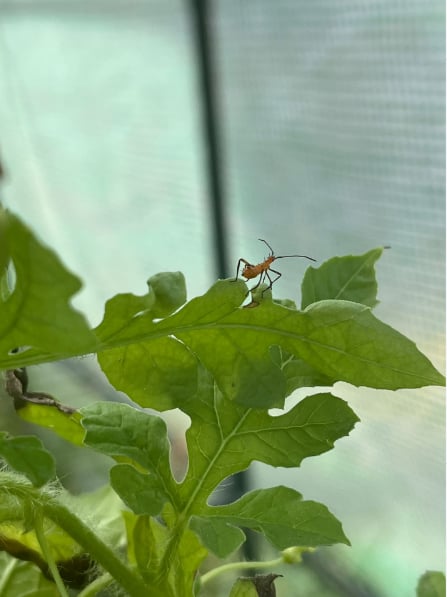
What are the bright orange bugs on my hedge?
Those bright orange insects are assassin bug nymphs, which are mostly helpful predators that eat other pests. They don’t need treatment; just avoid handling them, as they can give a painful bite if disturbed.
The question
“What are these bugs?!? @marieeverson76 discovered them today. They are so bright and tiny. Very chill little folks. #orangebugpartyinthehedge”
What's likely going on
The tiny, bright orange insects in the photo look like assassin bug nymphs (family Reduviidae). At this stage they’re very skinny, with long legs and antennae, and they often hang out on shrubs and hedges.
Assassin bugs are predators, not typical plant-eating pests. They hunt small insects like caterpillars, beetle larvae, aphids, and other soft‑bodied bugs. That’s why they’re just calmly moving around the foliage instead of clustering on one spot and sucking sap like aphids or scale.
They don’t normally harm the plant, but they can bite people if handled roughly, and the bite can sting quite a bit.
What to do
- Leave them in place if the plant otherwise looks healthy. They’re doing pest-control work for free.
- Avoid handling them with bare hands, especially teaching kids not to poke or pick them up. If you must move them, use a leaf, stick, or a jar.
- Skip insecticides unless there’s a serious, separate pest outbreak. Sprays that kill these nymphs will also kill ladybugs, lacewings, and other beneficials.
- If they’re too close to play areas, gently relocate the affected branch cuttings to another part of the garden, or shake a few nymphs into a jar and release them on a more distant shrub.
How to prevent it
In this case you don’t really want to prevent them—they’re helpful. But to avoid lots of insect surprises around seating and doorways:
- Keep dense shrubs slightly thinned so you can see what’s living in them.
- Reduce night lighting near hedges, which attracts lots of insects and therefore predators.
When to worry
- If the hedge shows serious damage (many leaves distorted, yellowing, or dying back), look closely for other pests such as caterpillars, aphids, or scale; the assassin bugs may just be there as predators.
- If someone is bitten and has strong swelling or an allergic reaction, seek medical advice.
Otherwise, consider these bright orange nymphs part of a healthy, balanced garden ecosystem.
Answered by the GrowPls assistant. Every plant and room is different; if things don't improve, a clear close-up photo of the affected part is the fastest way to a better answer.