
zucchini · Asked on Instagram · 3 November 2026
Are the small black insects on my zucchini leaves squash bugs?
These are not the typical gray, shield‑shaped squash bugs. They look like small slender plant bugs or thrips, which are usually much less serious. Check for real damage first, and only treat if leaves are actually being sucked dry or distorted; start with washing them off before using anything like diatomaceous earth.
The question
“Ok help!!! Are these squash bugs??? Will DE get rid of them?? Their on my zuchinni plants”
What's likely going on
From the photo, the insects on the zucchini leaves are small, narrow, and dark. They do not look like the usual squash bug, which is a larger, flat, gray‑brown, shield‑shaped insect with orange‑edged nymphs.
They look more like small plant bugs or thrips:
- Thrips / tiny plant bugs: very slim, fast‑moving; suck sap and can cause silvery streaking or speckling on leaves.
- Some similar insects are mostly harmless or even mildly beneficial, feeding on other tiny pests.
Because the picture doesn’t show close detail, it’s hard to be exact, but there’s no sign here of classic squash bug clusters or their bronze, football‑shaped egg masses on the leaves.
Diatomaceous earth (DE) can kill many soft‑bodied insects, but it’s non‑selective: it also harms beneficial insects and only works while dry and in direct contact.
What to do
Check for damage first
Look for silvery streaks, yellow speckling, curling leaves, or deformed new growth. If the leaves look mostly healthy, you may not need to do anything.Get a closer ID
If possible, take a clear close‑up of one insect from the side and from above. Compare to pictures of squash bugs vs thrips vs assassin/plant bugs.Use water as a first step
If numbers are high, spray the leaves (especially undersides) with a firm jet of water in the morning to knock them off. Repeat every couple of days.Hand removal
For larger or slower bugs, shake or tap them into a container of soapy water.Be cautious with DE and sprays
If you decide to use DE, dust lightly on soil and lower stems, not over the whole plant, and avoid flowering parts so pollinators aren’t hit. Reapply only after rain. Keep pets and kids from breathing the dust.
How to prevent it
- Keep plants vigorous with consistent watering and a bit of compost so they outgrow light feeding.
- Avoid over‑fertilizing with high‑nitrogen products, which attracts sap‑sucking pests.
- Remove plant debris around the base where insects can hide.
When to worry
- Leaves develop heavy silvering, bronzing, or curling, and new growth is stunted.
- You see lots of insects plus brown, crispy, or collapsing leaves.
- You start seeing the classic squash bug adults or their bronze egg clusters.
If that happens, step up control (daily hand‑picking and checking for eggs) and consider more targeted organic options for the specific pest you’ve identified.
Answered by the GrowPls assistant. Every plant and room is different; if things don't improve, a clear close-up photo of the affected part is the fastest way to a better answer.
Related questions
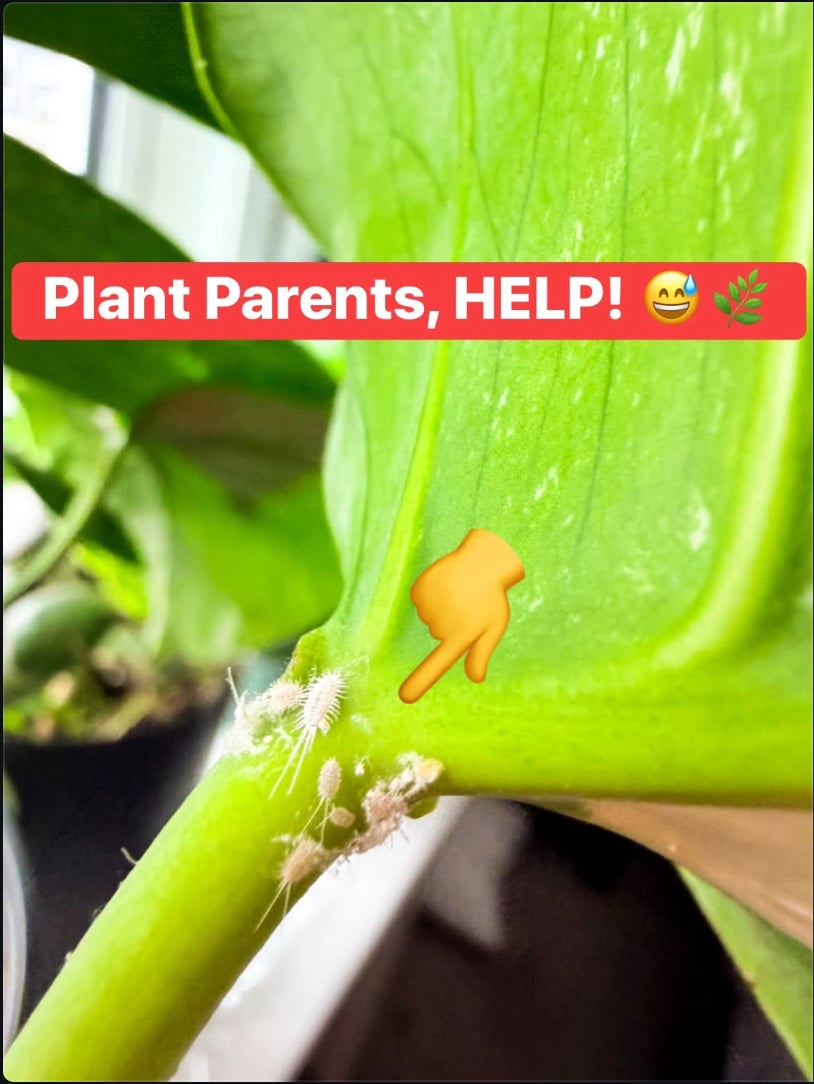
Are these white insects on my plant mealybugs and how do I get rid of them?
Those fluffy white insects in the leaf joint are mealybugs. Isolate the plant, wipe them off with cotton dipped in diluted rubbing alcohol, and repeat weekly, adding insecticidal soap or neem oil if they keep coming back.
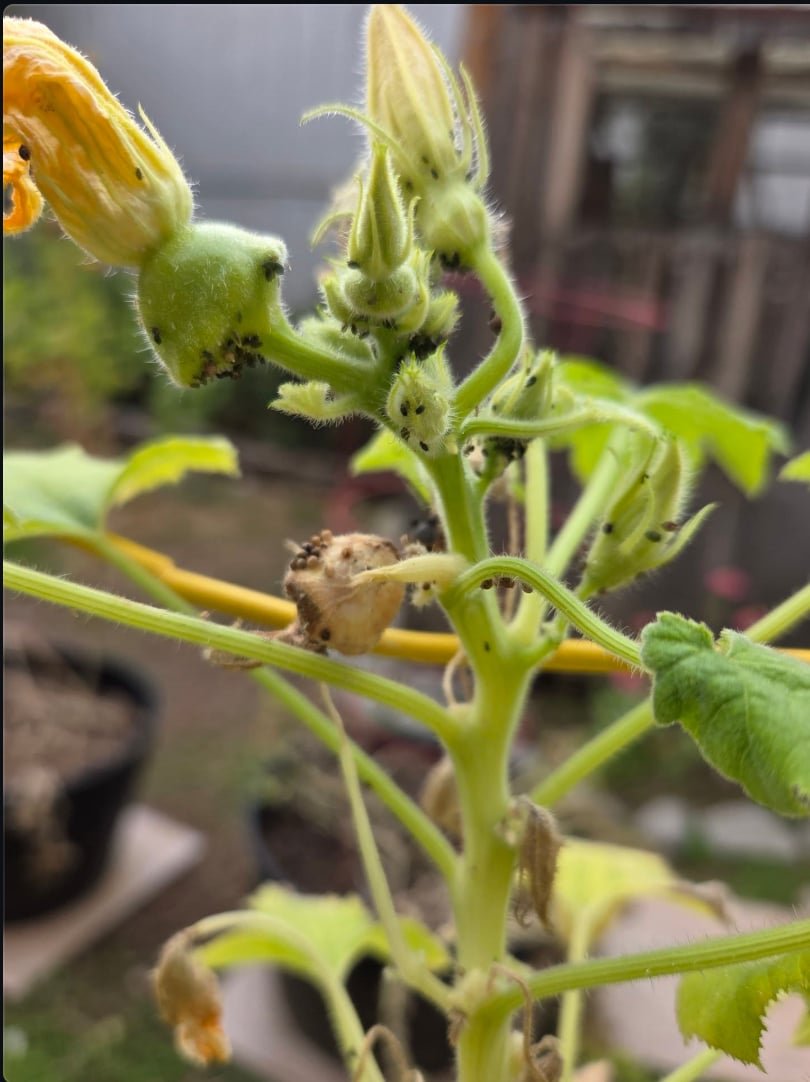
squash
What are the small black bugs on my squash flowers and stems?
Those tiny dark insects clustered on the buds and young stems are aphids. Rinse them off with a strong spray of water, then treat with insecticidal soap or neem oil if they keep coming back.
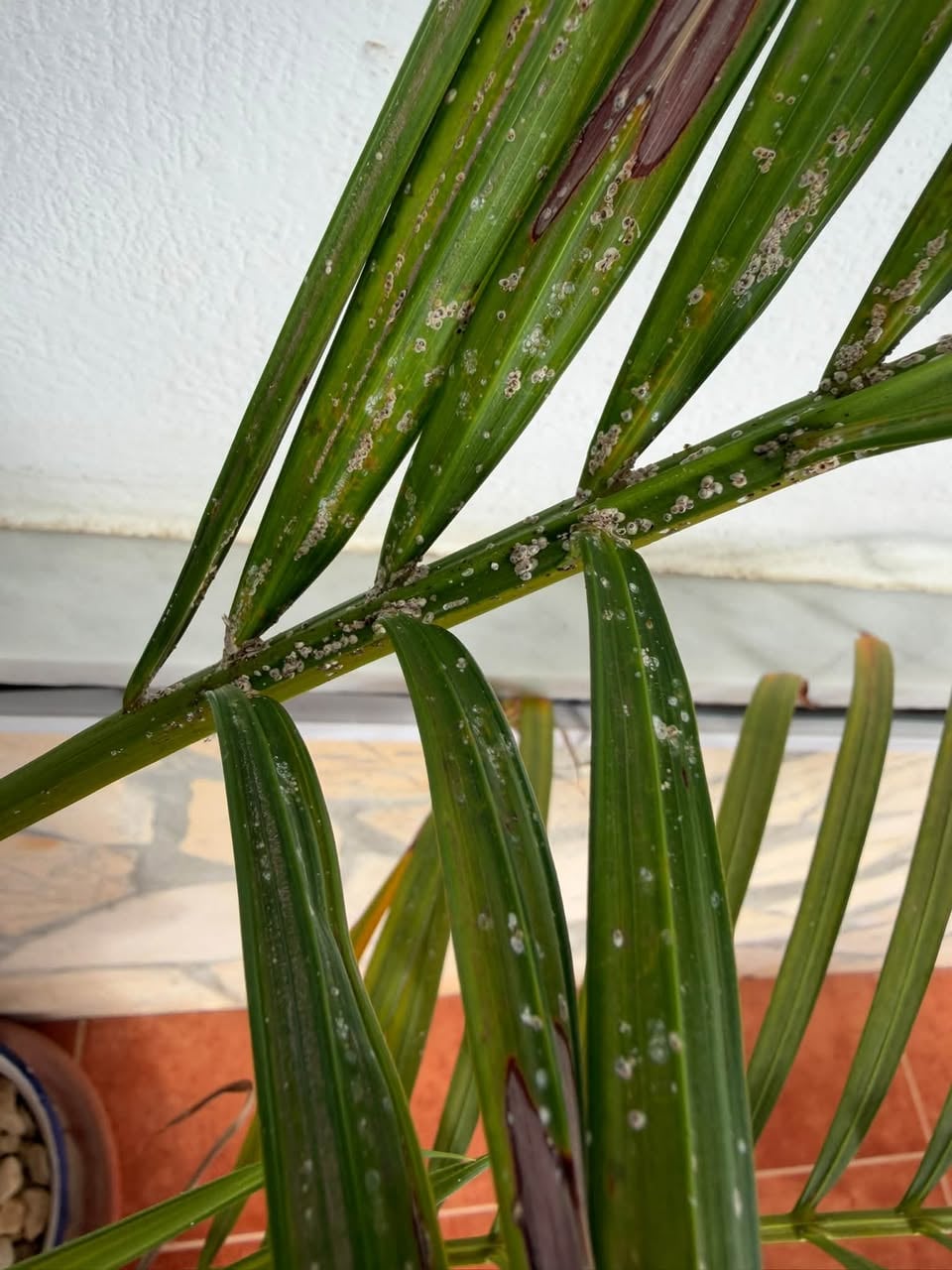
palm (likely an areca or similar)
What are the white bumps on my palm leaves and how do I treat them?
The plant is heavily infested with scale insects, which are sucking sap and weakening it. Start by physically wiping/scraping them off and then use repeated treatments with soapy water or horticultural oil until no new bumps appear.
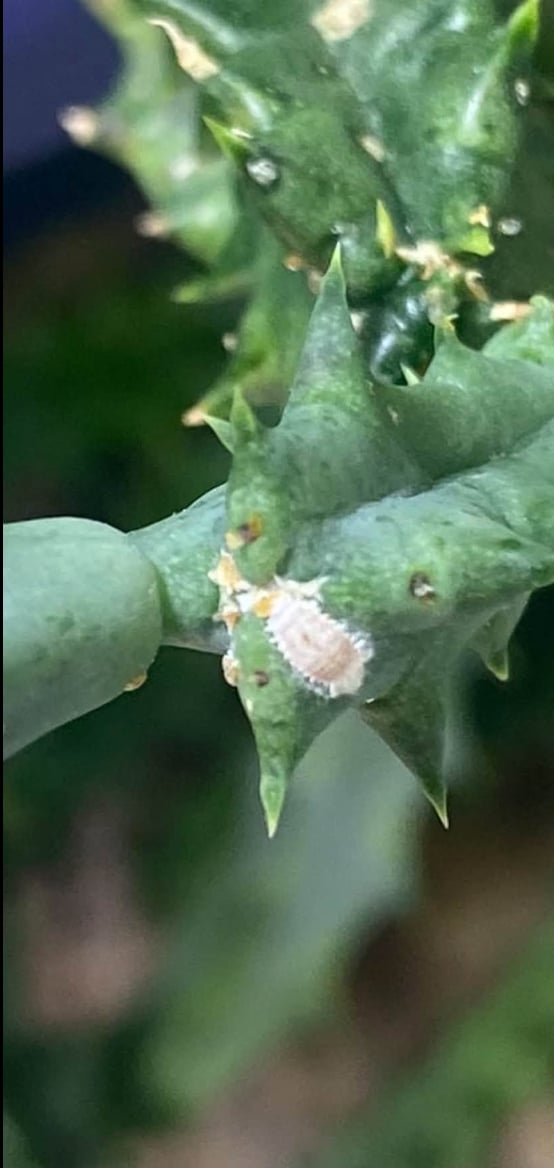
mealybugs
What are the white bugs on my indoor succulent and will soap kill them?
Those white, fuzzy ovals are mealybugs (a type of sap‑sucking insect). Isolate the plant, wipe them off with cotton dipped in rubbing alcohol, then follow up with a gentle soapy or insecticidal soap spray repeated weekly until they’re gone.