
squash · Asked on Instagram · 5 November 2026
What are the small black bugs on my squash flowers and stems?
Those tiny dark insects clustered on the buds and young stems are aphids. Rinse them off with a strong spray of water, then treat with insecticidal soap or neem oil if they keep coming back.
The question
“Ok what are these bugs?”
What's likely going on
The tiny dark bugs clustered around the flower buds and young stems are aphids. They’re soft‑bodied sap‑sucking insects that love tender growth on squash, cucumbers, and other gourds.
From the photo, you can clearly see groups of small, oval insects packed around the buds and fruit stems. That clustering pattern, plus their size and shape, is typical of aphids. They feed by sucking plant juices, which can:
- Stunt new growth and cause flowers and baby fruits to shrivel
- Leave sticky “honeydew” that can attract ants and cause sooty mold (black fungus) on leaves
What to do
Blast them with water
In the morning, use a strong but gentle spray from a hose to knock aphids off the plant, especially undersides of leaves, stems, and flower buds. This alone can greatly reduce their numbers.Prune badly infested bits
If a flower bud or small stem is completely covered, snip it off and throw it in the trash (not compost) to remove hundreds of aphids at once.Use insecticidal soap or neem oil
Spray the affected areas thoroughly, including undersides of leaves. These products work on contact, so good coverage matters. Avoid spraying in full hot sun to prevent leaf burn. Keep away from ponds or fish, and store safely if children or pets are around.Encourage natural predators
Ladybugs, lacewings, and hoverflies love aphids. Plant flowers like marigold, dill, or alyssum nearby and avoid broad‑spectrum chemical sprays that kill these helpers.
How to prevent it
- Check new growth and flower buds a couple of times a week so you catch infestations early.
- Rinse plants with water occasionally during warm, dry spells when aphids boom.
- Keep plants healthy with regular watering and balanced fertiliser; stressed plants attract pests.
When to worry
- If new growth is curling, flowers are dropping, and you still see dense clusters of aphids after repeated treatments.
- If you notice leaves covered in black sooty mold from sticky honeydew.
In those cases, repeat soap/neem treatments every 5–7 days for a couple of rounds and consider removing the worst‑hit plants to protect the rest of the garden.
Answered by the GrowPls assistant. Every plant and room is different; if things don't improve, a clear close-up photo of the affected part is the fastest way to a better answer.
Related questions
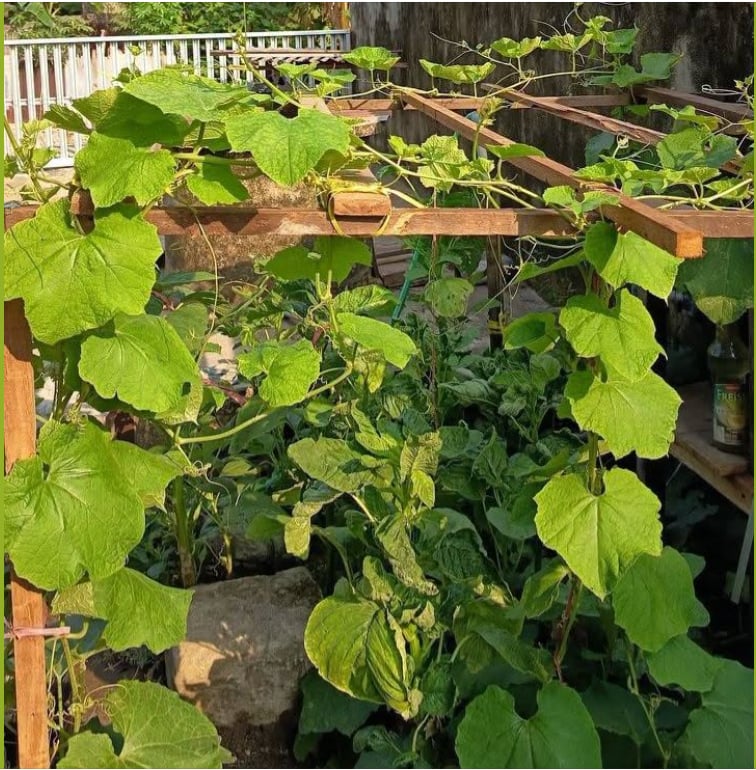
cucurbit vine (gourd/squash family)
What is this cucurbit vine growing wild on my trellis?
This looks like a cucurbit vine – something in the gourd/squash family, such as pumpkin, bottle gourd, or another edible squash – probably a volunteer from kitchen scraps or old compost. Let it flower and fruit to know exactly which one.
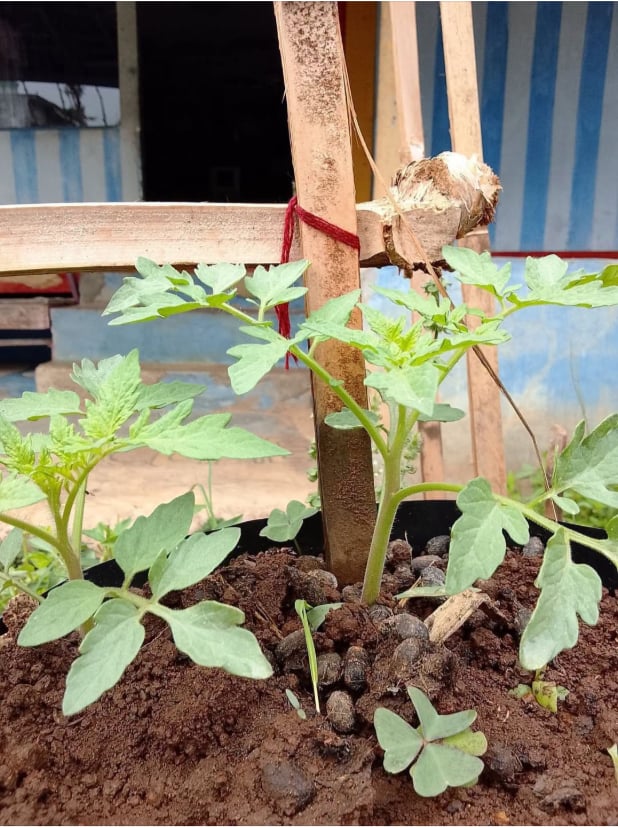
tomato
What plant is this seedling I planted?
The seedlings in the photo are tomato plants. Give them strong sun, a bigger pot or bed, and support as they grow taller.
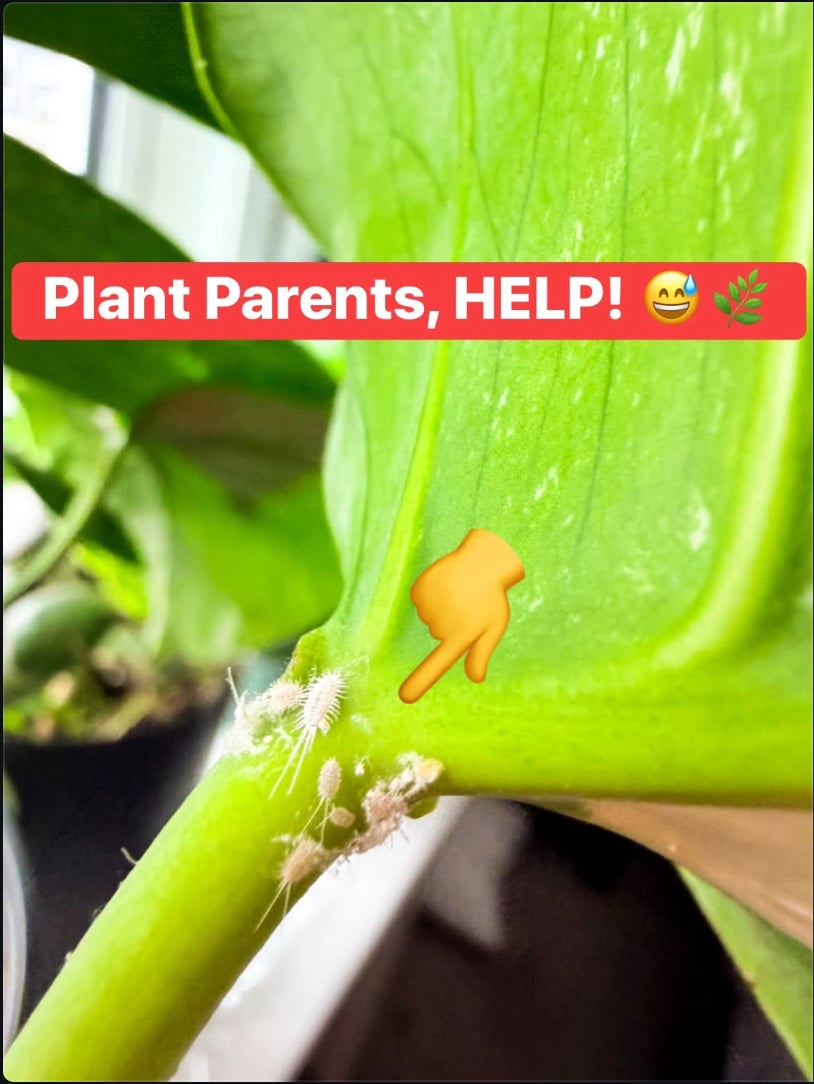
Are these white insects on my plant mealybugs and how do I get rid of them?
Those fluffy white insects in the leaf joint are mealybugs. Isolate the plant, wipe them off with cotton dipped in diluted rubbing alcohol, and repeat weekly, adding insecticidal soap or neem oil if they keep coming back.
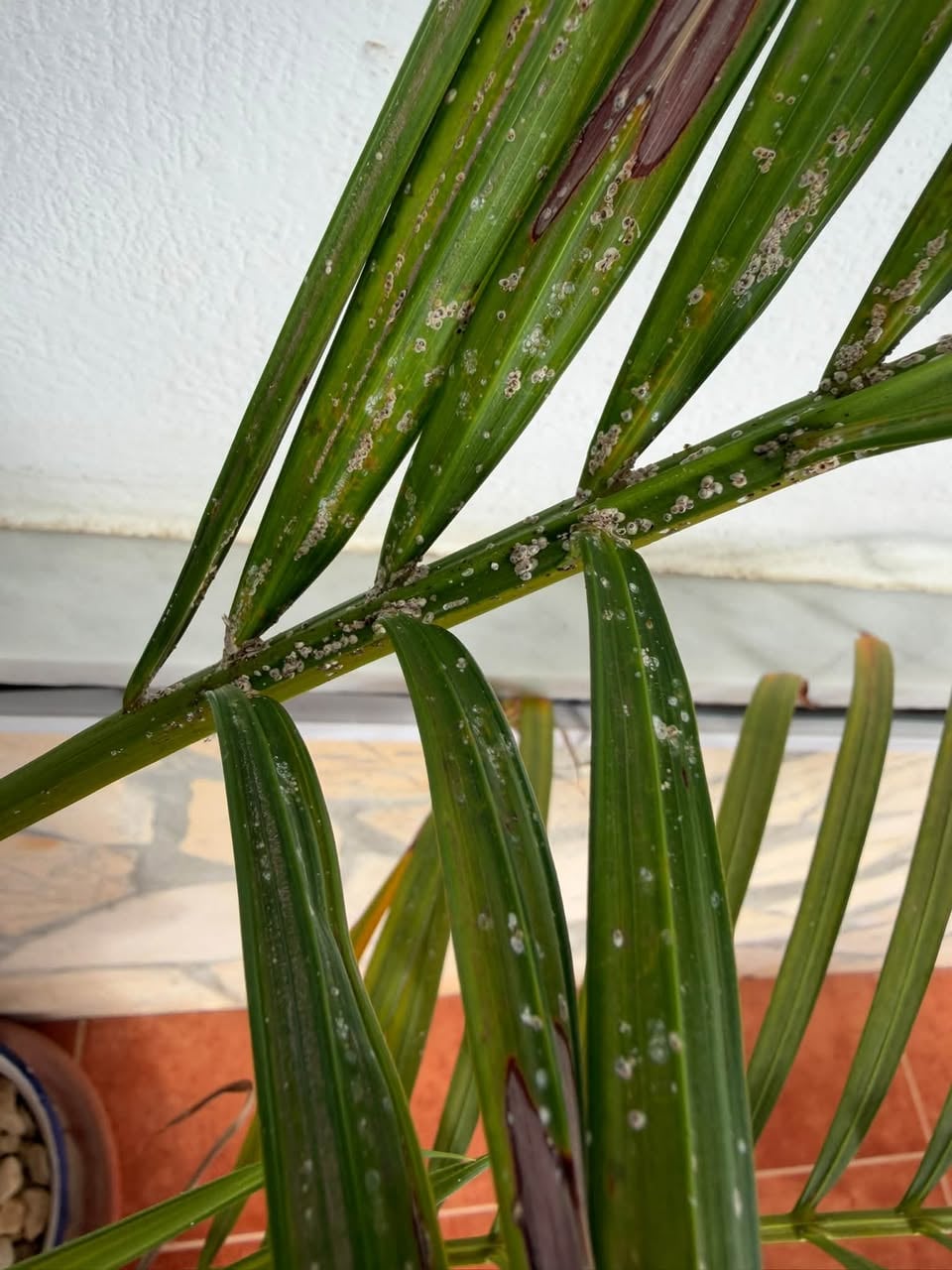
palm (likely an areca or similar)
What are the white bumps on my palm leaves and how do I treat them?
The plant is heavily infested with scale insects, which are sucking sap and weakening it. Start by physically wiping/scraping them off and then use repeated treatments with soapy water or horticultural oil until no new bumps appear.