
lantana · Asked on Facebook · 5 November 2026
How do I get mealybugs out of my outdoor flower beds?
Mealybugs don’t really live freely in garden soil; they survive on plant roots and stems, so the key is to treat the plants (and any ant activity) thoroughly and repeatedly. Start by cutting back the worst‑infested growth, washing plants hard with water, then using a soapy spray or horticultural oil every 5–7 days until you see no new bugs.
The question
“I just need yall to know that I’ve fought the good fight with the mealy bugs this season. I’ve been diligent. I’ve done everything I knew to do. I’ve treated with neem oil, alcohol, individually picked them off, and even treated the soil. Well now they’ve gone from the pots to the landscape soil. Someone please tell me how to get them out of my flower beds 🙏🏻”
What's likely going on
Mealybugs are sap‑sucking insects that hide in leaf joints, on stems, and sometimes on roots. They look like tiny white cotton bits. In the photo, the lantana looks healthy overall, so any infestation is probably early or hidden.
They don’t usually live in bare landscape soil by themselves. What feels like a “soil infestation” is usually:
- Root mealybugs feeding on plant roots underground, or
- Mealybugs on low stems, leaf bases, and mulch that get missed in spraying
- Ants farming them and moving them around the bed
Killing the ones on the plants and breaking the ant–mealybug cycle is what clears them up.
What to do
Check carefully where they really are
Part the foliage and look at stem bases, under lower leaves, in flower clusters, and just below the soil line. Dig a small plug next to one plant and inspect roots for white, cottony patches.Physically reduce the population
Trim off the worst‑infested tips and throw them in the trash, not compost. A strong jet of water can blast many off outdoor plants.Use a soapy or oil spray, not just soil drenches
Mix insecticidal soap or a mild dish soap (a few drops per liter of water) and spray all plant surfaces, especially hidden nooks. Or use horticultural oil or neem oil, well diluted. Repeat every 5–7 days for 3–4 rounds to catch new hatchlings.Control ants around the bed
If ants are active on the plants, use ant baits around (not on) the beds. Ants protect and spread mealybugs.Consider a systemic only as a last resort
For severe, persistent infestations, a soil drench with a systemic insecticide labeled for ornamentals can help, but many are toxic to bees and other pollinators—avoid using on or near flowering plants that bees visit whenever possible.Encourage natural predators
Ladybugs, lacewings, and parasitic wasps eat mealybugs. Avoid broad‑spectrum sprays that kill these helpers.
How to prevent it
- Avoid over‑fertilizing with high‑nitrogen fertilizer; soft, lush growth attracts mealybugs.
- Keep plants pruned so air moves through the canopy.
- Check new plants closely before adding them to beds.
- Rinse plants occasionally with a hose during warm seasons to knock off early pests.
When to worry
- Plants start wilting, yellowing, or dropping leaves despite good watering.
- You find heavy white, cottony masses on roots or stems across many plants.
- Pollinators are very active and you’re considering chemical controls—then check labels carefully and look for the least harmful option or stick to soaps/oils and pruning.
Answered by the GrowPls assistant. Every plant and room is different; if things don't improve, a clear close-up photo of the affected part is the fastest way to a better answer.
Related questions
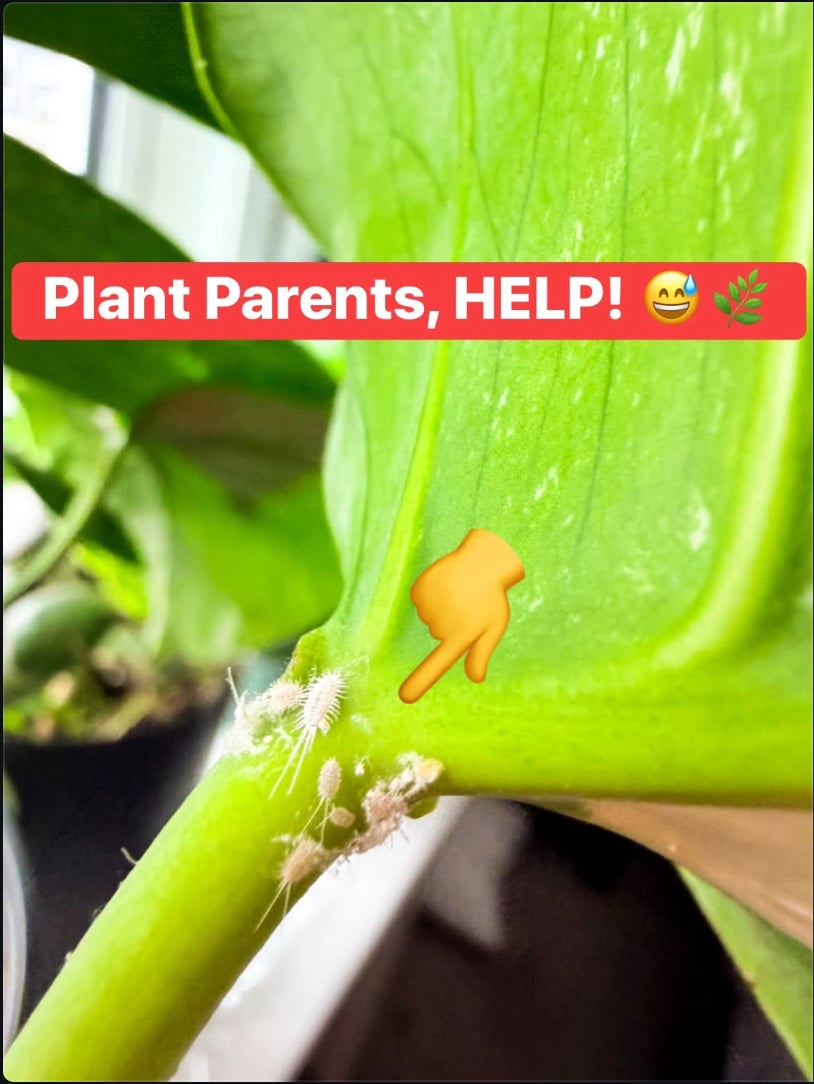
Are these white insects on my plant mealybugs and how do I get rid of them?
Those fluffy white insects in the leaf joint are mealybugs. Isolate the plant, wipe them off with cotton dipped in diluted rubbing alcohol, and repeat weekly, adding insecticidal soap or neem oil if they keep coming back.
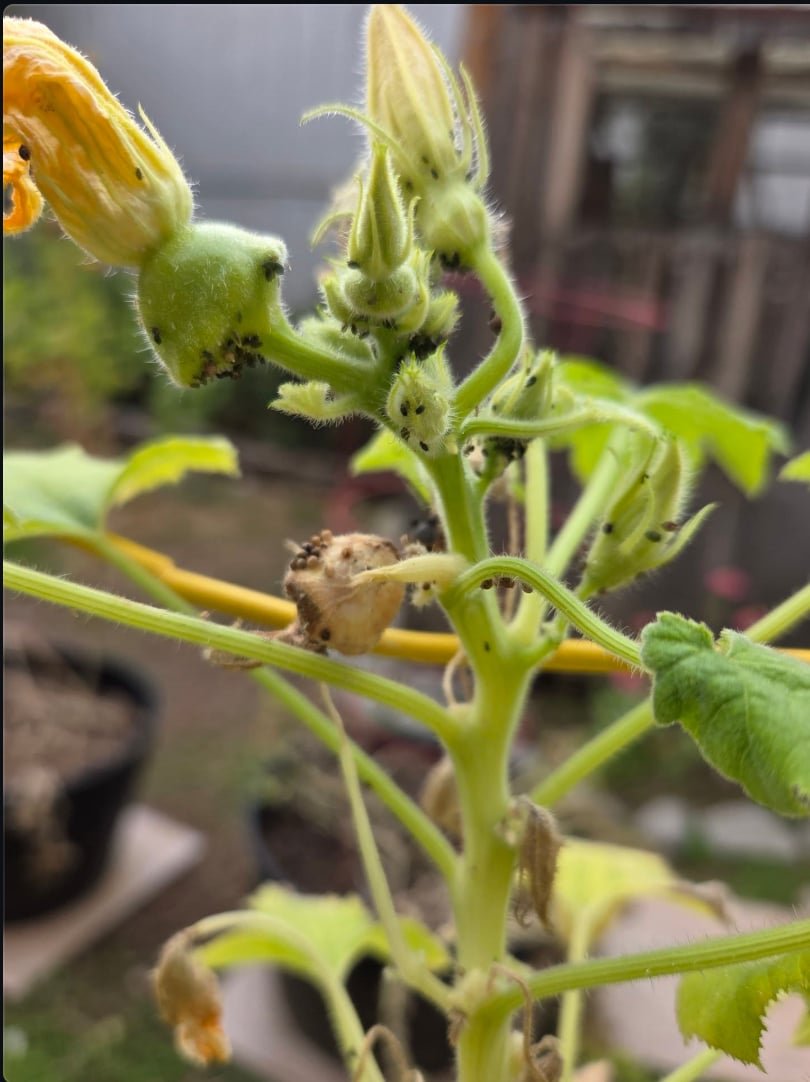
squash
What are the small black bugs on my squash flowers and stems?
Those tiny dark insects clustered on the buds and young stems are aphids. Rinse them off with a strong spray of water, then treat with insecticidal soap or neem oil if they keep coming back.
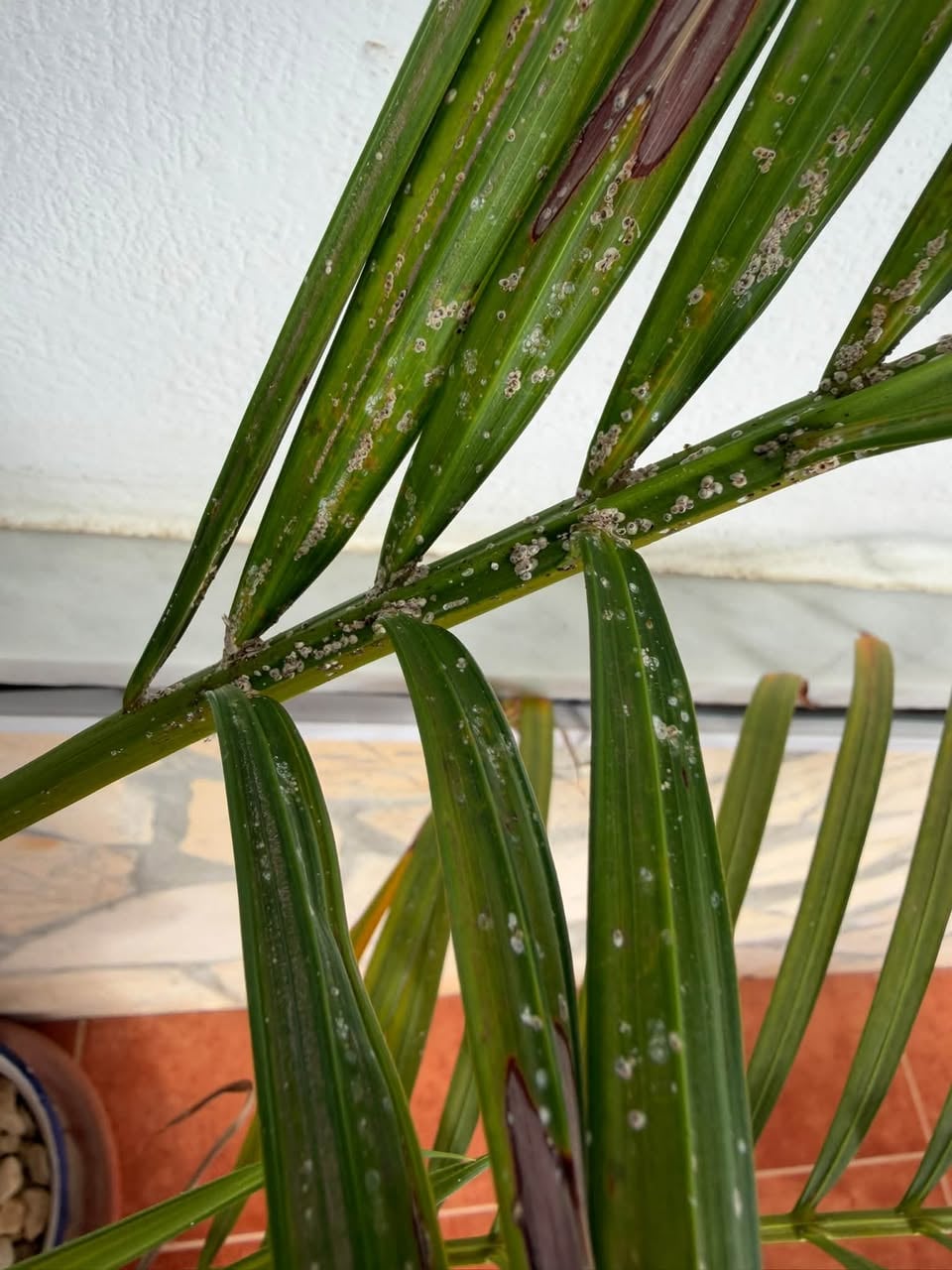
palm (likely an areca or similar)
What are the white bumps on my palm leaves and how do I treat them?
The plant is heavily infested with scale insects, which are sucking sap and weakening it. Start by physically wiping/scraping them off and then use repeated treatments with soapy water or horticultural oil until no new bumps appear.
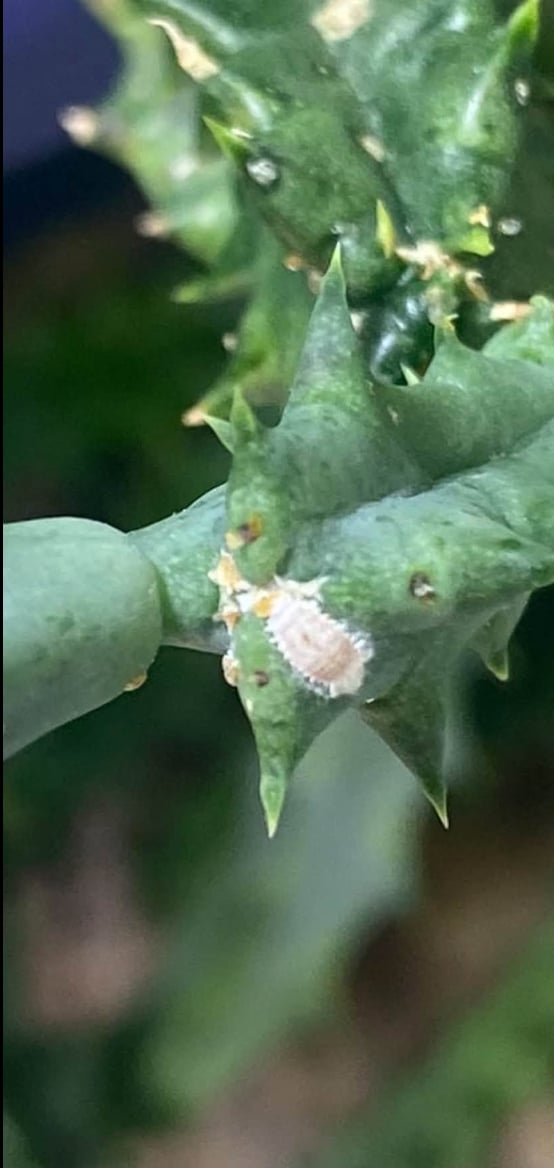
mealybugs
What are the white bugs on my indoor succulent and will soap kill them?
Those white, fuzzy ovals are mealybugs (a type of sap‑sucking insect). Isolate the plant, wipe them off with cotton dipped in rubbing alcohol, then follow up with a gentle soapy or insecticidal soap spray repeated weekly until they’re gone.