
angel wing begonia · Asked on Instagram · 31 October 2026
Is it normal for my angel wing begonia canes to grow and lean downward?
Yes, that arching, downward growth is normal for angel wing begonias—they are naturally cane-like and tend to lean as they get tall. Give them a stake or prune the stems to keep the plant bushy and supported.
The question
“My angel wings are growing downward. Is this normal?”
What's likely going on
The plant in the photo is an angel wing begonia (a cane-type begonia). These don’t grow like stiff trees; their stems are long, jointed “canes” that naturally arch and lean as they get taller and heavier with leaves.
From the picture, the stems look healthy: firm, green, plenty of leaves, and no clear signs of rot or wilting. The downward direction is mostly just the plant’s growth habit plus:
- Height and weight – the longer the cane, the more it bends under its own weight.
- Light direction – grown high up near a wall, it may stretch toward available light, which can exaggerate the leaning.
This is normal, but if the canes aren’t supported, they can eventually crease or snap.
What to do
Add support
Put a stake, moss pole, or slim bamboo canes in the pot and gently tie the stems with soft ties or string. Aim to keep them upright but not rigidly straight.Pinch or prune for bushiness
Cut back the longest canes by 5–10 cm (or to just above a leaf node). This encourages side shoots and a fuller, less droopy plant.Improve light
Place it where it gets bright, indirect light (near a window with curtains or just out of direct sun). Better light reduces weak, stretched growth.Check watering
Water when the top 2–3 cm of soil feel dry. If stems go soft or leaves droop limply, you may be overwatering; if leaves crisp and curl, it may be too dry.
How to prevent it
- Stake new canes early so they grow with support.
- Regularly pinch the tips of fast-growing stems to keep the plant compact.
- Rotate the pot every week or two so it doesn’t lean toward one side of light.
When to worry
- Stems feel soft, mushy, or dark at the base – this can mean rot; reduce watering and check the roots.
- Leaves are drooping and yellowing all over, not just hanging normally – look at watering and light.
- A cane snaps or collapses – trim it back to healthy tissue; the plant usually resprouts from lower nodes.
Answered by the GrowPls assistant. Every plant and room is different; if things don't improve, a clear close-up photo of the affected part is the fastest way to a better answer.
Related questions
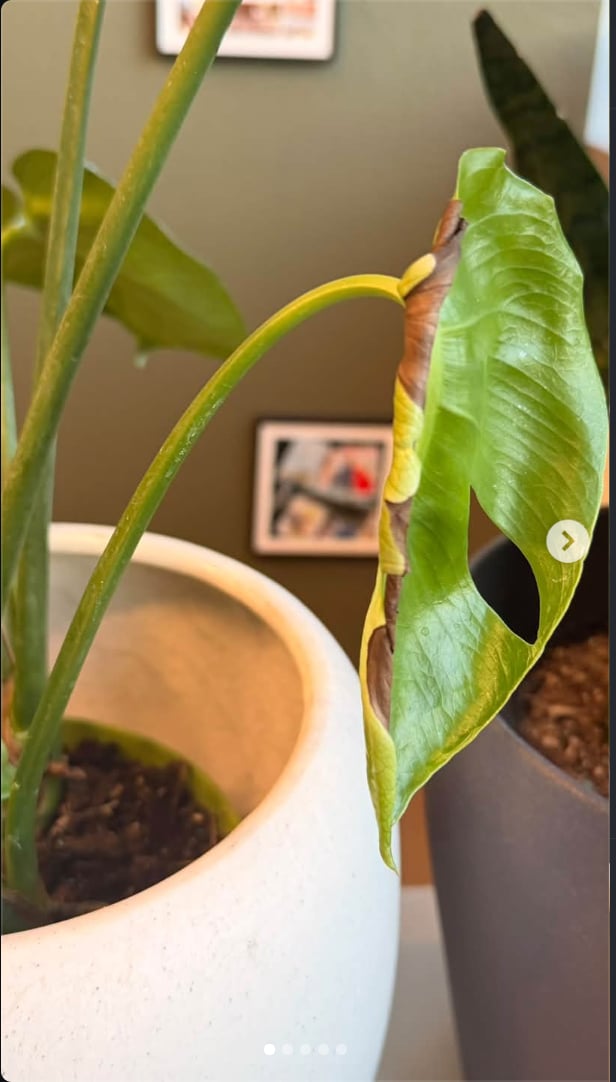
monstera
Why is my Monstera new leaf browning before it fully opens?
That brown edge on the new leaf is usually from stress while the leaf is still tightly rolled – most often low humidity, underwatering, or the leaf getting stuck and damaged. Check watering, light, and humidity, and focus on helping the next leaf grow in better.
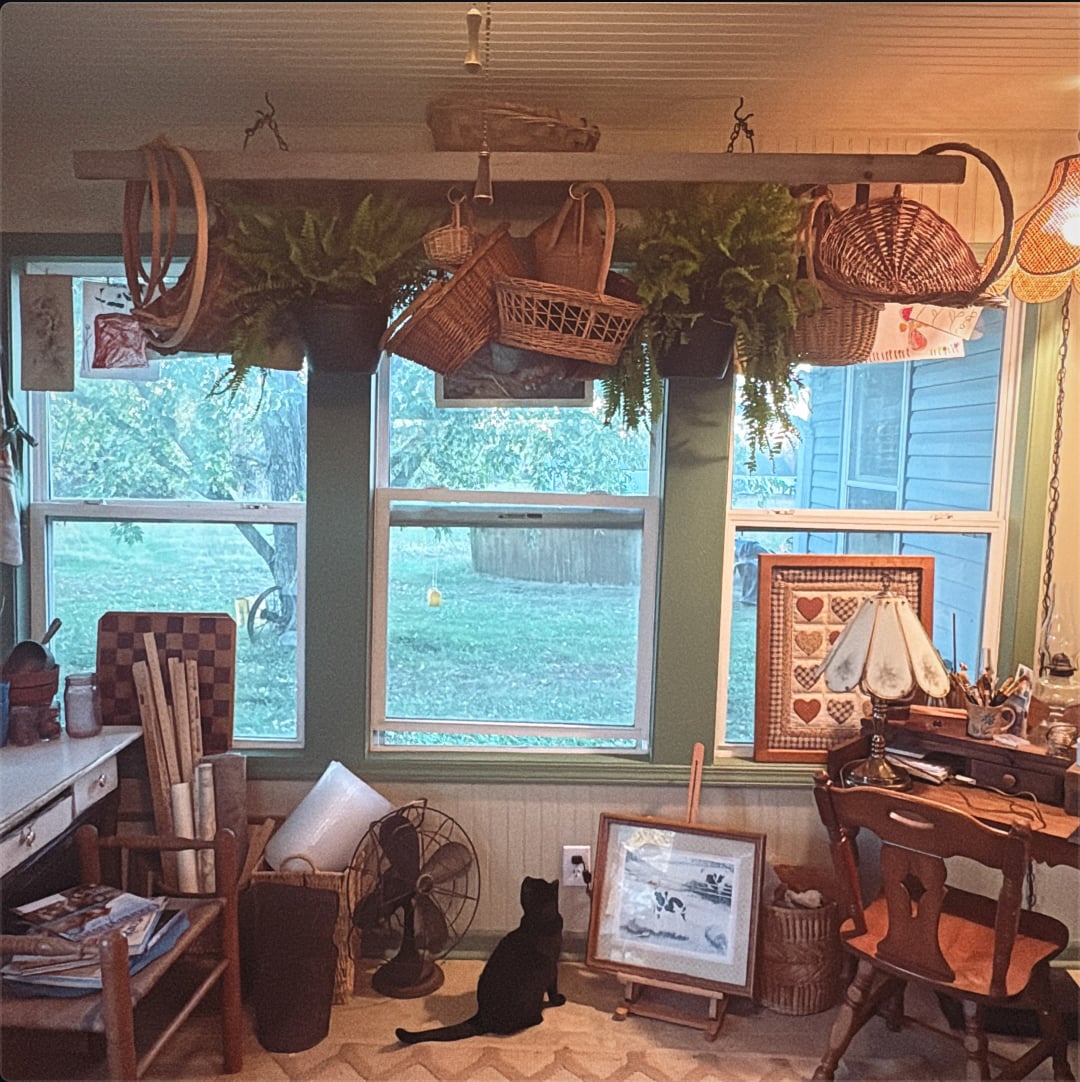
fern (likely Boston fern)
How do I overwinter hanging ferns in a bright sunroom?
That sunroom spot should work well if the ferns get bright but not harsh direct sun and the air isn’t too hot or dry. Indoors, water whenever the top of the soil just starts to feel dry, which is often about once a week but depends on your room’s temperature and humidity.
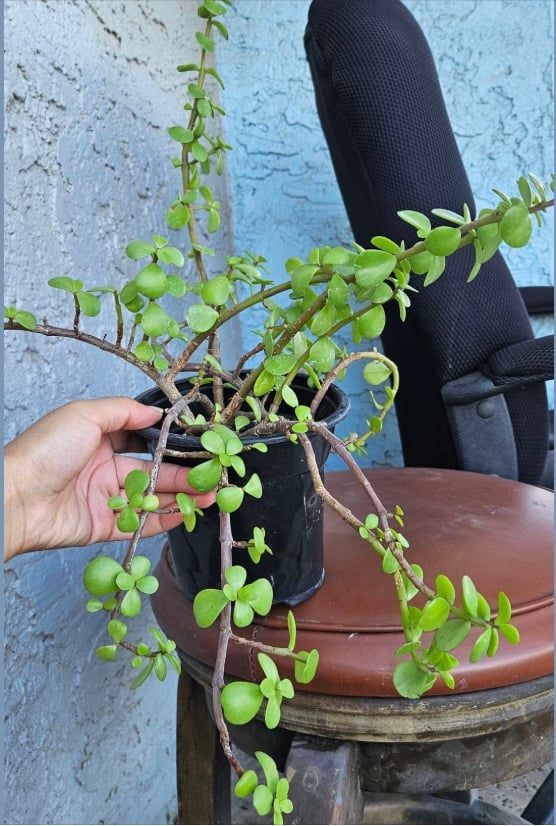
elephant bush
Why is my elephant bush (Portulacaria afra) droopy and losing leaves?
This elephant bush is most likely reacting to a change in light and watering, and it’s probably staying too wet in its current soil. Move it to brighter light, let it dry more between waterings, and consider repotting into a fast‑draining succulent mix.
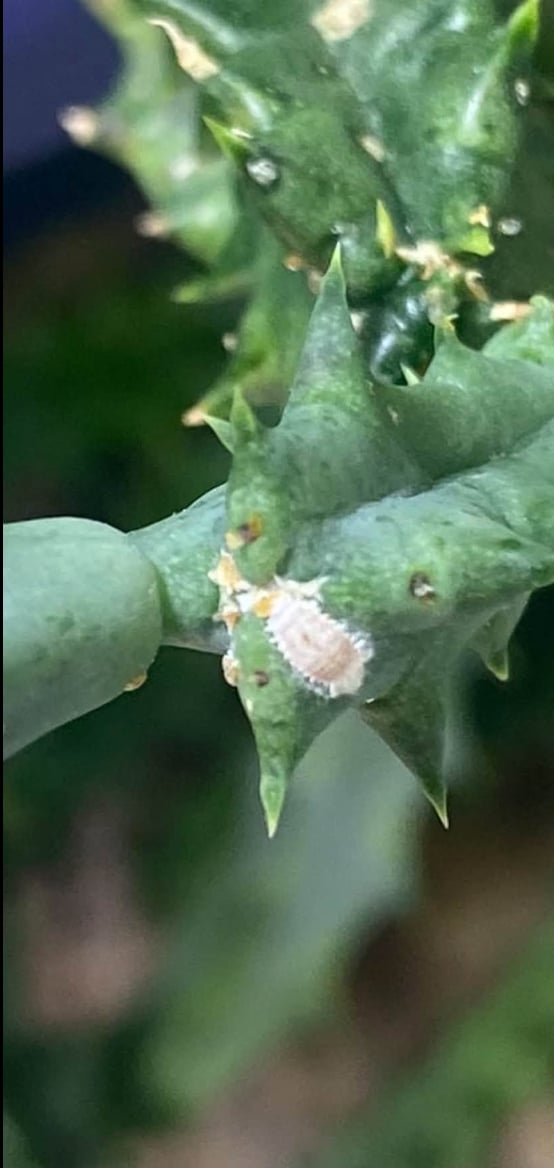
mealybugs
What are the white bugs on my indoor succulent and will soap kill them?
Those white, fuzzy ovals are mealybugs (a type of sap‑sucking insect). Isolate the plant, wipe them off with cotton dipped in rubbing alcohol, then follow up with a gentle soapy or insecticidal soap spray repeated weekly until they’re gone.