
fern (likely Boston fern) · Asked on Instagram · 5 November 2026
How do I overwinter hanging ferns in a bright sunroom?
That sunroom spot should work well if the ferns get bright but not harsh direct sun and the air isn’t too hot or dry. Indoors, water whenever the top of the soil just starts to feel dry, which is often about once a week but depends on your room’s temperature and humidity.
The question
“🪴🧺My ferns are tucked into the sunroom for the winter! This is my first attempt to keep some alive all year. 😅 Plant friends! Is this a good spot for them? Do they need to be lower so they get more sunlight? How often do I water now that they’re inside? Any tips are appreciated.”
What's likely going on
These look like classic hanging ferns (often Boston ferns) brought in to escape winter cold. Indoors they usually struggle with dry air, heat sources, and irregular watering more than with light.
From the photo, they’re:
- In front of big windows → good bright light.
- Hanging up near the ceiling → warmer, drier air collects here.
- Surrounded by baskets → good for looks, but make sure air can move around each plant.
Most ferns want bright, indirect light, consistently moist soil, and higher humidity. Too much direct sun scorches fronds; too little light makes them thin and yellow.
What to do
Check the light
If these windows get gentle morning sun, they’re perfect. If they get intense midday/afternoon sun that hits the leaves directly for hours, add a sheer curtain or shift them a bit to the side.Height: leave them unless it’s very dim
If you can comfortably read a book by the window without lights on during the day, they’re getting enough light. Lower them only if the room feels noticeably dark around plant level on cloudy days.Set a watering routine
Stick a finger into the soil: water when the top 1–2 cm (about the first knuckle) feels just barely dry, never dusty-dry. Thoroughly water until it drains out, then empty saucers or cachepots so roots don’t sit in water.Boost humidity
Keep them away from heat vents or space heaters. Group plants together, use a humidifier nearby, or place pots on trays of pebbles with water below (not touching the pot bottom).Tidy and inspect
Trim brown, crispy fronds. Check regularly for spider mites or scale (fine webbing or bumps on stems) and wipe leaves with a damp cloth if needed.Pets
Common Boston ferns are considered non‑toxic to cats and dogs, but still discourage nibbling.
How to prevent it
- Keep their soil evenly moist—never bone‑dry, never swampy.
- Maintain steady temperatures, ideally 15–24°C, with no cold drafts.
- Give them bright, indirect light year‑round, not deep shade.
- Refresh the top layer of potting mix in spring and feed lightly with a balanced liquid fertilizer at half strength.
When to worry
- Large sections turn yellow and drop → usually underwatering, very dry air, or too little light.
- Fronds bleach or get crisp brown patches on the sunniest side → too much direct sun; move slightly back or filter the light.
- Sticky residue, fine webbing, or bumps on stems → possible pests; isolate the plant and treat with insecticidal soap or neem oil, following the label.
If they stay mostly green with just a few older fronds browning over winter, they’re doing fine and will flush out with new growth in spring.
Answered by the GrowPls assistant. Every plant and room is different; if things don't improve, a clear close-up photo of the affected part is the fastest way to a better answer.
Related questions
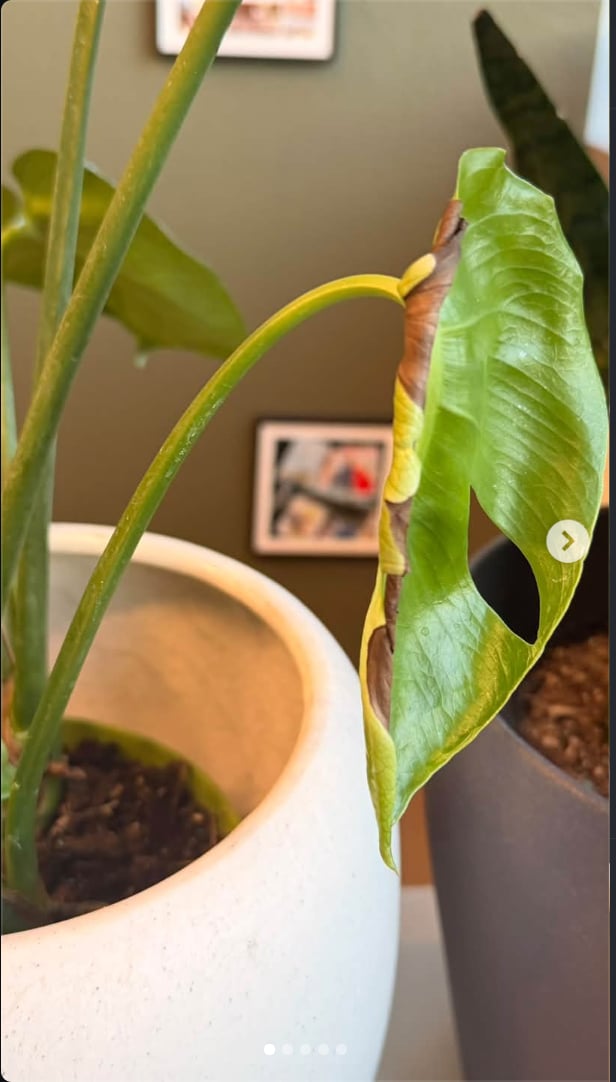
monstera
Why is my Monstera new leaf browning before it fully opens?
That brown edge on the new leaf is usually from stress while the leaf is still tightly rolled – most often low humidity, underwatering, or the leaf getting stuck and damaged. Check watering, light, and humidity, and focus on helping the next leaf grow in better.
How do I know when my plants need watering?
Most plants should be watered when the top layer of soil has dried out, not on a fixed schedule. Check the soil with your finger, lift the pot to feel the weight, and watch the leaves for early signs of thirst like slight drooping or dullness.

tropical canna or banana-type plant
How can I overwinter the tropical “palm” in my big patio pots?
That center “palm” can be saved, but it’s a tropical (not frost‑hardy), so you’ll need to lift it from the mixed pot before frost and keep it inside in bright light with much less water. The flowering trailers around it are usually treated as annuals and are hard to carry over.
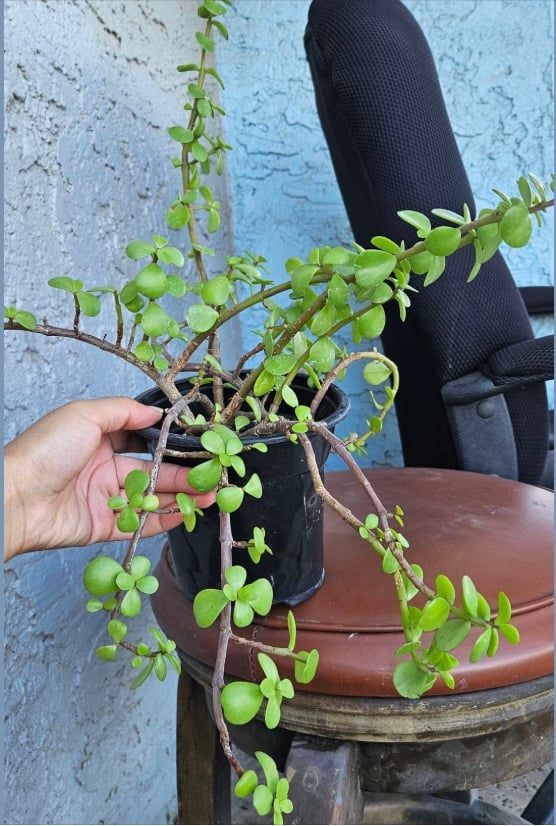
elephant bush
Why is my elephant bush (Portulacaria afra) droopy and losing leaves?
This elephant bush is most likely reacting to a change in light and watering, and it’s probably staying too wet in its current soil. Move it to brighter light, let it dry more between waterings, and consider repotting into a fast‑draining succulent mix.