
Asked on Instagram · 31 October 2026
What are these big white fuzzy bugs on my plant leaves and how do I get rid of them?
Those white, cottony clumps are sap‑sucking insects, most likely woolly aphids or planthopper nymphs, not mold. Rinse them off strongly with water, then treat the plant with insecticidal soap or neem oil and repeat weekly until they’re gone.
The question
“I never knew white bugs could get this big”
What's likely going on
The white, fluffy mass on the leaves is not a fungus. It’s a group of insects that hide under waxy, cotton‑like fluff. From the photo, they’re most likely:
- Woolly aphids or
- Planthopper nymphs (sometimes called “fluffy bums”).
Both are small sap‑sucking insects that gather in big clusters and produce that striking white, hairy coating. From a single photo it’s hard to say exactly which species, but the treatment is the same.
They feed by sucking plant sap, which can cause curling leaves, slow growth, sticky honeydew, and black sooty mold later on.
What to do
Physically remove as many as possible
Take the plant outside if you can and blast the clusters with a strong jet of water (from a hose or spray bottle on “jet”). This alone can remove most of them.Wipe heavily infested leaves
For reachable leaves, wipe the bugs off with a damp cloth or cotton dipped in soapy water (a few drops of mild liquid soap in a cup of water).Spray with insecticidal soap or neem oil
Use a ready‑made insecticidal soap or neem oil spray, coating the tops and undersides of leaves and stems. Avoid doing this in full hot sun to prevent leaf burn. Repeat every 5–7 days for 3–4 rounds.Check nearby plants
These insects move around easily. Inspect neighbouring plants and treat any new clusters early, before they build up.Clean up honeydew
If leaves are sticky or getting black mold, gently wash them with soapy water, then rinse.
How to prevent it
- Avoid over‑fertilizing with high‑nitrogen fertilizer; soft new growth attracts sap suckers.
- Keep plants spaced so air can move between them.
- Regularly inspect the undersides of leaves, especially in warm, humid weather.
- Encourage natural predators (ladybugs, lacewings) by avoiding broad‑spectrum chemical insecticides.
When to worry
- New leaves are coming out distorted, curling, or yellowing.
- You see thick, sticky honeydew and black sooty mold spreading.
- Despite several weeks of washing and spraying, the insects keep returning in huge numbers.
In those cases, step up control (more frequent sprays, or a systemic insecticide if local rules allow and there are no pets/children that might contact treated plants) or consider pruning and discarding the most heavily infested parts of the plant.
Answered by the GrowPls assistant. Every plant and room is different; if things don't improve, a clear close-up photo of the affected part is the fastest way to a better answer.
Related questions
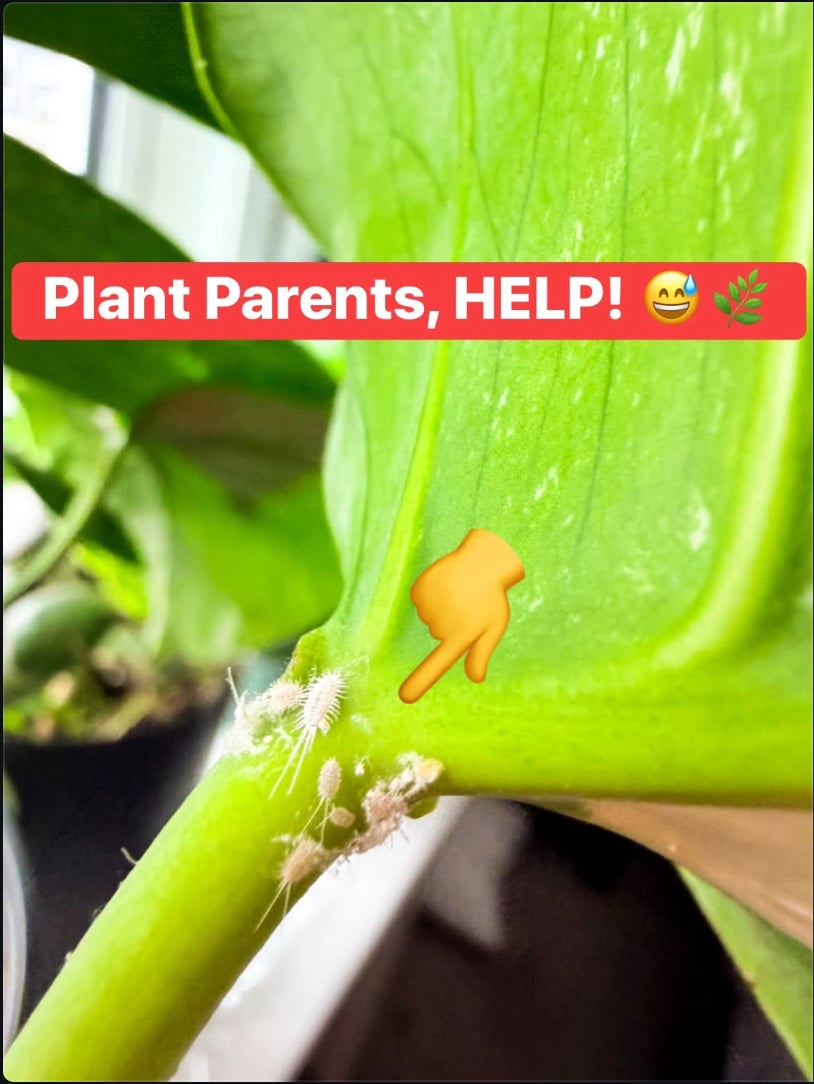
Are these white insects on my plant mealybugs and how do I get rid of them?
Those fluffy white insects in the leaf joint are mealybugs. Isolate the plant, wipe them off with cotton dipped in diluted rubbing alcohol, and repeat weekly, adding insecticidal soap or neem oil if they keep coming back.
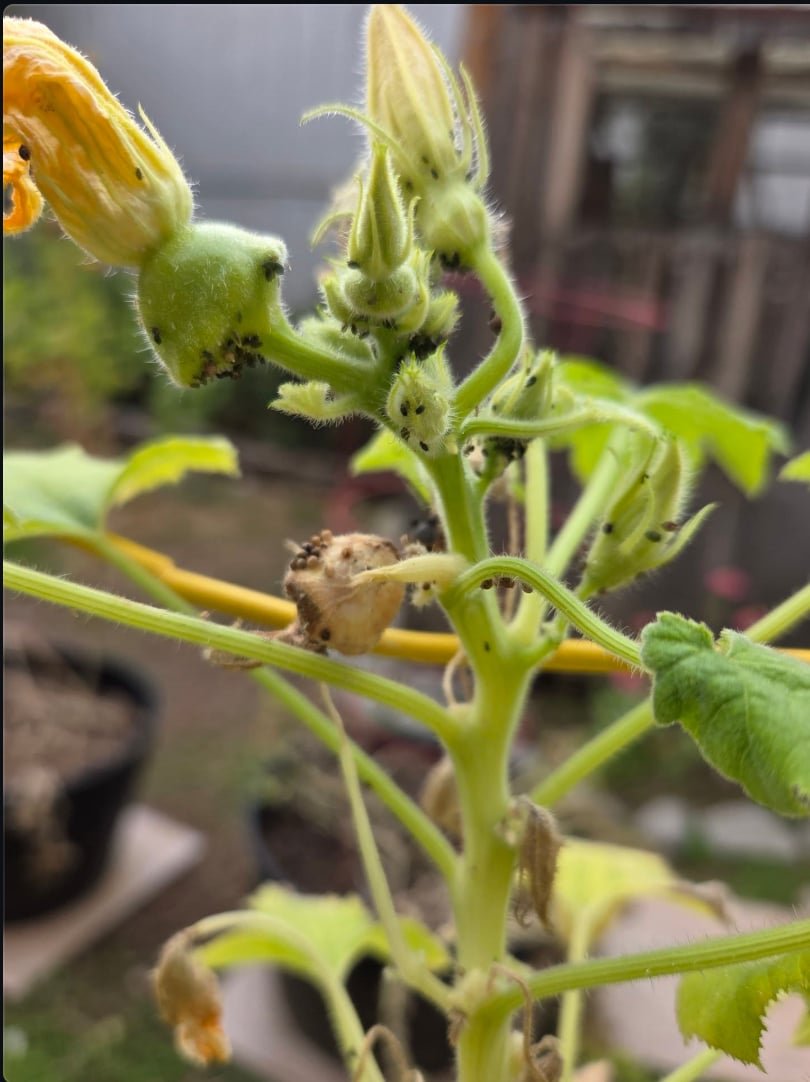
squash
What are the small black bugs on my squash flowers and stems?
Those tiny dark insects clustered on the buds and young stems are aphids. Rinse them off with a strong spray of water, then treat with insecticidal soap or neem oil if they keep coming back.
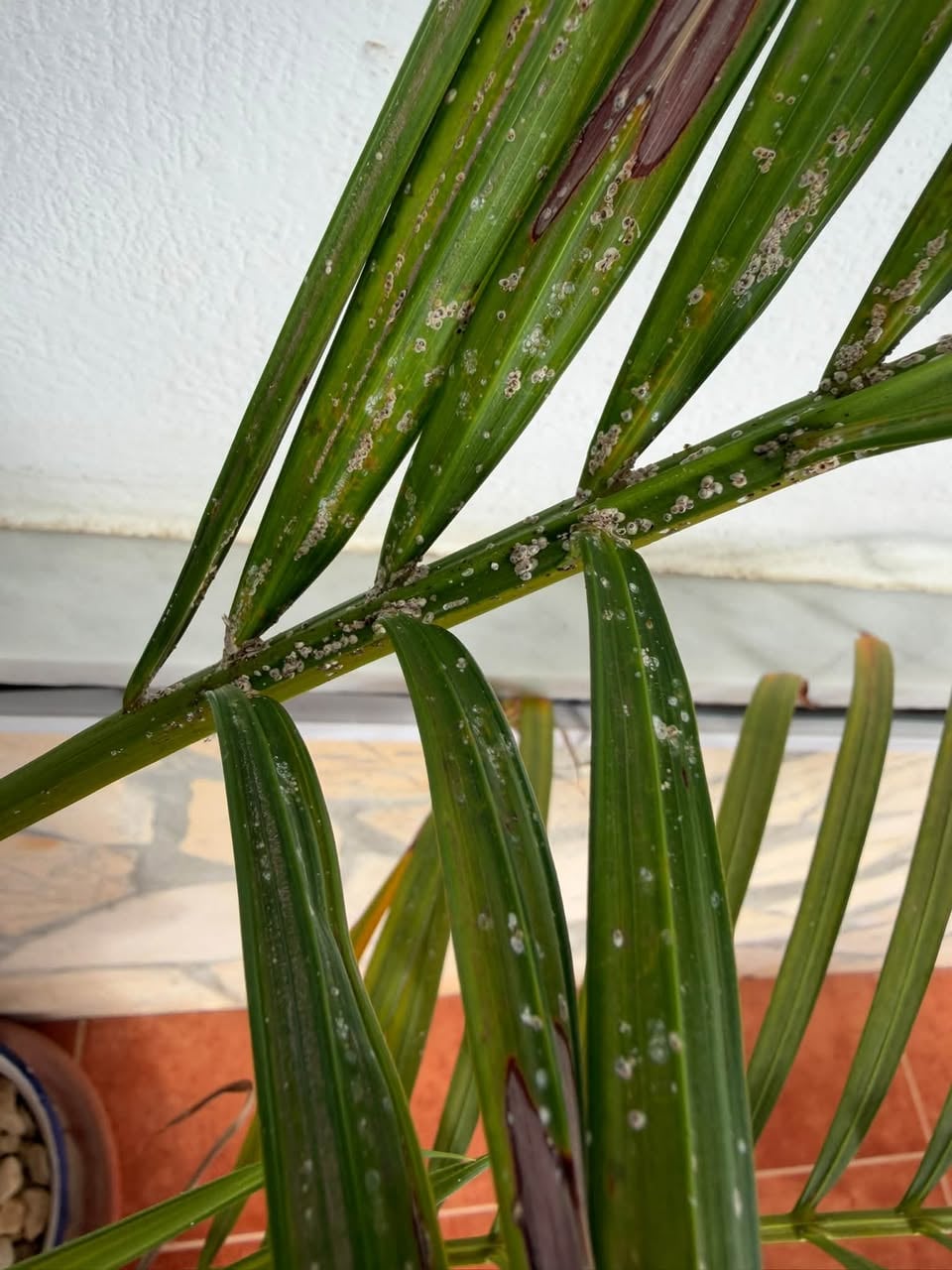
palm (likely an areca or similar)
What are the white bumps on my palm leaves and how do I treat them?
The plant is heavily infested with scale insects, which are sucking sap and weakening it. Start by physically wiping/scraping them off and then use repeated treatments with soapy water or horticultural oil until no new bumps appear.
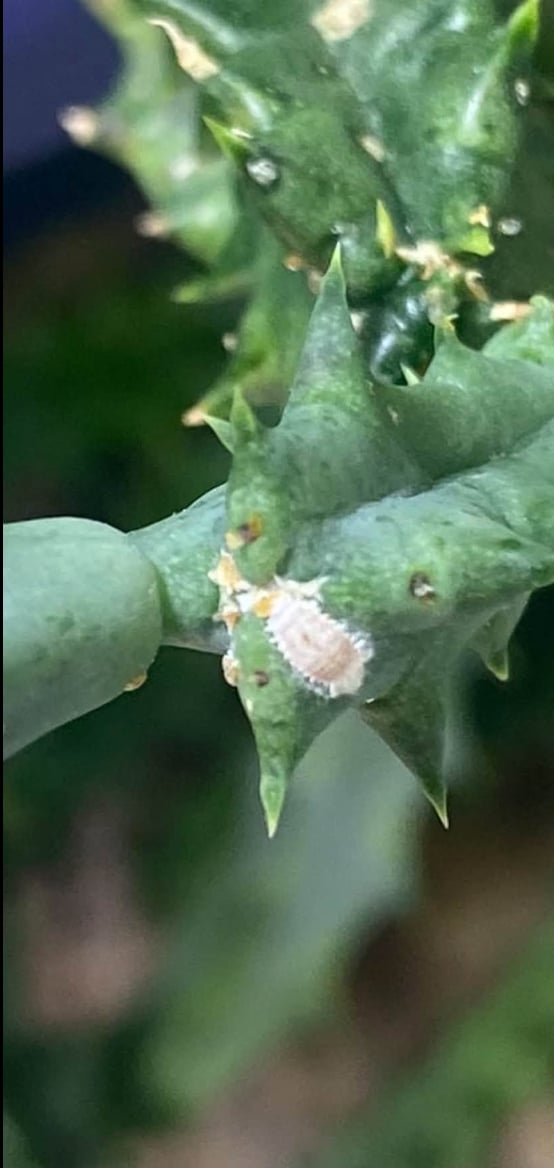
mealybugs
What are the white bugs on my indoor succulent and will soap kill them?
Those white, fuzzy ovals are mealybugs (a type of sap‑sucking insect). Isolate the plant, wipe them off with cotton dipped in rubbing alcohol, then follow up with a gentle soapy or insecticidal soap spray repeated weekly until they’re gone.