
narrow-leaved sunflower · Asked on Instagram · 3 November 2026
Why are my narrow-leaved sunflowers flopping over instead of standing upright?
Narrow-leaved sunflowers naturally grow tall and can flop if they’re crowded, shaded, over-fertilized, or buffeted by wind. Start by thinning or dividing clumps, giving them more sun and support, and avoiding high‑nitrogen fertilizer.
The question
“Why won’t my narrow-leaved sunflowers stand upright? 🌻🤔”
What's likely going on
From the photo, the blooms look healthy, but narrow‑leaved sunflowers (Helianthus species) often have tall, relatively thin stems. There are a few common reasons they won’t stand upright:
- Tall, top‑heavy stems. Many perennial sunflowers naturally get tall with lots of blooms at the top. Once they’re in full flower, the weight can make them lean or flop, especially after rain.
- Crowding and shade. If plants are packed tightly or shaded part of the day, they stretch taller (a response called “etiolation”), which makes stems weaker and more likely to bend.
- Rich, soft growth from fertilizer. Lots of nitrogen (from lawn runoff, manure, or general fertilizers) can push very lush, soft stems that can’t support themselves.
- Wind or rain. Heavy wind or storms easily push over tall plants that aren’t well anchored or supported.
The flowers themselves don’t show disease or pest damage that would explain flopping, so growth habit and conditions are the most likely causes.
What to do
- Check the site. Make sure the plants get at least 6 hours of strong sun. If they’re shaded or leaning toward the light, consider cutting back nearby plants or moving/dividing them next season.
- Thin or divide clumps. In early spring or after flowering, dig and divide crowded clumps so each stem has space. This encourages sturdier individual plants.
- Cut back early in the season. When stems are 30–45 cm tall, pinch or cut them back by about one‑third. This makes them bushier and shorter, so they support themselves better.
- Avoid high‑nitrogen feeding. Skip lawn fertilizers nearby and use a balanced, low‑nitrogen fertilizer only if the soil is poor.
- Provide support. For existing tall stems, use stakes, bamboo canes, or a simple string “corral” around the clump to hold them upright, especially in windy spots.
How to prevent it
- Plant in full sun and in soil that is not overly rich.
- Space plants so air and light can reach each stem.
- Pinch or lightly prune early each season to keep height under control.
- In very windy gardens, plan on using discreet supports from the start of the season.
When to worry
- If stems are soft, rotting, or black at the base, check for waterlogged soil or fungal rot and improve drainage.
- If plants suddenly collapse and stems look chewed or hollow, look for stem‑boring insects.
- If the flopping is only from height and flower weight, it’s mostly a cosmetic issue and can be managed with spacing, pruning, and support next year.
Answered by the GrowPls assistant. Every plant and room is different; if things don't improve, a clear close-up photo of the affected part is the fastest way to a better answer.
Related questions
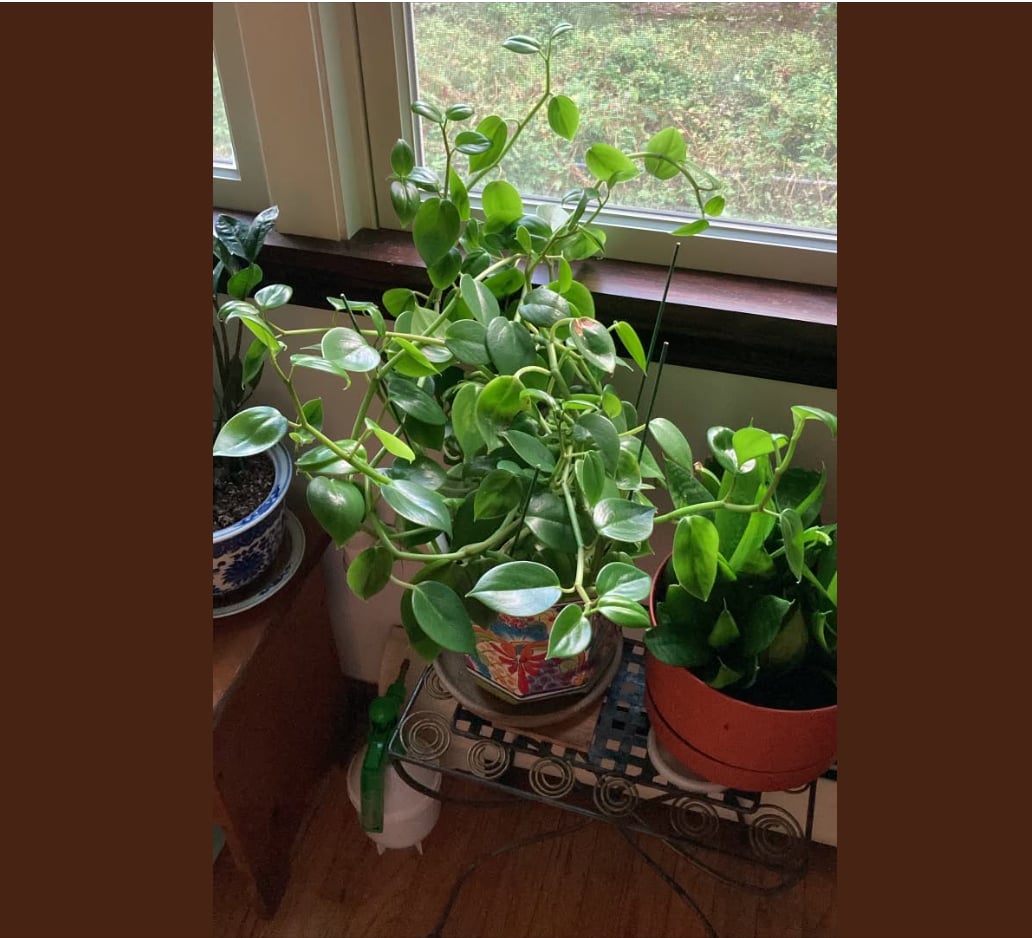
peperomia
How can I make my peperomia look fuller and healthier?
The plant is healthy but very leggy, which usually means it isn’t getting quite enough light and needs a haircut. Move it to a brighter spot with indirect sun and prune the long, bare stems so it can grow back compact and bushy.
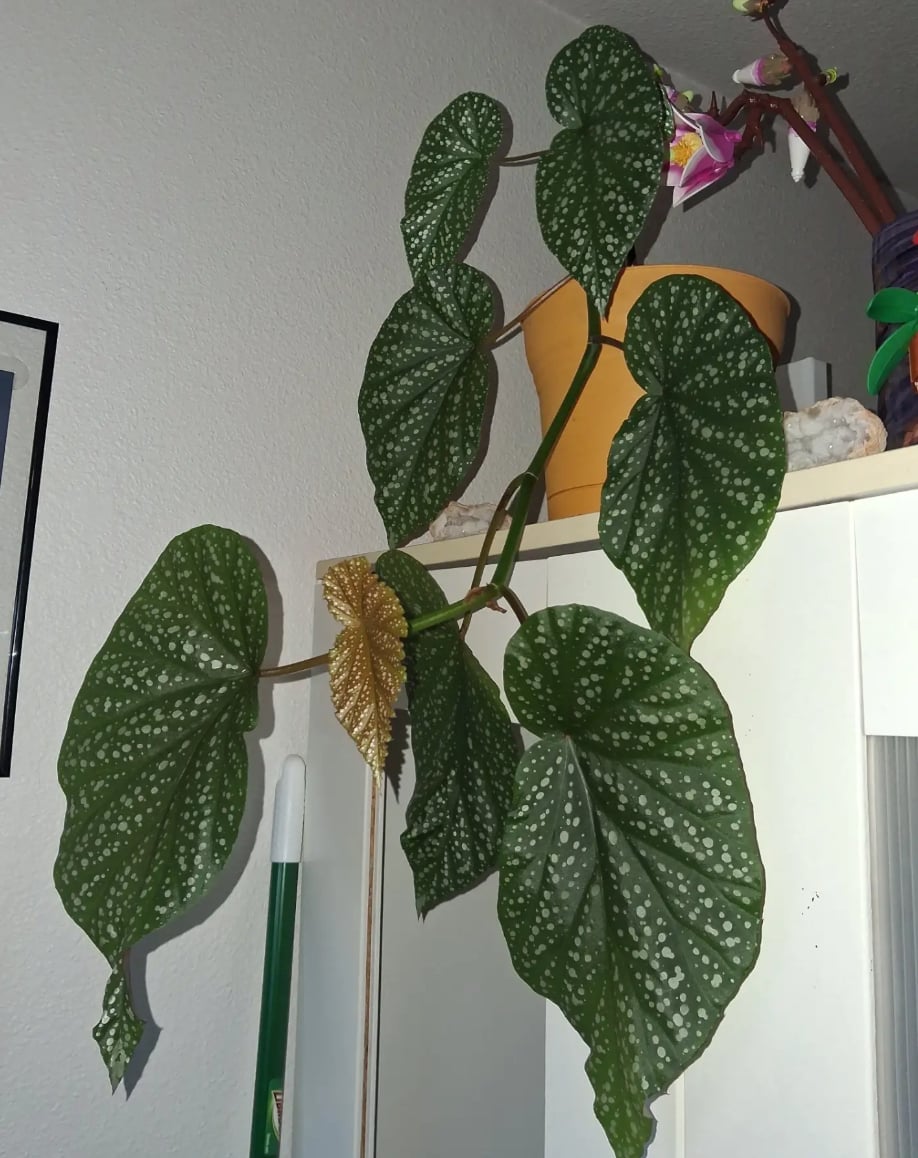
angel wing begonia
Is it normal for my angel wing begonia canes to grow and lean downward?
Yes, that arching, downward growth is normal for angel wing begonias—they are naturally cane-like and tend to lean as they get tall. Give them a stake or prune the stems to keep the plant bushy and supported.