
Asked on Facebook · 2 November 2026
How can I keep my plant’s leaves healthy when insects are damaging them?
The leaf edges are being chewed and distorted by insects, likely sap‑sucking pests plus feeders that ants are protecting. Start by removing badly damaged leaves, washing the plant with water, and then using a gentle insect control like diluted neem oil or soap spray.
The question
“What should I use to keep the leaves healthy, guys?”
What's likely going on
In the photo the older leaves look glossy and healthy, but the newer leaves are:
- Chewed around the edges
- Curled and a bit blistered
- Covered with small insects and ants
What can be seen for sure is physical insect damage and ants running over the leaves. Ants are often attracted to sap‑sucking insects (like aphids, scale or leafhoppers) because they feed on the sweet liquid those pests produce. The chewing along the edges may be from caterpillars or beetles coming at night.
So the main problem isn’t a nutrient or fertilizer issue – it’s insects attacking the tender new growth.
What to do
Trim badly damaged leaves
Use clean scissors to remove the worst‑affected leaves and any shoots heavily covered in insects. This reduces the pest population right away.Wash the plant
Spray the leaves (top and underside) with a strong but gentle stream of plain water to knock off insects. Do this in the morning so the plant dries during the day.Use a mild insect spray
Mix 1–2 ml of neem oil + a few drops of mild liquid soap in 1 litre of water. Spray all leaves, especially the undersides and growing tips, every 5–7 days for 3–4 rounds. Avoid spraying in hot midday sun to prevent leaf burn.Control ants
If ants keep coming back, disturb their trails and, if needed, place ant baits on the ground away from the plant. Fewer ants makes it harder for sap‑sucking pests to spread.Clean around the base
Remove weeds and debris around the plant so pests have fewer hiding places and the soil can dry slightly between waterings.
How to prevent it
- Check the new leaves weekly for tiny insects, sticky residue, or fresh chew marks.
- Keep the area around the plant weed‑free and lightly mulched.
- Use a preventive neem spray once or twice a month during the main growing season.
- Water regularly but don’t keep the soil constantly soggy; a strong, not‑stressed plant copes better with pests.
When to worry
- If new leaves keep emerging curled and stunted even after treatment.
- If you see webbing, heavy sticky honeydew, or black sooty mold covering many leaves.
- If more than half the canopy is damaged or the plant stops growing.
In those cases, take a close, clear photo of the insects themselves (front and back of a leaf) and consider asking a local nursery or extension service for a specific pest identification and stronger treatment options.
Answered by the GrowPls assistant. Every plant and room is different; if things don't improve, a clear close-up photo of the affected part is the fastest way to a better answer.
Related questions
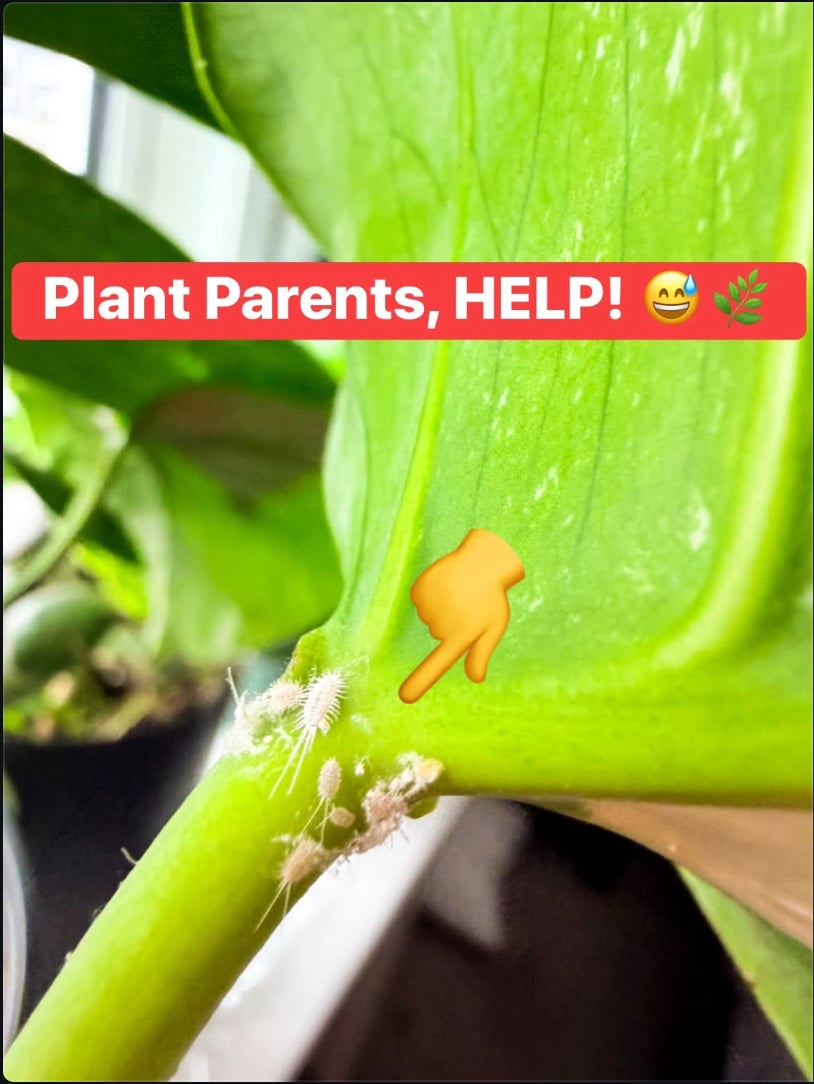
Are these white insects on my plant mealybugs and how do I get rid of them?
Those fluffy white insects in the leaf joint are mealybugs. Isolate the plant, wipe them off with cotton dipped in diluted rubbing alcohol, and repeat weekly, adding insecticidal soap or neem oil if they keep coming back.
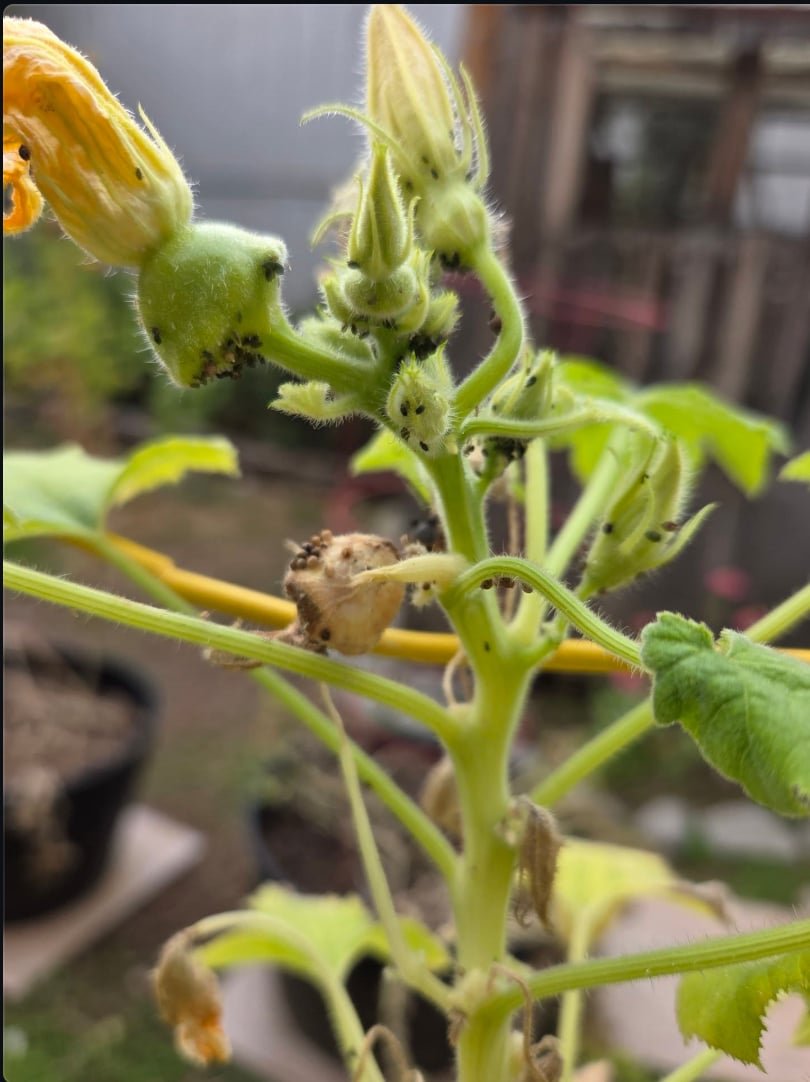
squash
What are the small black bugs on my squash flowers and stems?
Those tiny dark insects clustered on the buds and young stems are aphids. Rinse them off with a strong spray of water, then treat with insecticidal soap or neem oil if they keep coming back.
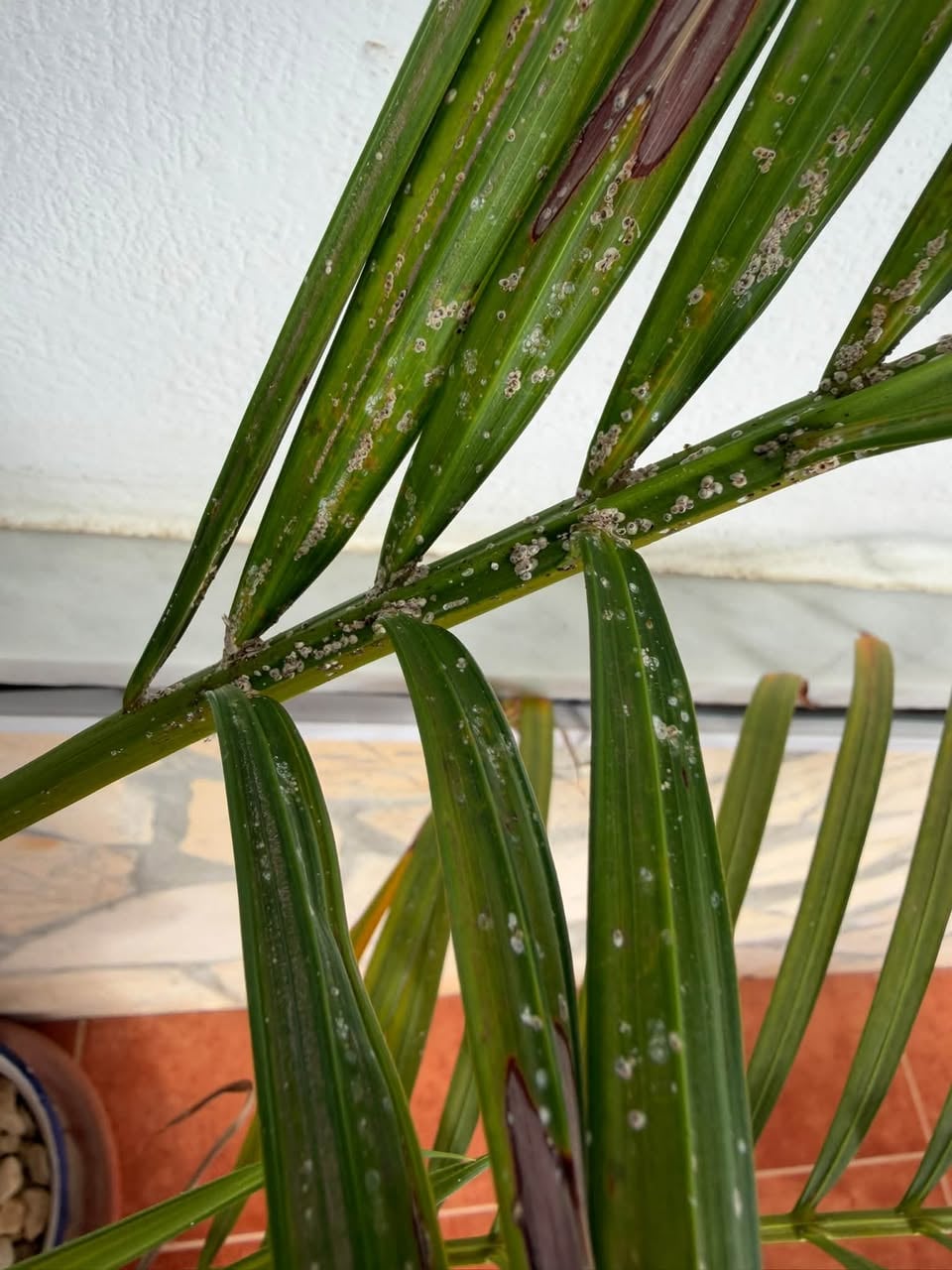
palm (likely an areca or similar)
What are the white bumps on my palm leaves and how do I treat them?
The plant is heavily infested with scale insects, which are sucking sap and weakening it. Start by physically wiping/scraping them off and then use repeated treatments with soapy water or horticultural oil until no new bumps appear.
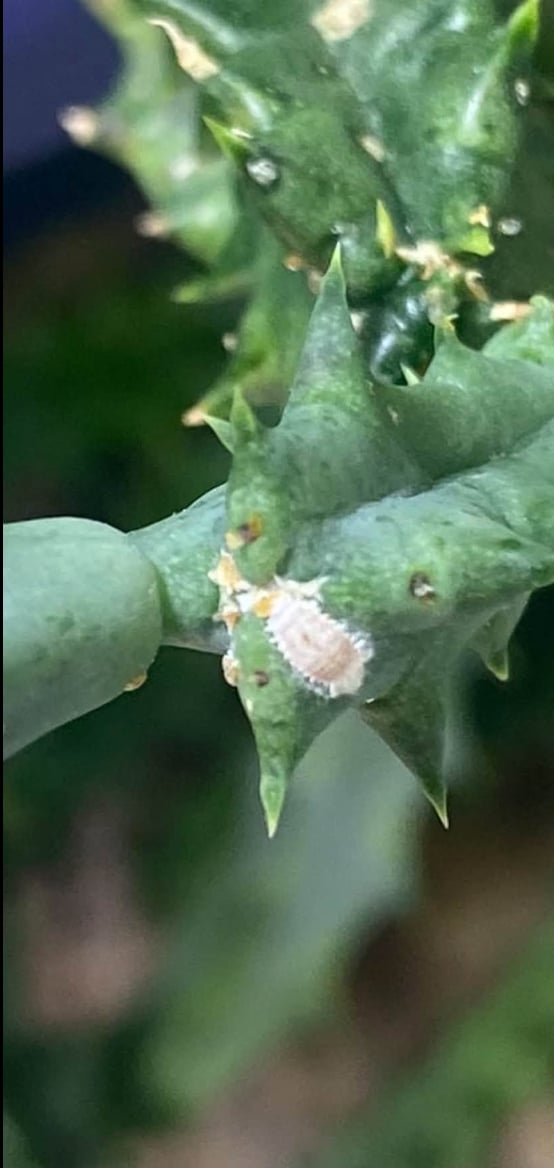
mealybugs
What are the white bugs on my indoor succulent and will soap kill them?
Those white, fuzzy ovals are mealybugs (a type of sap‑sucking insect). Isolate the plant, wipe them off with cotton dipped in rubbing alcohol, then follow up with a gentle soapy or insecticidal soap spray repeated weekly until they’re gone.