
tropical canna or banana-type plant · Asked on Instagram · 5 November 2026
How can I overwinter the tropical “palm” in my big patio pots?
That center “palm” can be saved, but it’s a tropical (not frost‑hardy), so you’ll need to lift it from the mixed pot before frost and keep it inside in bright light with much less water. The flowering trailers around it are usually treated as annuals and are hard to carry over.
The question
“Help a girl out! 🌸🌷🌻 Can I save the palm that’s in the middle of the big pots?? Tell me how to bring it in for the winter & keep it alive! I’m going to be sad when the first frost kills them! They’ve been so pretty all summer long.”
What's likely going on
From the photos, the tall plant in the middle of the big pots looks more like a tropical canna or banana‑type plant than a true palm. Those are strictly frost‑tender: one hard frost outdoors will kill the top growth, and in a pot they can die right down to the roots.
The flowering plants spilling over the edges (petunias, portulaca, etc.) are usually grown as annuals. They normally don’t overwinter well indoors and are cheaper/easier to replant next year.
So the realistic goal is: save the tall tropical center plant, accept that the surrounding flowers are seasonal.
What to do
Choose what to keep
Plan to keep only the tall center plant. Let the petunias/other trailers finish the season.Lift and repot before frost
A week or two before your expected first frost, gently dig out the center plant from the big pot. Keep as much root ball as you reasonably can and move it into its own pot with fresh, well‑draining potting mix.Clean and inspect
Rinse the leaves with water and check for insects (especially on leaf undersides). Remove any damaged or yellowing leaves.Move it gradually indoors
First move the new pot to a bright, sheltered porch for a few days, then indoors near the sunniest window you have. This helps reduce shock.Water much less in winter
Indoors, let the top few centimeters of soil dry before watering again. No fertilizer until days are longer in spring.Optional: cool rest (for cannas)
If it’s a canna, you can also let frost kill the top, then store the root (rhizome) dry in a cool, frost‑free place and replant in spring.
How to prevent it
- Know your average first‑frost date and plan to bring or lift tender plants 1–2 weeks before.
- Grow the center tropical in its own nursery pot set inside the decorative planter, so it’s easy to pull out in fall.
- Use fresh potting mix each spring for best growth.
When to worry
- Leaves collapsing, turning mushy, or the stem going soft after a cold night usually means frost damage. Move it inside immediately and trim off dead tissue.
- If the base of the plant becomes soft and foul‑smelling, the roots may have rotted; at that point it’s unlikely to recover.
Answered by the GrowPls assistant. Every plant and room is different; if things don't improve, a clear close-up photo of the affected part is the fastest way to a better answer.
Related questions
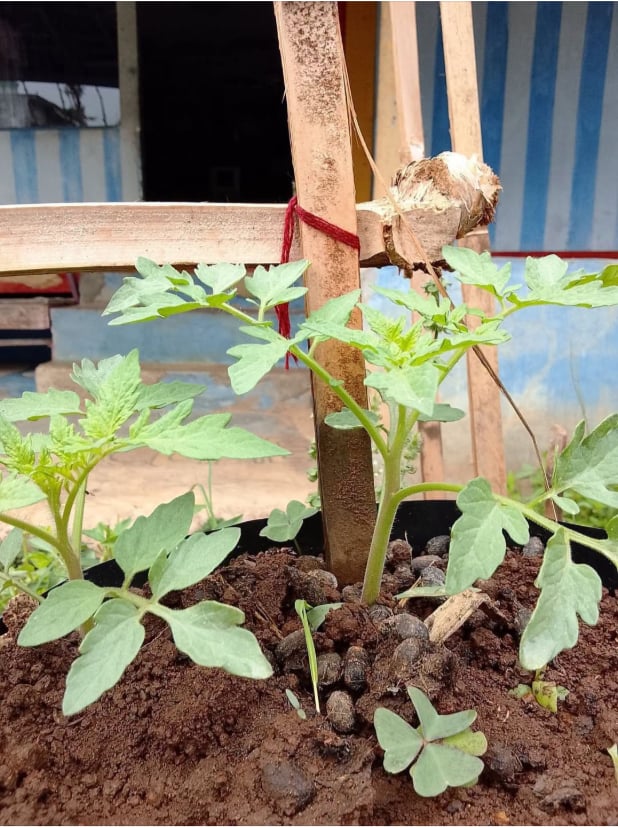
tomato
What plant is this seedling I planted?
The seedlings in the photo are tomato plants. Give them strong sun, a bigger pot or bed, and support as they grow taller.

fern (likely Boston fern)
How do I overwinter hanging ferns in a bright sunroom?
That sunroom spot should work well if the ferns get bright but not harsh direct sun and the air isn’t too hot or dry. Indoors, water whenever the top of the soil just starts to feel dry, which is often about once a week but depends on your room’s temperature and humidity.
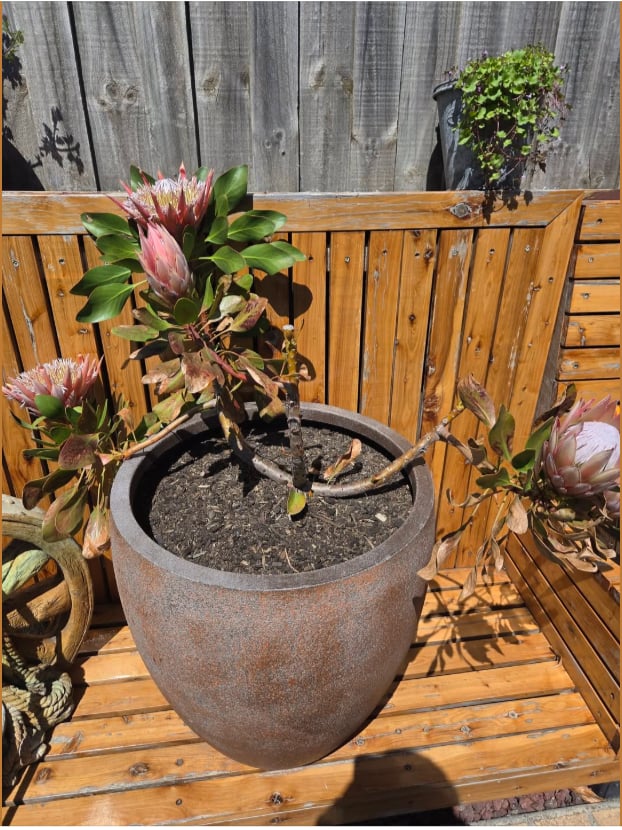
protea
How can I save my potted protea that is browning and sparse?
The protea in the photo is stressed, likely from a mix of poor drainage/over‑watering and an unsuitable potting mix. Trim back the dead stems, improve drainage, and refresh with a very free‑draining, low‑fertility mix, then water deeply but only when the top of the mix has dried out.
How often should I fertilize plants grown in pots, and what should I use?
Potted plants usually need light, regular feeding because nutrients wash out faster than in the ground. Start with a balanced, water‑soluble or slow‑release fertilizer at half strength every 2–4 weeks in the growing season, and always follow the label.