
tropical pitcher plant · Asked on Facebook · 2 November 2026
What is this hanging plant with red pitchers?
This is a tropical pitcher plant (Nepenthes), a carnivorous vine that catches insects in its hanging pitchers. Keep it in bright filtered light, high humidity, and evenly moist soil so it can keep making those pitchers.
The question
“Does anyone know what plant this is?”
What's likely going on
The plant in the photo is a tropical pitcher plant, genus Nepenthes. These are carnivorous plants: the “jugs” or “pitchers” are modified leaves that fill with liquid and trap insects for extra nutrients.
This one looks like a common hybrid (often sold as Nepenthes x ventrata or similar) grown in a hanging pot. The exact hybrid is hard to say from a single angle, but the care is similar for most lowland/intermediate Nepenthes.
What to do
Light
Give bright, indirect light – for example, near a sunny window with sheer curtains, or outdoors in dappled shade. Direct hot midday sun can burn the leaves.Watering
Keep the potting mix consistently moist but not waterlogged. Water when the top feels just barely dry. If possible, use rainwater, RO, or filtered water; tap water that’s very hard can slowly damage carnivorous plants.Humidity and temperature
Nepenthes love humidity above ~50–60%. Grouping plants, using a humidity tray, or keeping it in a bright bathroom can help. Most common hybrids are happy in warm household temperatures (roughly 18–30°C).Soil and feeding
They need a very airy, poor-nutrient mix such as sphagnum moss with perlite or bark. Avoid regular potting soil or fertilizer, which can burn the roots. The plant can catch enough insects on its own; if not, an occasional small insect dropped into a few pitchers is enough.
How to prevent it
To keep it thriving long‑term:
- Avoid chemical fertilizers and heavy, compact soil.
- Don’t let it dry out completely.
- Protect from strong mid‑day sun and from cold drafts below about 10–12°C.
When to worry
- All pitchers turning brown quickly: usually low humidity, too little light, or the plant has been allowed to dry out. Improve conditions and trim off dead pitchers.
- Leaves yellowing from the base upward: check for overwatering, poor drainage, or mineral buildup from hard tap water.
- No new pitchers forming for months: likely not enough light or humidity.
With the right moisture, light, and humidity, a Nepenthes like this can keep producing new colorful pitchers for years.
Answered by the GrowPls assistant. Every plant and room is different; if things don't improve, a clear close-up photo of the affected part is the fastest way to a better answer.
Related questions
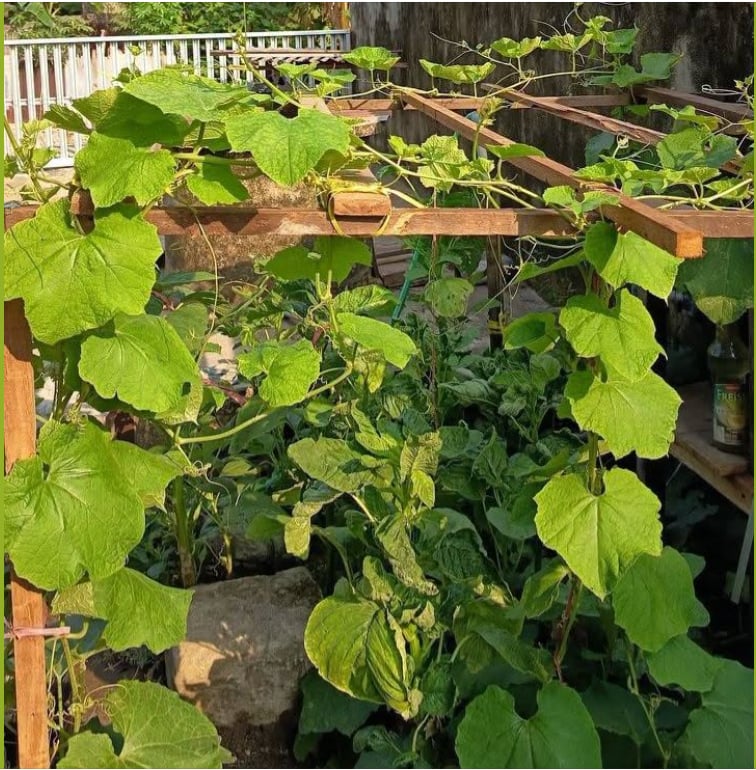
cucurbit vine (gourd/squash family)
What is this cucurbit vine growing wild on my trellis?
This looks like a cucurbit vine – something in the gourd/squash family, such as pumpkin, bottle gourd, or another edible squash – probably a volunteer from kitchen scraps or old compost. Let it flower and fruit to know exactly which one.
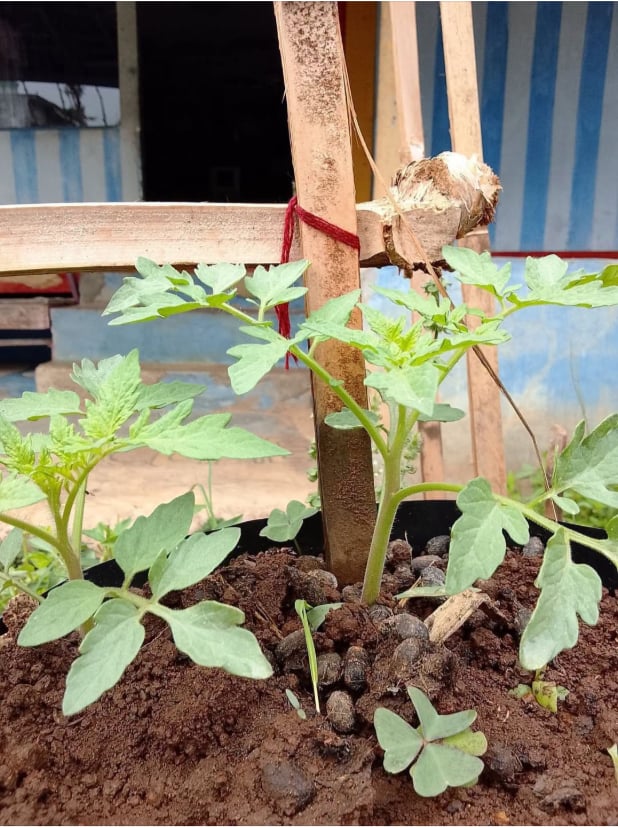
tomato
What plant is this seedling I planted?
The seedlings in the photo are tomato plants. Give them strong sun, a bigger pot or bed, and support as they grow taller.
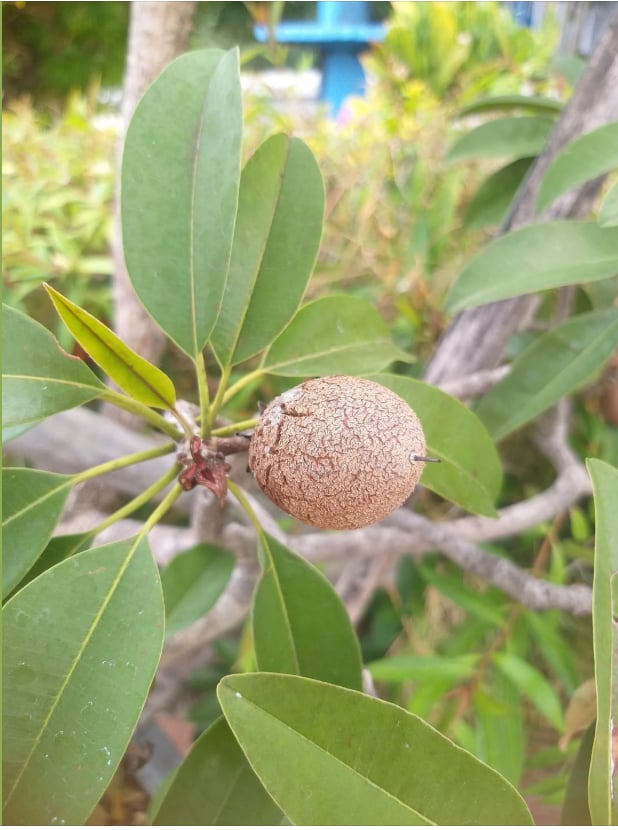
sapodilla (chikoo)
What is this tree with brown round fruits – is the fruit edible?
This looks very much like a sapodilla (chikoo) tree, whose ripe fruit is edible and sweet, but never eat anything based only on an online ID. Have a local plant expert or neighbor familiar with the tree confirm it in person before tasting.
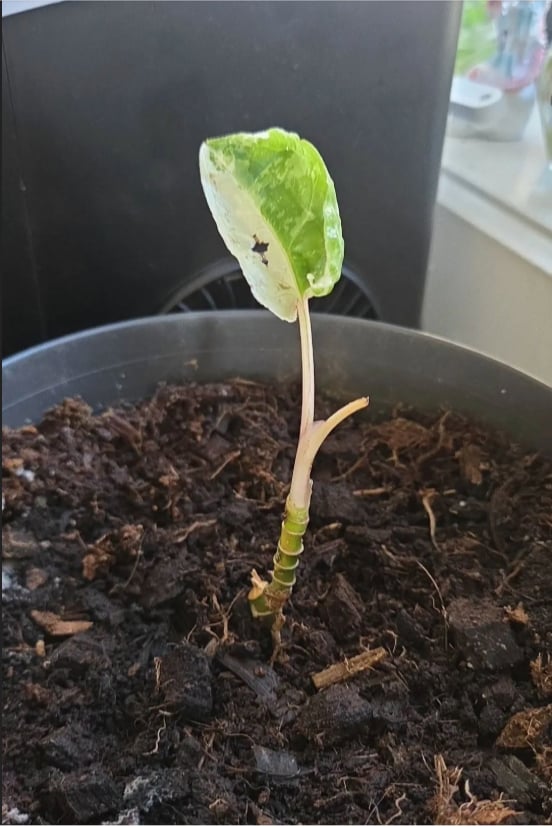
How can I identify this small cutting with only one damaged leaf?
From the photo, the plant is too small and damaged to confidently identify; it looks like a young aroid-type houseplant grown from a stem cutting. Let it grow a few new leaves and nodes, then compare leaf shape and growth habit for a more reliable ID.