
papaya · Asked on Facebook · 2 November 2026
What is this volunteer plant with deeply lobed leaves in my garden?
This looks like a young papaya (Carica papaya) that has sprouted from a dropped seed. If you have space and good sun, you can let it grow into a fruiting papaya tree, otherwise remove or transplant it while it’s still small.
The question
“I found this plant growing in my garden. Does anyone know what it is?”
What's likely going on
From the photo, the plant has:
- Soft green stems
- Deeply lobed, hand‑shaped leaves
- Leaves arising on long stalks (petioles) from a single main stem
These features strongly match a young papaya (Carica papaya) seedling. Papayas very often pop up where kitchen waste or seeds from eaten fruit were thrown into the soil or compost.
Because the plant is still young, the trunk is not thick or woody yet, and there are no visible flowers or fruits. A clearer close‑up of a single leaf and the stem where the leaves join would confirm the ID, but everything visible fits papaya better than most look‑alike weeds.
What to do
Decide if you want a papaya tree there
Papayas can grow into small trees a few meters tall. If this spot is too close to walls, other plants, or paths, plan to move or remove it.If keeping it in place
- Make sure it gets at least 5–6 hours of direct sun daily.
- Loosen the soil gently around it and add some compost to help it establish.
- Water when the top soil feels dry, but avoid waterlogging.
If you want to transplant it
- Move it while it’s still small, on a cool evening.
- Dig a generous root ball and replant at the same depth in a sunny, well‑drained spot.
- Water thoroughly after transplanting and keep the soil just moist for a week or two.
If you don’t want it at all
- Simply pull it out by the roots while the soil is moist, or cut it at the base; young papaya stems are soft and easy to remove.
How to prevent it
- Avoid throwing papaya seeds into garden beds; compost them deeply or discard them.
- If using kitchen waste as fertilizer, bury it well so seeds are less likely to sprout.
When to worry
- If you notice rapid wilting, black lesions on the stem, or heavy insect damage, remove the plant so any disease doesn’t spread to other crops.
- Otherwise, volunteer papayas are usually harmless and can even reward you with fruit in 8–12 months under warm conditions.
Answered by the GrowPls assistant. Every plant and room is different; if things don't improve, a clear close-up photo of the affected part is the fastest way to a better answer.
Related questions
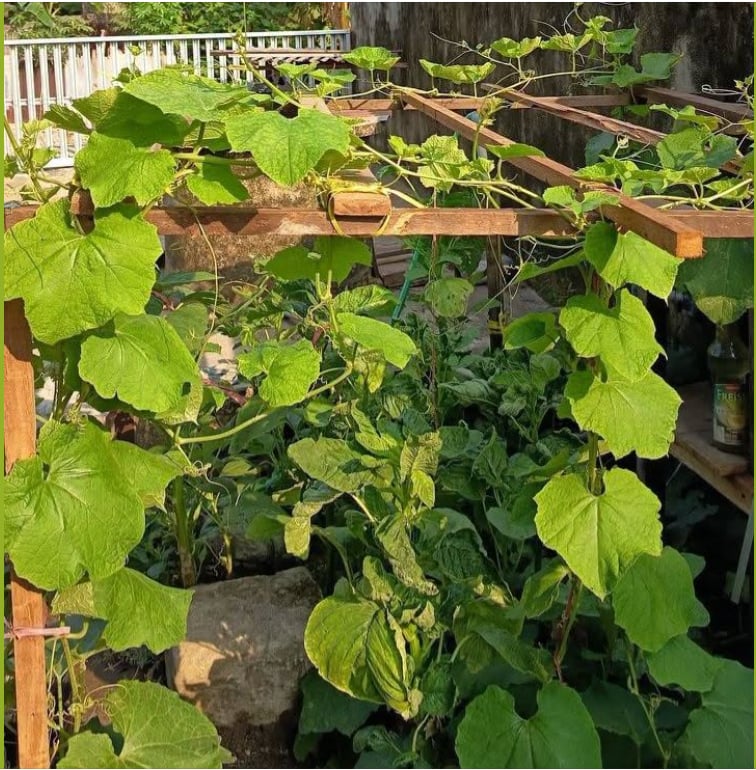
cucurbit vine (gourd/squash family)
What is this cucurbit vine growing wild on my trellis?
This looks like a cucurbit vine – something in the gourd/squash family, such as pumpkin, bottle gourd, or another edible squash – probably a volunteer from kitchen scraps or old compost. Let it flower and fruit to know exactly which one.
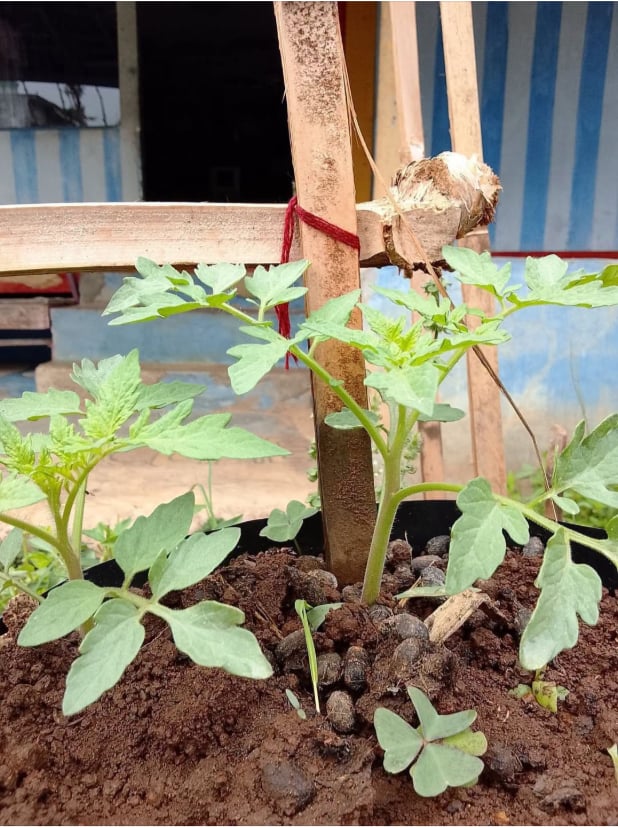
tomato
What plant is this seedling I planted?
The seedlings in the photo are tomato plants. Give them strong sun, a bigger pot or bed, and support as they grow taller.
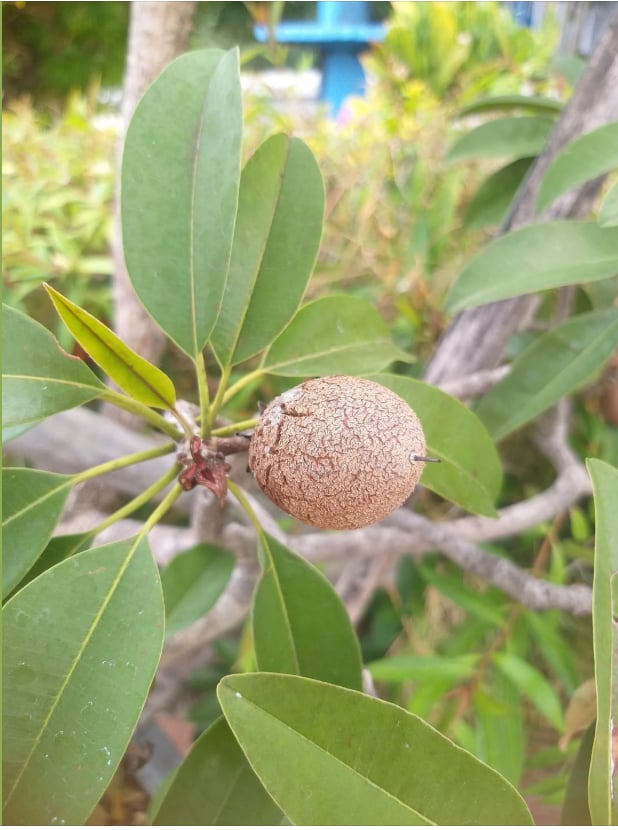
sapodilla (chikoo)
What is this tree with brown round fruits – is the fruit edible?
This looks very much like a sapodilla (chikoo) tree, whose ripe fruit is edible and sweet, but never eat anything based only on an online ID. Have a local plant expert or neighbor familiar with the tree confirm it in person before tasting.
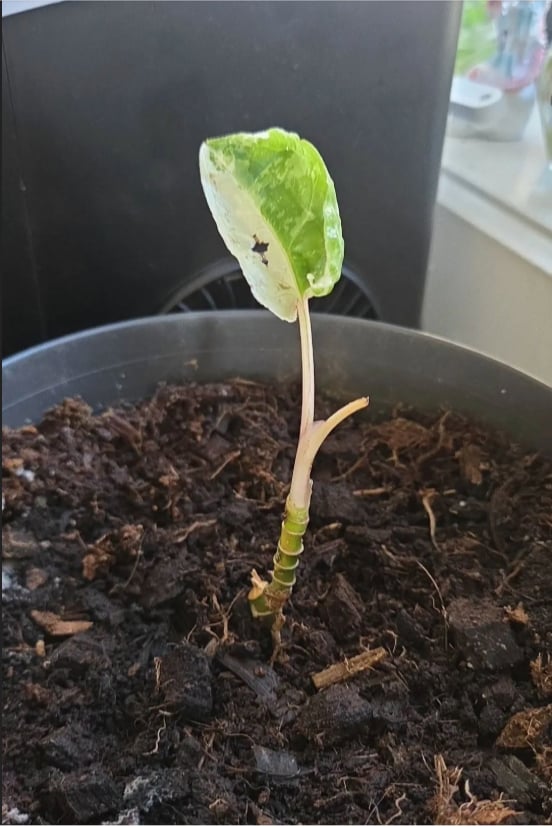
How can I identify this small cutting with only one damaged leaf?
From the photo, the plant is too small and damaged to confidently identify; it looks like a young aroid-type houseplant grown from a stem cutting. Let it grow a few new leaves and nodes, then compare leaf shape and growth habit for a more reliable ID.