
golden pothos · Asked on Instagram · 30 October 2026
Why are my golden pothos cuttings turning yellow in water?
The yellowing leaves and brown, mushy spots suggest the pothos cuttings are rotting in stale water or were not prepared correctly. Trim back to healthy stem, refresh the water often, and keep only the nodes (not the leaves) under water in bright, indirect light.
The question
“Plant Lovers please help guide me what am I doing wrong trying the water method for a golden POTUS plant”
What's likely going on
From the photo, the golden pothos leaves have yellowing with brown, dead patches and the lower parts of the stems look tired and possibly mushy. That usually means:
- Stem rot from stale water – If the water isn’t changed often, it runs low on oxygen and bacteria build up. Soft, brown sections on the stem and blackened roots are a sign.
- Incorrect cuttings – If only a leaf stem (petiole) is in water, or the node (the little bump where a leaf and aerial root come from) is damaged, the cutting can’t root and starts to die back.
- Stress from low light or heat – Cuttings kept in very low light or in strong hot sun will also yellow and drop leaves.
The plant itself can grow happily in water, but the setup has to be clean and only the right part of the stem should be submerged.
What to do
Check the stems closely
Take the cuttings out. With clean scissors, cut off any soft, brown, or black sections until you reach firm, green tissue.Prepare proper cuttings
Each piece should have at least one healthy node. Remove the leaf that would sit under water so only bare stem and node are submerged; leaves stay above water.Clean the container and refresh water
Wash the jar with soap and hot water, rinse well, then refill with fresh, room‑temperature water (filtered or left‑out tap water if yours is very chlorinated).Give bright, indirect light
Place the jar near a bright window but out of harsh midday sun. Avoid dark corners.Change water regularly
Replace all the water every 3–5 days and rinse the jar. Remove any fallen leaves from the water.
How to prevent it
- Always cut just below a node with clean tools.
- Never leave leaves or decaying pieces under water.
- Keep the water clear and oxygenated with frequent changes.
- Once roots are a few centimeters long, you can either keep it in water (still changing it often) or pot it into well‑draining soil.
When to worry
- If all stems turn mushy and hollow, they’re too far gone; discard and start with fresh, healthy cuttings from the mother plant.
- If new roots turn brown and the water smells bad within a day or two, check for very high heat or direct sun on the jar, and move it to a cooler, bright spot and change water more often.
Answered by the GrowPls assistant. Every plant and room is different; if things don't improve, a clear close-up photo of the affected part is the fastest way to a better answer.
Related questions
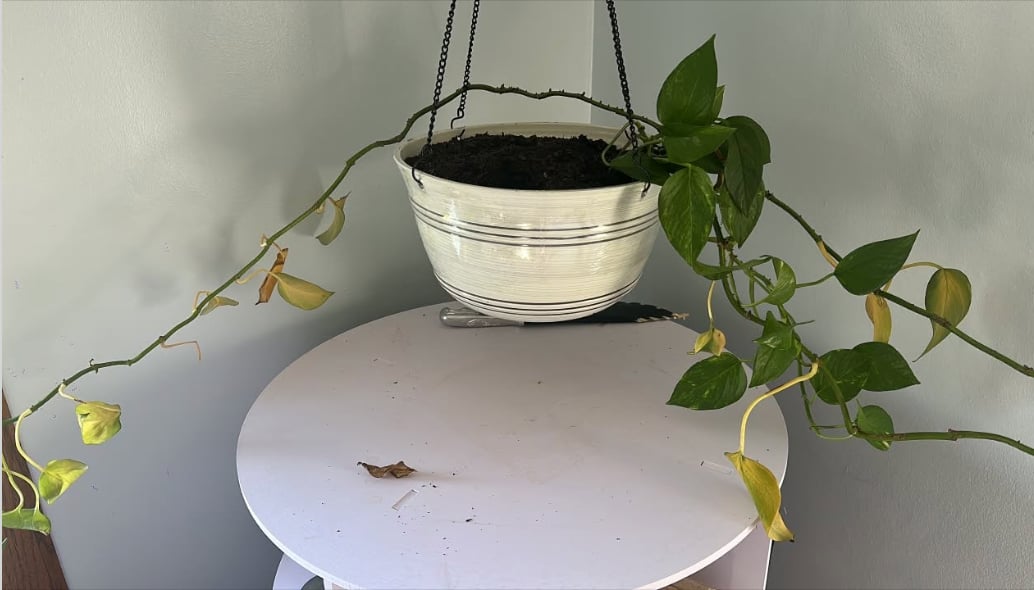
pothos (money plant)
Why are my pothos leaves turning yellow after repotting?
Those yellow leaves are most likely from stress after repotting plus soil that’s staying too wet. Check that the pot drains well, let the soil dry a bit between waterings, and trim off the worst yellow leaves.
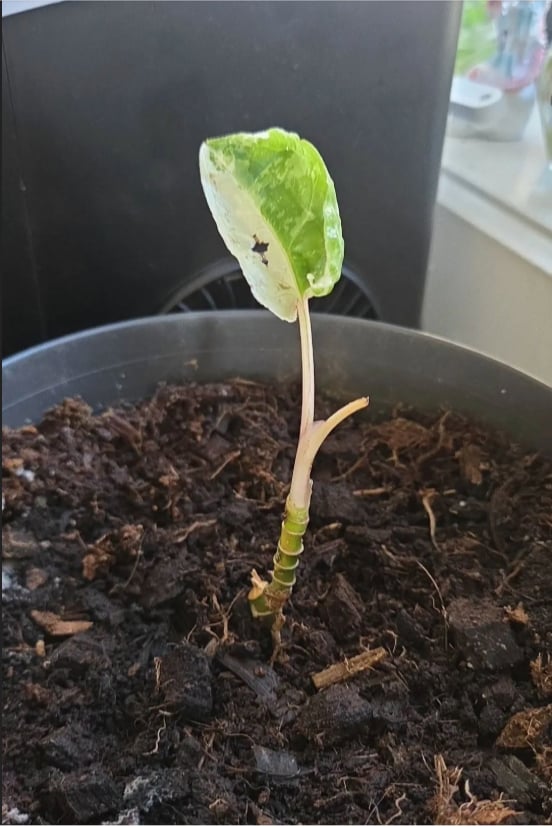
How can I identify this small cutting with only one damaged leaf?
From the photo, the plant is too small and damaged to confidently identify; it looks like a young aroid-type houseplant grown from a stem cutting. Let it grow a few new leaves and nodes, then compare leaf shape and growth habit for a more reliable ID.
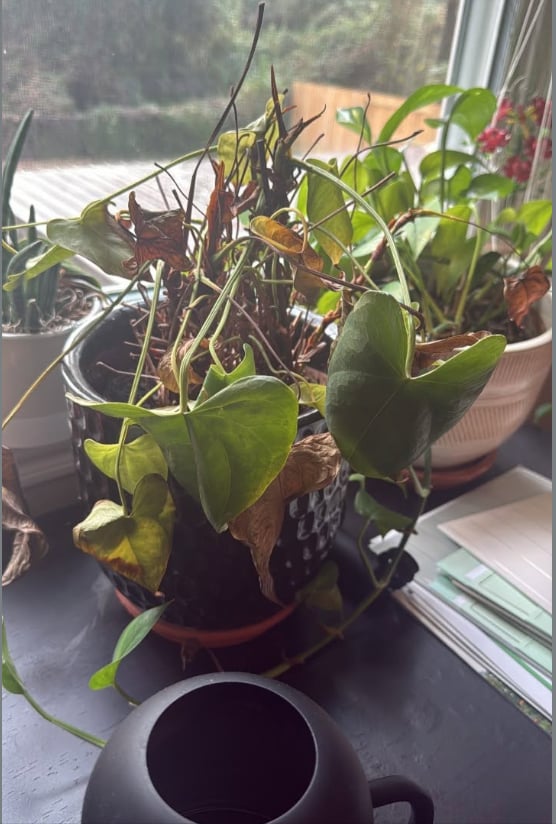
heartleaf philodendron
What is wrong with my heartleaf philodendron with yellow, crispy leaves?
The plant looks badly stressed from a mix of underwatering and an old, crowded root system, so many of the old vines have died back. Start by pruning all dead growth, checking the roots, and repotting into fresh, well‑draining soil, then water regularly but not constantly soggy.
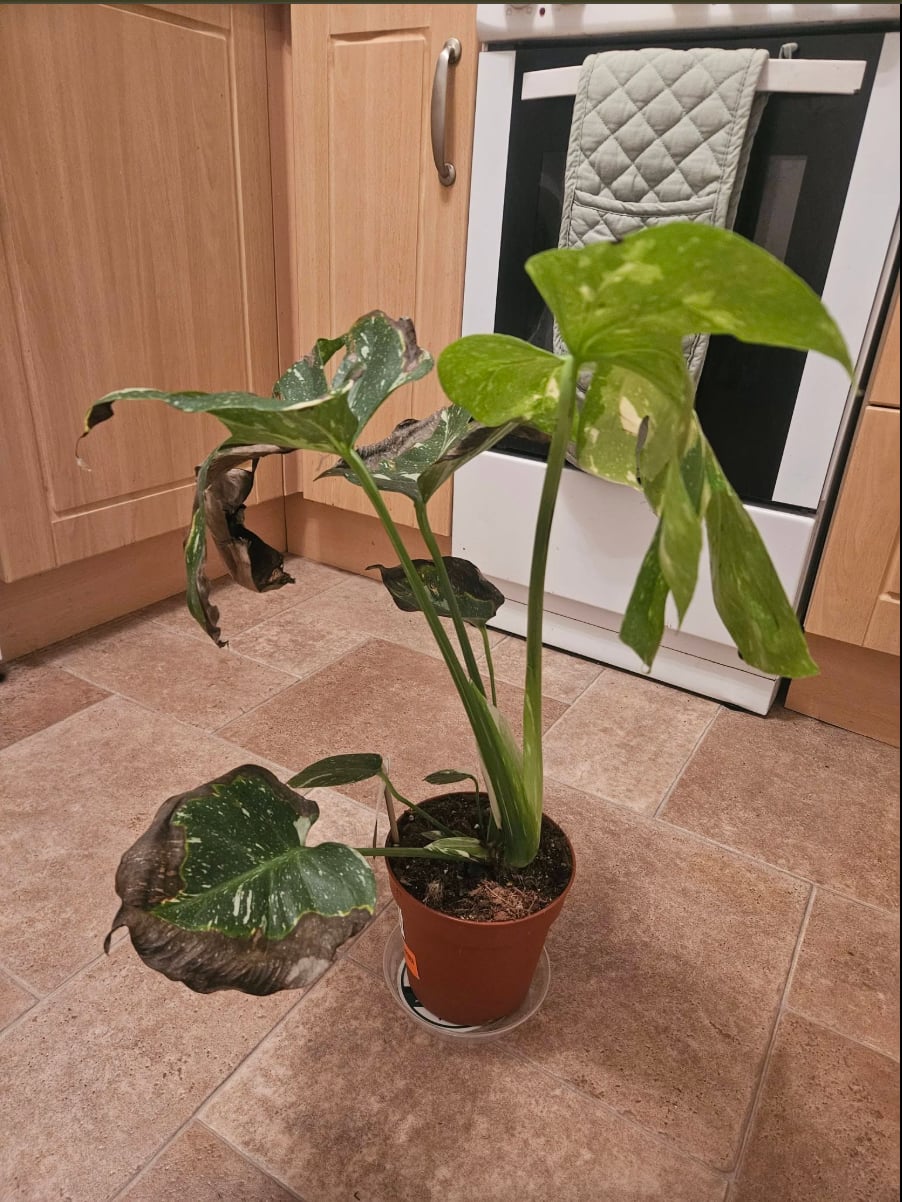
variegated monstera
What should I do with my new variegated Monstera with browned leaves?
Those badly browned leaves are old damage, not a disease. You can safely cut off the worst ones and let the plant settle in its pot for a few weeks, only repotting if it’s very rootbound.