
pothos (money plant) · Asked on Facebook · 6 November 2026
Why are my pothos leaves turning yellow after repotting?
Those yellow leaves are most likely from stress after repotting plus soil that’s staying too wet. Check that the pot drains well, let the soil dry a bit between waterings, and trim off the worst yellow leaves.
The question
“My hanging plant started yellowing after resoiling. Whyyyy”
What's likely going on
From the photo, this looks like a pothos (money plant) with long vines and several leaves turning yellow, especially the older ones further from the pot.
When yellowing starts right after “resoiling” or repotting, the usual reasons are:
- Transplant shock – Roots were disturbed, broken, or kept too bare while re‑potting. The plant can’t pull up water efficiently, so it drops older leaves.
- Soil staying too wet – If the new mix is heavy, or the pot doesn’t drain freely, roots sit in soggy soil and start to suffocate and rot. Pothos likes moisture but also a lot of air around its roots.
- Watering change – After repotting, many people either water much more (because there’s more soil) or much less (afraid of overwatering). Either extreme can trigger yellow leaves.
Less commonly, a sudden change in light (moving the plant away from a bright window) will also cause some yellowing, but the timing with the new soil points more to root/soil issues.
What to do
Check drainage right away
Make sure the hanging pot has drainage holes and that water can freely run out the bottom. If water pools, fix this first or change to a draining pot.Test the soil moisture
Push a finger into the mix 3–4 cm deep. If it feels wet or cold days after watering, the mix is too heavy or you’re watering too often. Let it dry until the top 2–3 cm are dry before watering again.Improve the potting mix if needed
If the soil is dense like garden mud, gently unpot and mix in perlite, chunky coco husk, or coarse sand so it’s light and drains fast. Work gently to avoid breaking more roots.Trim damaged parts
Cut off fully yellow or brown leaves and any crispy, bare stem sections. This tidies the plant and lets it focus on healthy growth.Give steady, bright light
Place it in bright, indirect light (near a window but not hot midday sun). Good light helps it recover faster.
How to prevent it
- Use a loose, well‑draining mix for pothos (regular potting soil plus some perlite or coco chips).
- Always choose pots with drainage holes.
- When repotting, move up only one pot size and keep the root ball as intact as possible.
- Water thoroughly, then wait until the top layer dries before watering again, rather than on a fixed schedule.
When to worry
- If new leaves (near the pot) start yellowing rapidly.
- If stems near the soil turn black or mushy (sign of root rot).
- If the soil smells sour or rotten.
If any of these happen, unpot the plant, trim off black/brown mushy roots, repot into fresh, airy mix, and reduce watering. Otherwise, with small adjustments, a pothos usually bounces back and pushes out fresh green growth along the vines.
Answered by the GrowPls assistant. Every plant and room is different; if things don't improve, a clear close-up photo of the affected part is the fastest way to a better answer.
Related questions
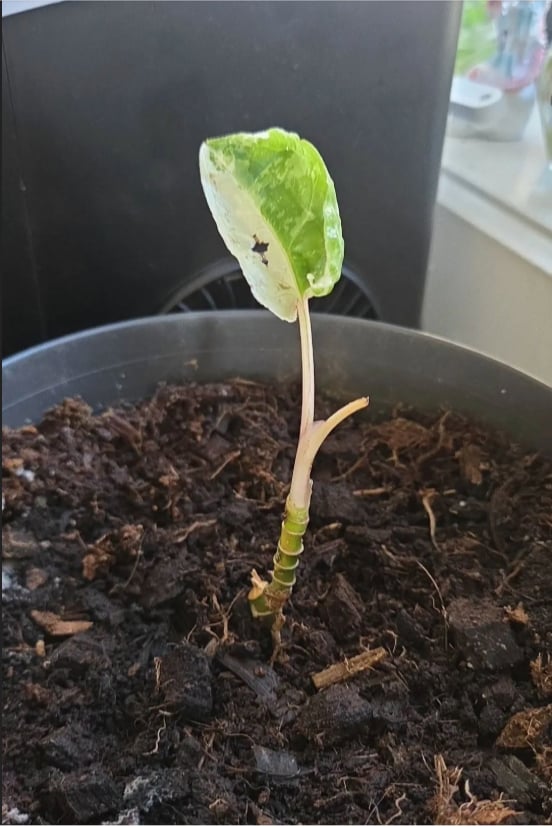
How can I identify this small cutting with only one damaged leaf?
From the photo, the plant is too small and damaged to confidently identify; it looks like a young aroid-type houseplant grown from a stem cutting. Let it grow a few new leaves and nodes, then compare leaf shape and growth habit for a more reliable ID.
How do I know when my plants need watering?
Most plants should be watered when the top layer of soil has dried out, not on a fixed schedule. Check the soil with your finger, lift the pot to feel the weight, and watch the leaves for early signs of thirst like slight drooping or dullness.
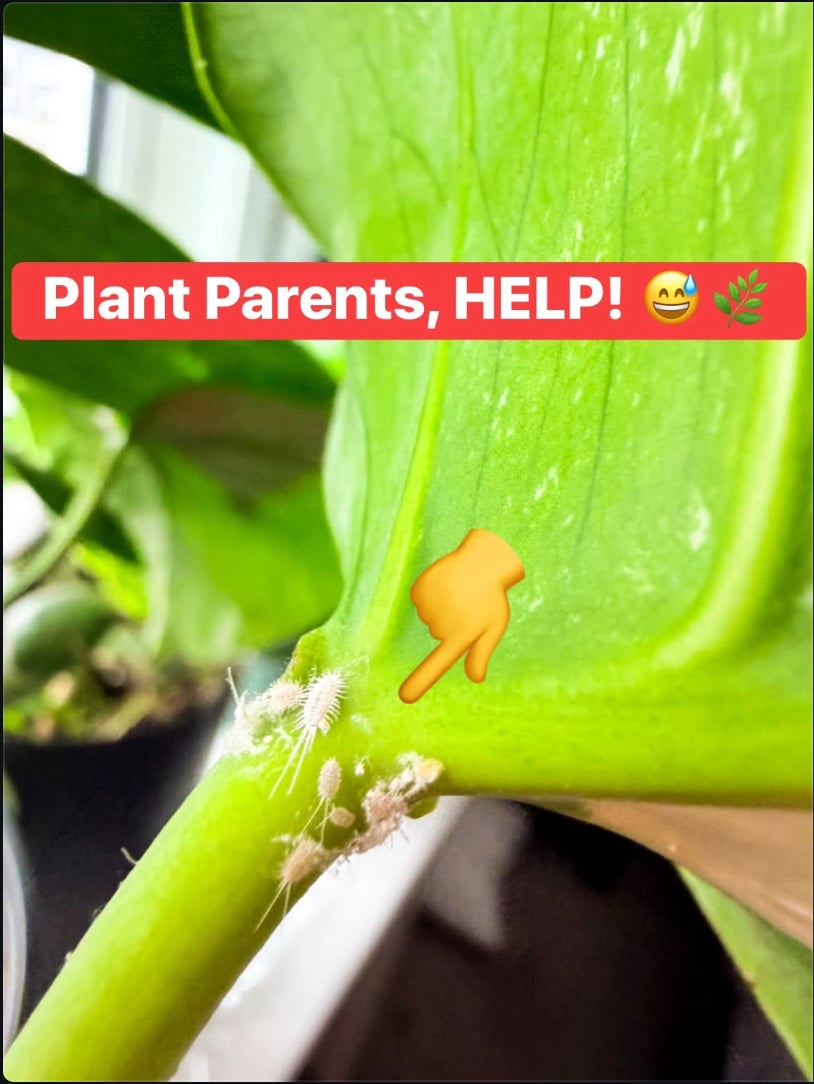
Are these white insects on my plant mealybugs and how do I get rid of them?
Those fluffy white insects in the leaf joint are mealybugs. Isolate the plant, wipe them off with cotton dipped in diluted rubbing alcohol, and repeat weekly, adding insecticidal soap or neem oil if they keep coming back.
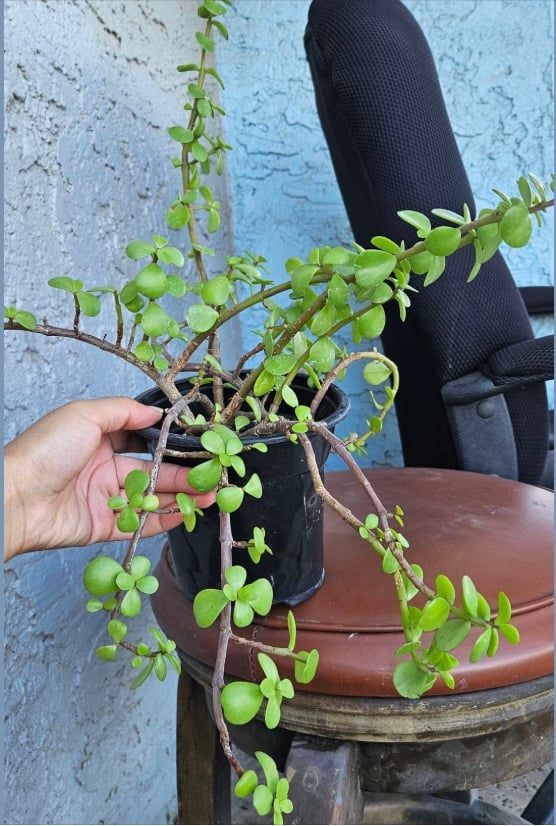
elephant bush
Why is my elephant bush (Portulacaria afra) droopy and losing leaves?
This elephant bush is most likely reacting to a change in light and watering, and it’s probably staying too wet in its current soil. Move it to brighter light, let it dry more between waterings, and consider repotting into a fast‑draining succulent mix.