
heartleaf philodendron · Asked on Facebook · 5 November 2026
What is wrong with my heartleaf philodendron with yellow, crispy leaves?
The plant looks badly stressed from a mix of underwatering and an old, crowded root system, so many of the old vines have died back. Start by pruning all dead growth, checking the roots, and repotting into fresh, well‑draining soil, then water regularly but not constantly soggy.
The question
“Does anyone have an idea of what is wrong with my plant?”
What's likely going on
From the photo, this looks like a heartleaf philodendron (Philodendron hederaceum). The symptoms are:
- Lots of brown, crispy leaves and bare, dead stems in the center
- Yellowing older leaves along long, thin vines
- A few still‑healthy green leaves around the outside
That pattern usually points to chronic stress over time, most often:
- Underwatering / irregular watering. When soil dries out deeply and stays dry, older leaves crisp and drop while only a few newer leaves hang on.
- Tired, compacted or root‑bound soil. In an old, crowded pot, water runs through quickly or only wets the top. Roots can’t take up enough moisture or nutrients, so the center of the plant dies back first.
- Possible cold or heat stress if it sits right against a drafty or very hot window, which can worsen leaf damage, but the main issue still looks like water and root problems.
A close photo of the soil surface and roots (once unpotted) would confirm this.
What to do
- Check the soil and roots. Gently slide the plant out of the pot.
- Healthy roots: mostly light tan/white and firm.
- Dead/rotting roots: brown/black, mushy, or smell bad.
- Trim dead material. Cut off all brown, crispy leaves and any hollow, completely dry stems. This won’t hurt the plant and helps it focus on new growth.
- Repot if crowded or soil is old. Use a pot with a drainage hole and fresh, well‑draining indoor mix (you can mix regular potting soil with some perlite or coco chips). Loosen roots gently and cut away any clearly dead ones.
- Water deeply, then let it drain. After repotting, water until excess runs from the hole, then let the top 2–3 cm of soil dry before watering again.
- Adjust the spot. Bright, indirect light near a window is perfect, but keep it out of harsh midday sun and away from cold drafts.
How to prevent it
- Water on a pattern, not by calendar. Check with a finger: when the top is dry to about the first knuckle, water thoroughly.
- Refresh potting mix every 1–2 years. This keeps it airy so roots can breathe and drink.
- Fertilize lightly in the growing season. A balanced liquid fertilizer at half strength once a month in spring–summer helps, but skip when the plant is very stressed until you see new growth starting.
When to worry
- If most remaining green leaves suddenly turn yellow and soft within days, check again for root rot or severe overwatering.
- If stems near the soil are mushy instead of dry and brittle, cut back to firm tissue and let the plant dry slightly before the next watering.
- If no new leaves appear after 1–2 months of improved care, reassess the roots; you may need to take healthy cuttings and restart the plant in fresh soil or water.
Answered by the GrowPls assistant. Every plant and room is different; if things don't improve, a clear close-up photo of the affected part is the fastest way to a better answer.
Related questions
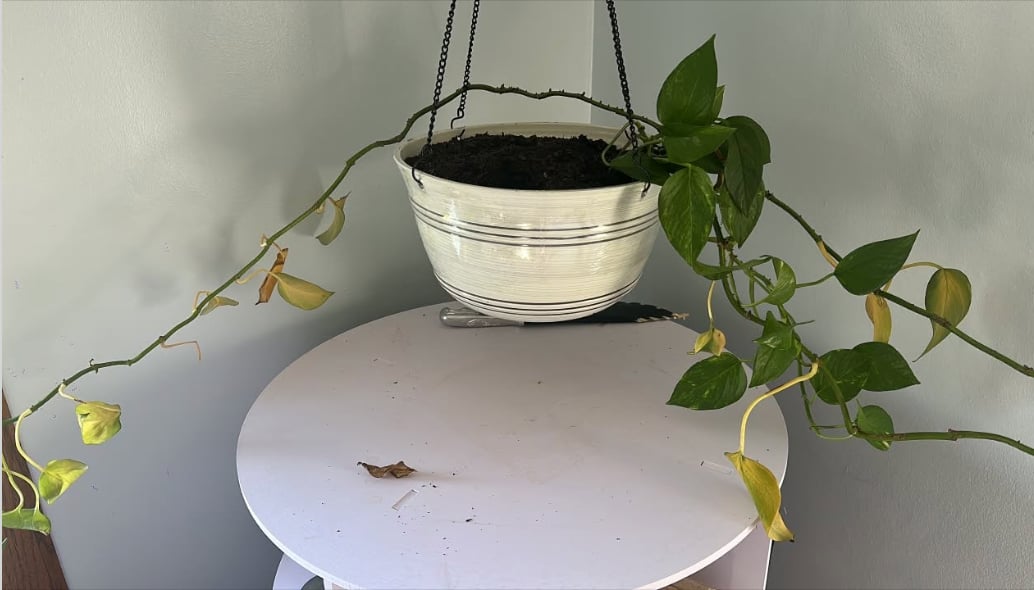
pothos (money plant)
Why are my pothos leaves turning yellow after repotting?
Those yellow leaves are most likely from stress after repotting plus soil that’s staying too wet. Check that the pot drains well, let the soil dry a bit between waterings, and trim off the worst yellow leaves.
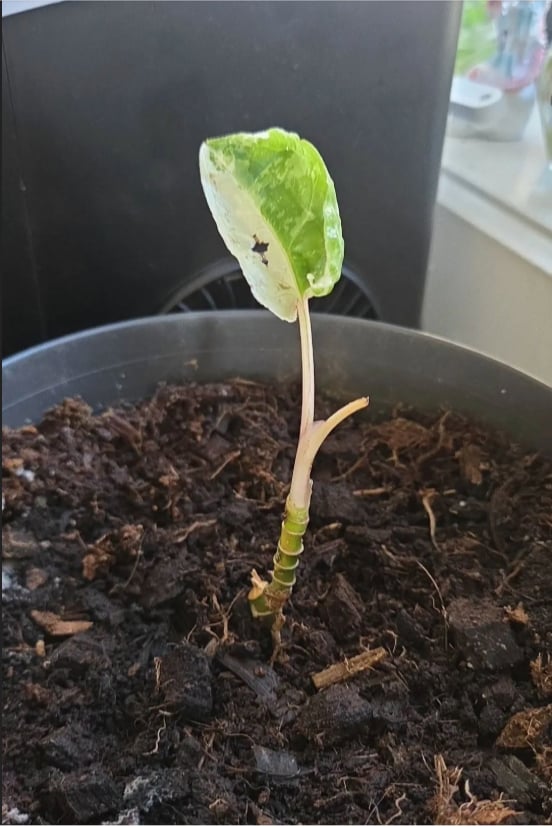
How can I identify this small cutting with only one damaged leaf?
From the photo, the plant is too small and damaged to confidently identify; it looks like a young aroid-type houseplant grown from a stem cutting. Let it grow a few new leaves and nodes, then compare leaf shape and growth habit for a more reliable ID.
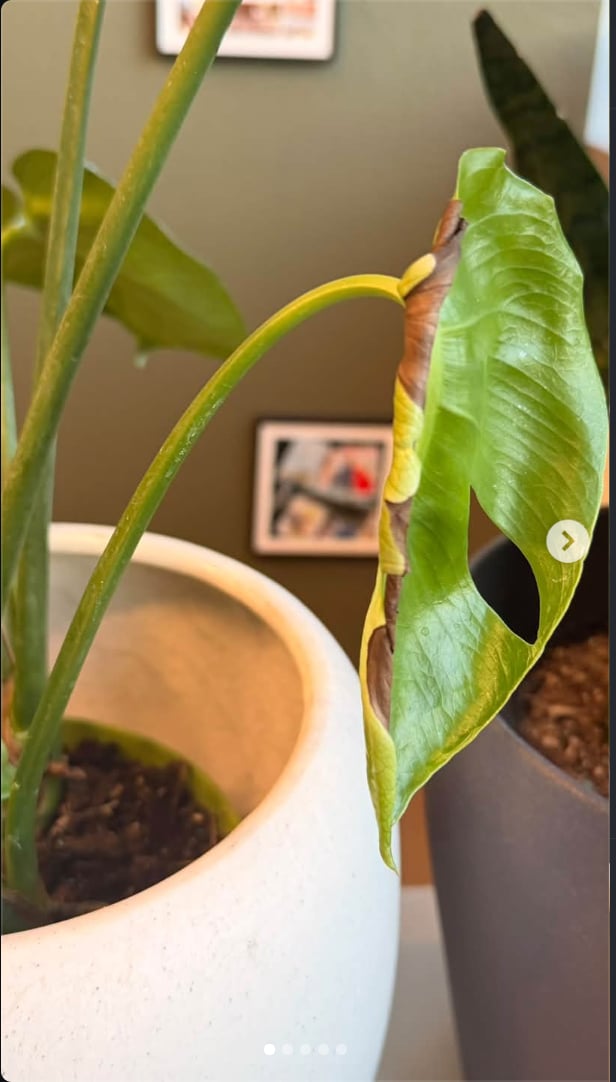
monstera
Why is my Monstera new leaf browning before it fully opens?
That brown edge on the new leaf is usually from stress while the leaf is still tightly rolled – most often low humidity, underwatering, or the leaf getting stuck and damaged. Check watering, light, and humidity, and focus on helping the next leaf grow in better.
How do I know when my plants need watering?
Most plants should be watered when the top layer of soil has dried out, not on a fixed schedule. Check the soil with your finger, lift the pot to feel the weight, and watch the leaves for early signs of thirst like slight drooping or dullness.