
plumeria (frangipani) · Asked on Instagram · 31 October 2026
Why didn’t my potted plumeria bloom and should I prune it?
The plumeria in the photo looks leggy and likely isn’t getting enough strong sun or the right seasonal care to trigger blooms. Give it more direct light, a dry, coolish rest in winter, and then prune lightly to shape and encourage branching once it’s growing strongly.
The question
“I think my plumeria needs pruning, it didn’t bloom this year. Does anyone have any advice?”
What's likely going on
From the photo, the plumeria is tall, with long bare stems and foliage only at the tips. That “leggy” look usually means:
- Not enough strong sun. Plumerias need several hours of direct, intense sun to set flower buds. Bright shade or short morning sun often gives leaves but no blooms.
- No clear rest period. In winter they like to go mostly leafless and dry. If they’re kept watered and a bit warm all year, they may stay alive but skip flowering.
- Nutrient balance. Regular high‑nitrogen fertilizer (the kind for leafy plants or lawns) can push green growth instead of blooms.
Some leaves also show brown, crispy patches, which could be sunburn on older leaves, underwatering between deep waterings, or normal aging – nothing in the photo screams disease.
What to do
- Increase direct sun. Aim for 6+ hours of strong, direct sunlight daily in the growing season. Move the pot gradually over a week so it doesn’t shock.
- Check the pot and soil. If roots are circling tightly or the soil is heavy and stays wet, repot in spring into a fast‑draining mix (cactus/succulent mix with extra perlite or coarse sand).
- Adjust feeding. During active growth, use a low‑nitrogen, higher‑phosphorus fertilizer (often labelled for blooming plants) every 4–6 weeks. Stop feeding when it starts dropping leaves for winter.
- Give it a dry rest. In cooler months, let it drop most or all leaves, keep it in a bright, dry spot, and water just enough to keep the stems from shriveling.
- Prune at the right time. In late winter or very early spring, before new growth starts, you can cut back long, bare stems by up to about one‑third to a branching point. This encourages multiple new tips, which means more potential flower clusters next season.
- Clean cuts and tools. Use sharp, clean pruners and let cuts dry and callus. Large cuttings can be rooted if allowed to dry a few days before potting.
How to prevent it
- Keep it in the sunniest spot available.
- Avoid constant light watering; instead water deeply, then let the top of the soil dry well.
- Feed only in the warm growing season and with a bloom‑supporting formula.
- Maintain a clear yearly cycle: strong growth in warmth, then a drier, cooler rest.
When to worry
- If stems become soft, mushy, or blackened, that suggests rot – reduce watering immediately, cut out rotten parts into firm green tissue, and improve drainage.
- If leaves develop widespread spots or fuzzy growth, check for fungal disease or pests and isolate the plant.
- If the plant stays leafless or fails to push new growth in spring despite warmth and light, gently scratch a stem; if it’s brown and dry inside, that branch is dead and should be pruned out.
Answered by the GrowPls assistant. Every plant and room is different; if things don't improve, a clear close-up photo of the affected part is the fastest way to a better answer.
Related questions
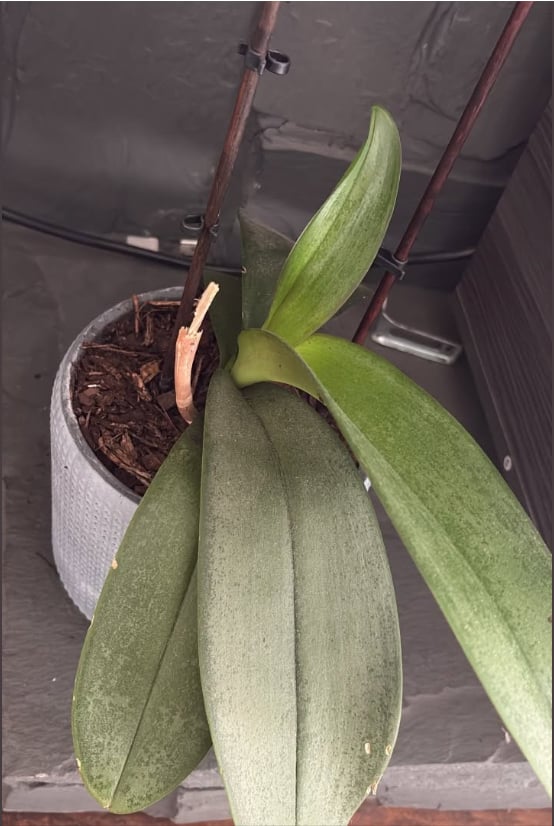
moth orchid (Phalaenopsis)
Why hasn’t my orchid flowered again for a year?
This moth orchid looks healthy enough but likely isn’t getting the right mix of bright light, feeding, and a slight temperature drop that triggers new flower spikes. Improve light, start regular orchid fertilizer, and give it a cooler, brighter spot for a few weeks to encourage blooming.
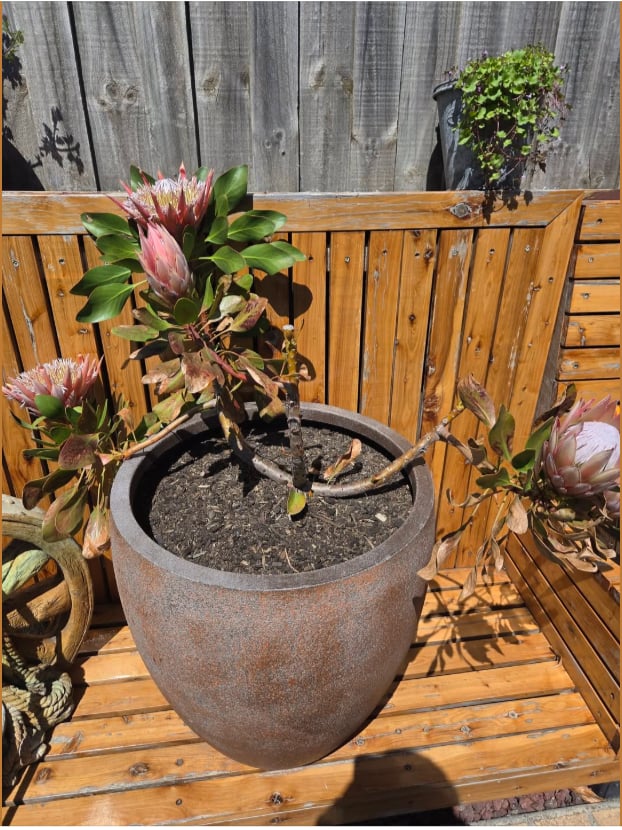
protea
How can I save my potted protea that is browning and sparse?
The protea in the photo is stressed, likely from a mix of poor drainage/over‑watering and an unsuitable potting mix. Trim back the dead stems, improve drainage, and refresh with a very free‑draining, low‑fertility mix, then water deeply but only when the top of the mix has dried out.
How often should I fertilize plants grown in pots, and what should I use?
Potted plants usually need light, regular feeding because nutrients wash out faster than in the ground. Start with a balanced, water‑soluble or slow‑release fertilizer at half strength every 2–4 weeks in the growing season, and always follow the label.
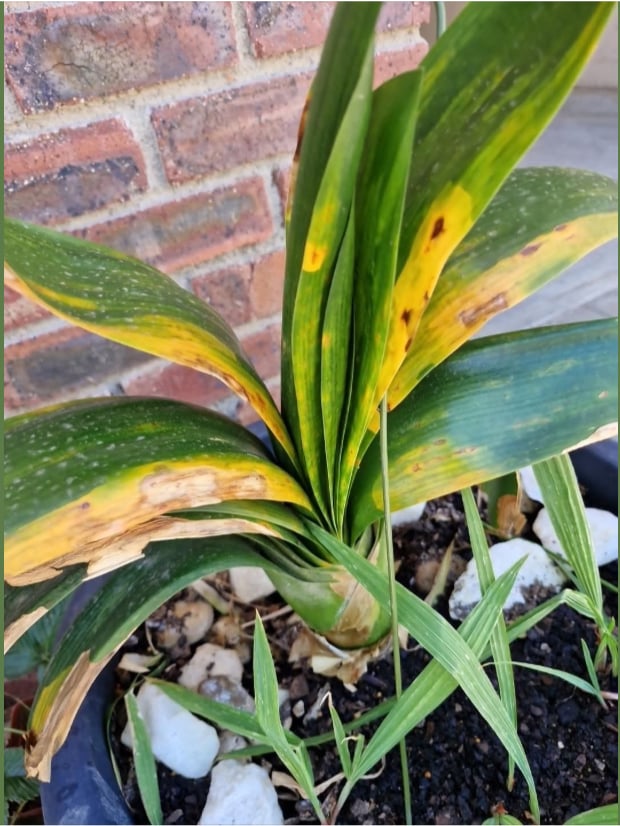
clivia
Why are my clivia leaves turning yellow with brown patches?
Those yellow leaves with crispy brown patches are most likely from stress: too much direct sun and/or watering issues causing leaf burn and weak roots. Move it to bright shade, adjust watering, and remove the worst damaged leaves so new healthy growth can replace them.