
moth orchid (Phalaenopsis) · Asked on Facebook · 6 November 2026
Why hasn’t my orchid flowered again for a year?
This moth orchid looks healthy enough but likely isn’t getting the right mix of bright light, feeding, and a slight temperature drop that triggers new flower spikes. Improve light, start regular orchid fertilizer, and give it a cooler, brighter spot for a few weeks to encourage blooming.
The question
“What should I do to plant as there is no flower since 1 year.”
What's likely going on
The plant in the photo is a moth orchid (Phalaenopsis). It has finished its old flower spike, which was cut off, and is now just growing leaves.
From what’s visible:
- Leaves look mostly healthy but a bit dull and stretched, which often means not enough bright light.
- It’s in bark mix, which is correct, but orchids in bark need regular fertiliser to bloom again.
- Phalaenopsis usually need a small temperature drop between day and night for a few weeks to trigger new flower spikes.
So this is probably not a “sick” plant – it’s a plant that has been kept too comfortable (similar temperature all the time, not bright enough, low feeding), so it only makes leaves, not flowers.
What to do
Check the roots
Gently lift the plant from the pot. Healthy roots are firm and green/silvery. Trim any brown, mushy ones and repot in fresh orchid bark if the mix has broken down.Move it to brighter light
Give it bright, indirect light – for example near an east window or a shaded south window. Avoid harsh midday sun directly on the leaves.Start regular feeding
Use an orchid fertiliser at half strength every 2–4 weeks while the plant is actively growing. Flush with plain water every month to avoid salt build‑up.Create a temperature difference
For 3–6 weeks, aim for nights about 4–6 °C cooler than days (for example 26 °C daytime, 20–22 °C night). A bright windowsill that cools at night often works.Water correctly
Water thoroughly, then let the bark almost dry before watering again. Don’t leave water sitting in the crown (where the leaves meet) to prevent rot.
How to prevent it
- Keep the plant in steady bright, indirect light year‑round.
- Feed lightly but regularly, especially after flowering.
- Repot in fresh bark every 1–2 years so the roots don’t suffocate.
- Make sure there is some day–night temperature swing, especially in the cooler season.
When to worry
- Leaves turn yellow from the base, become very soft, or the crown turns black – this can mean rot.
- Most roots are brown and mushy or dry and hollow – then urgent repotting and root trimming is needed.
- No new leaves or roots appear for many months – then reassess light, watering, and fertiliser.
With the right light and a bit of temperature change, a healthy Phalaenopsis often sends up a new flower spike within a season.
Answered by the GrowPls assistant. Every plant and room is different; if things don't improve, a clear close-up photo of the affected part is the fastest way to a better answer.
Related questions
How do I know when my plants need watering?
Most plants should be watered when the top layer of soil has dried out, not on a fixed schedule. Check the soil with your finger, lift the pot to feel the weight, and watch the leaves for early signs of thirst like slight drooping or dullness.
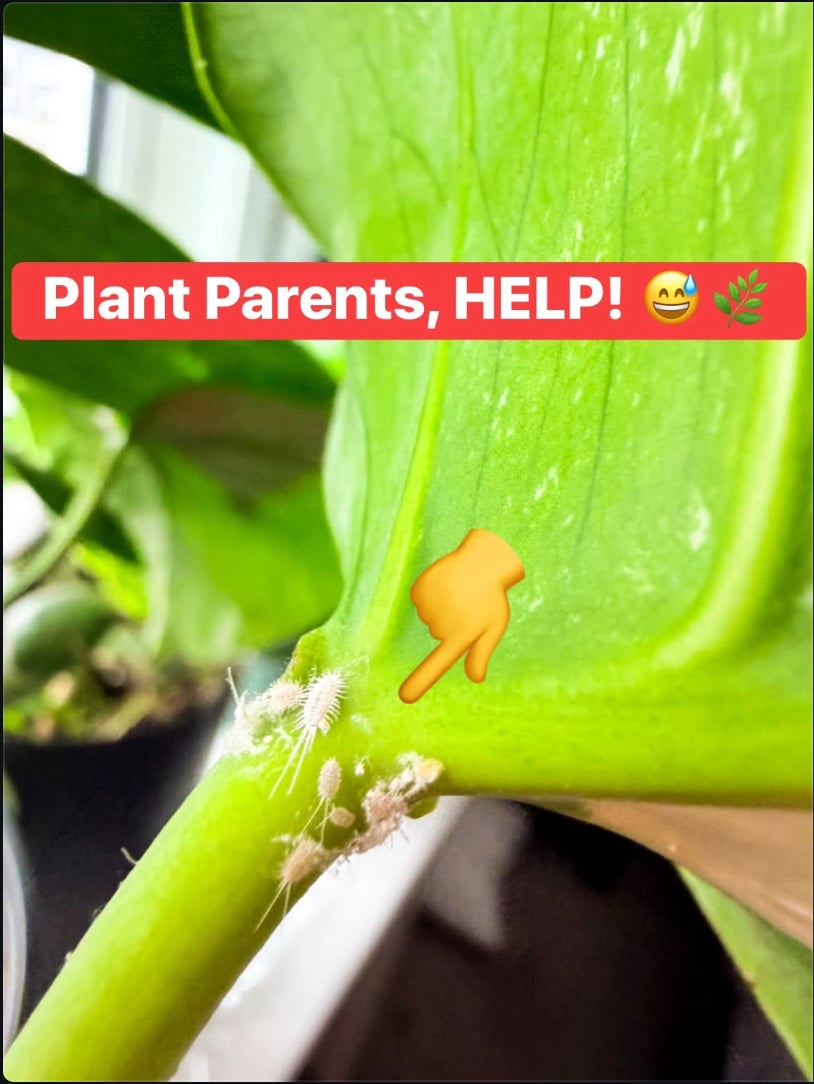
Are these white insects on my plant mealybugs and how do I get rid of them?
Those fluffy white insects in the leaf joint are mealybugs. Isolate the plant, wipe them off with cotton dipped in diluted rubbing alcohol, and repeat weekly, adding insecticidal soap or neem oil if they keep coming back.
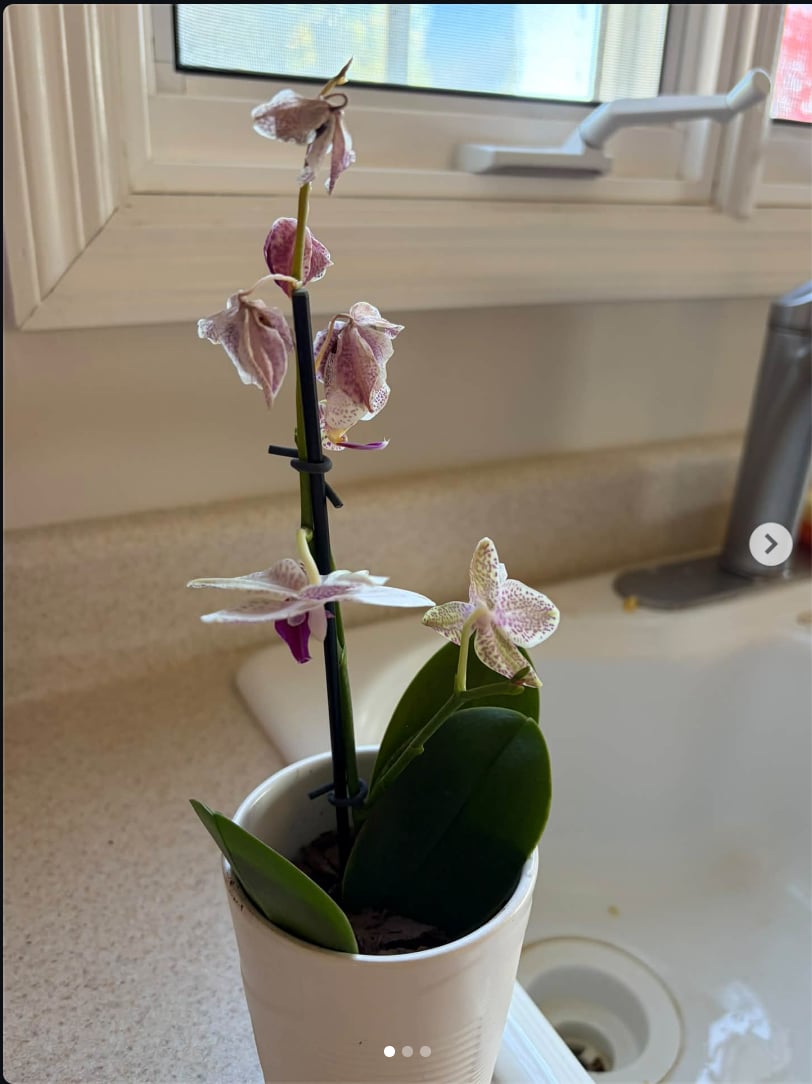
orchid, basil, croton
Can these orchid, basil, and croton plants be saved?
Yes, the orchid and croton are probably salvageable, but the herb in the black pot looks too dried out to recover. Check each plant’s stems and roots for green, firm tissue, trim off dead parts, repot if needed, and adjust light and watering so they can regrow.
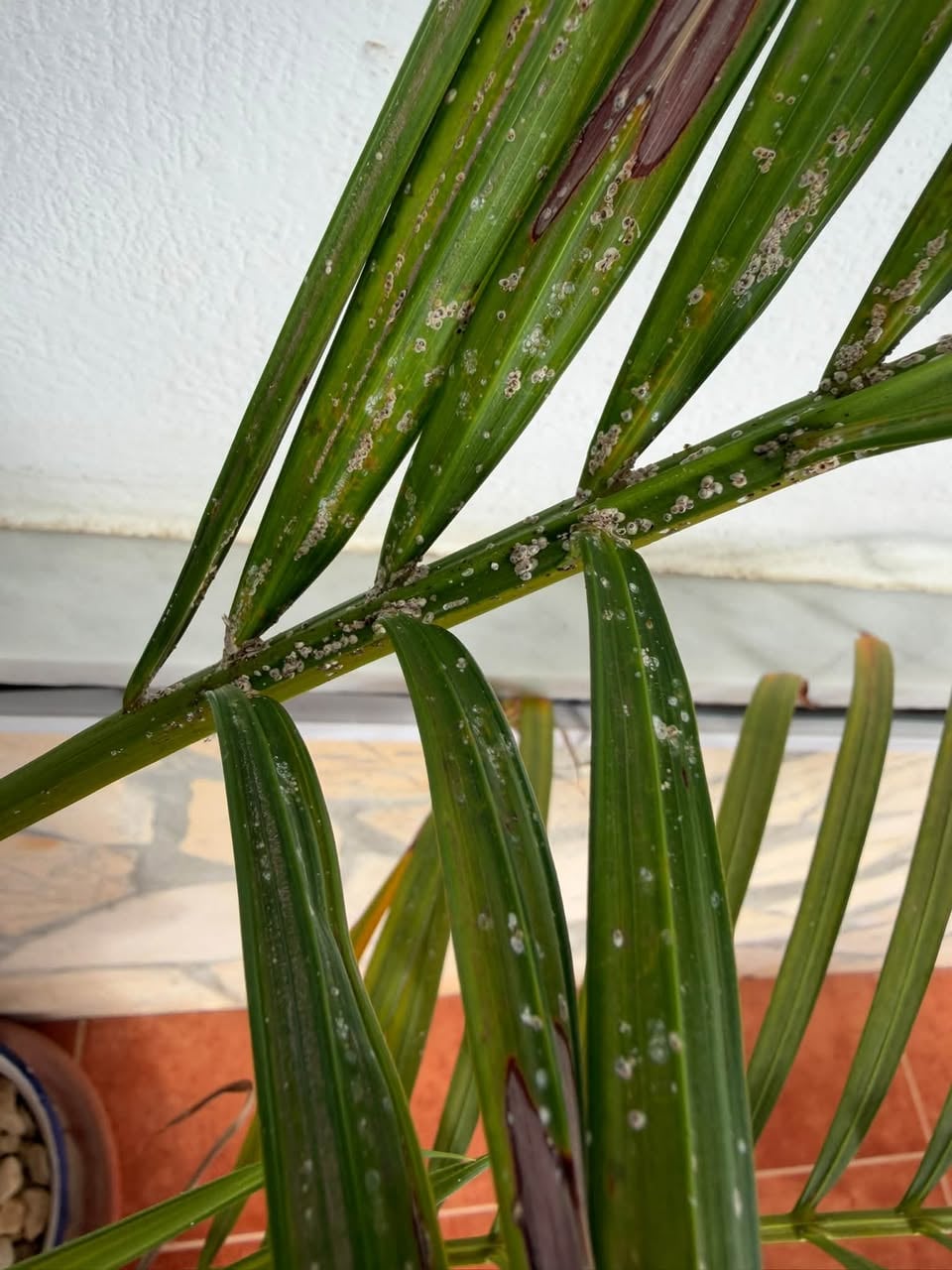
palm (likely an areca or similar)
What are the white bumps on my palm leaves and how do I treat them?
The plant is heavily infested with scale insects, which are sucking sap and weakening it. Start by physically wiping/scraping them off and then use repeated treatments with soapy water or horticultural oil until no new bumps appear.