
orchid · Asked on Facebook · 4 November 2026
Does my orchid in a glass pot have root rot?
Yes, this orchid is suffering from severe root and possibly crown rot, made worse by sitting in a glass container with poor drainage. Take it out of the pot, cut away all mushy or hollow roots, and repot in fresh orchid bark with good drainage.
The question
“Does this have root rot? Help!”
What's likely going on
From the photo, the roots look shriveled, discolored, and many seem dead or hollow. The plant is in a glass container, which usually holds moisture around the roots for too long. Orchids like this (commonly a Phalaenopsis) need air around their roots and a very free‑draining mix.
This combination—staying too wet, low air flow, and old or compacted potting mix—often leads to root rot. Rotting roots can’t take up water, so the plant actually dries out from the top even while the pot is wet. If the center of the plant (the “crown” where the leaves meet) is also brown and mushy, it may have crown rot as well.
To be sure, unpot the orchid and look: healthy roots are firm and green/silver; rotten ones are brown or black, mushy, or papery and hollow.
What to do
- Take the orchid out of the glass pot and gently remove all old mix from the roots.
- Inspect the roots. With clean scissors, cut off every root that is soft, dark, or hollow. Leave only firm, pale/green roots.
- Check the crown. If it is mushy or smells bad, trim only obviously rotten tissue and keep the plant very dry at the center. If the rot is deep into the crown, recovery is unlikely.
- Let the plant dry for a few hours so cut surfaces can callus.
- Repot in a small pot with drainage holes using chunky orchid bark (or bark + a bit of charcoal/perlite). Do not use regular potting soil.
- Water thoroughly, then let it drain completely. After that, water only when roots look silvery and the bark feels almost dry.
- Give it bright, indirect light and good air movement while it recovers.
How to prevent it
- Always use pots with drainage holes.
- Use a loose orchid mix, never dense soil.
- Water deeply but infrequently; don’t let the pot sit in water.
- Empty decorative cachepots after watering so no water stays at the bottom.
- Refresh the bark mix every 1–2 years before it breaks down and stays too wet.
When to worry
- If almost all roots are dead and the crown is mushy, the orchid may not survive.
- If new firm roots and at least one healthy leaf remain, it can recover slowly.
- Watch for continued yellowing, a foul smell, or black spreading tissue; if that continues after repotting, the plant is unlikely to pull through and is best discarded to avoid pests or fungus spreading to other plants.
Answered by the GrowPls assistant. Every plant and room is different; if things don't improve, a clear close-up photo of the affected part is the fastest way to a better answer.
Related questions
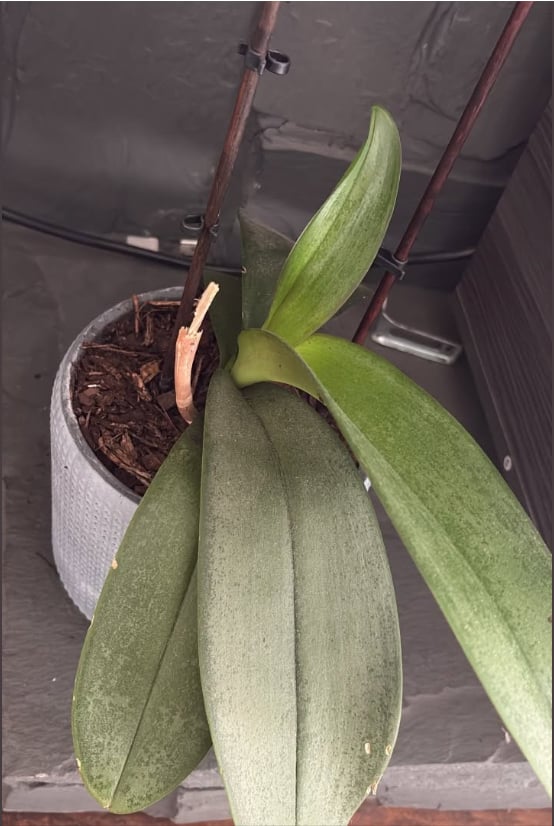
moth orchid (Phalaenopsis)
Why hasn’t my orchid flowered again for a year?
This moth orchid looks healthy enough but likely isn’t getting the right mix of bright light, feeding, and a slight temperature drop that triggers new flower spikes. Improve light, start regular orchid fertilizer, and give it a cooler, brighter spot for a few weeks to encourage blooming.
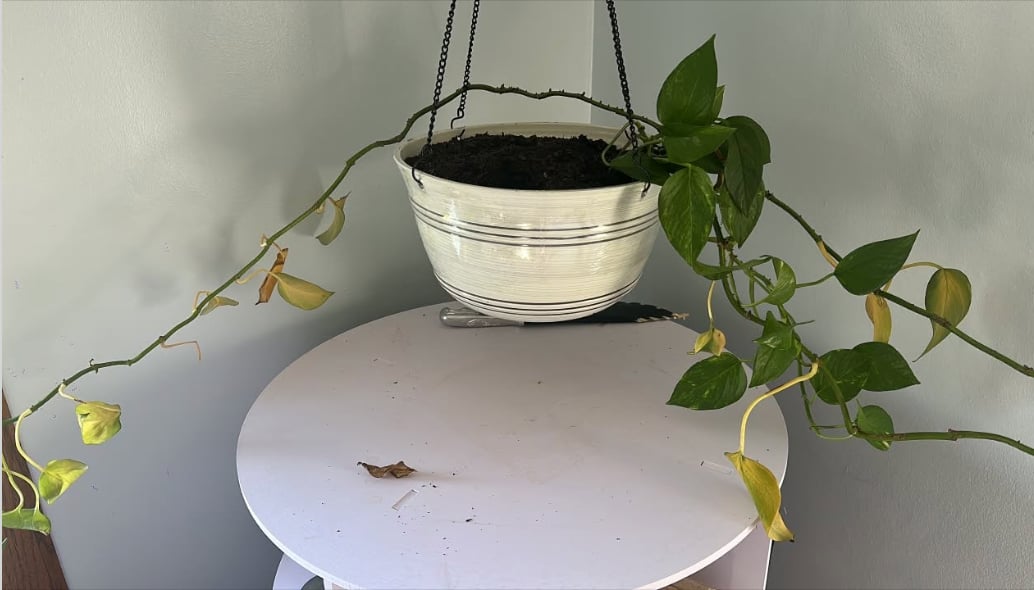
pothos (money plant)
Why are my pothos leaves turning yellow after repotting?
Those yellow leaves are most likely from stress after repotting plus soil that’s staying too wet. Check that the pot drains well, let the soil dry a bit between waterings, and trim off the worst yellow leaves.
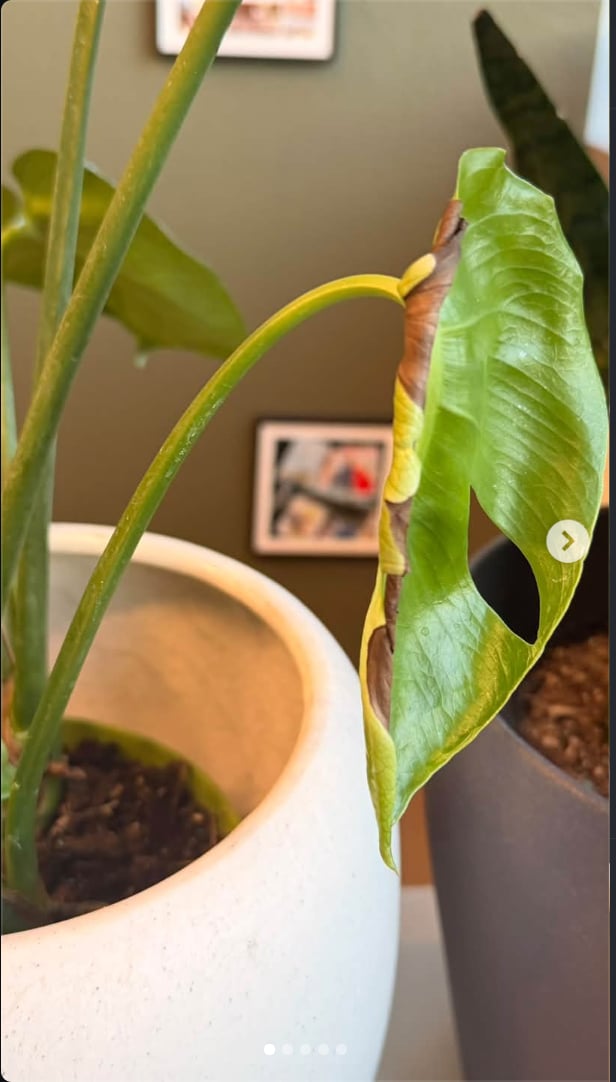
monstera
Why is my Monstera new leaf browning before it fully opens?
That brown edge on the new leaf is usually from stress while the leaf is still tightly rolled – most often low humidity, underwatering, or the leaf getting stuck and damaged. Check watering, light, and humidity, and focus on helping the next leaf grow in better.
How do I know when my plants need watering?
Most plants should be watered when the top layer of soil has dried out, not on a fixed schedule. Check the soil with your finger, lift the pot to feel the weight, and watch the leaves for early signs of thirst like slight drooping or dullness.