
hydrangea · Asked on Instagram · 5 November 2026
What is causing spots and discoloration on my hydrangea leaves?
The shrub has a leaf‑spot disease, most likely a fungal problem made worse by wet leaves and crowded growth. Remove the worst leaves, clean up fallen ones, and keep the plant drier and better ventilated; it usually clears up without harsh chemicals.
The question
“Can anyone tell me what’s wrong with my plant?? And what to do”
What's likely going on
From the photo, the plant looks like a hydrangea with many small, dark spots on the leaves and some reddish or yellowish discoloration. The pattern fits leaf‑spot disease, usually fungal (like Cercospora) and sometimes bacterial.
A few things are probably working together:
- Fungal leaf spot: Small dark spots with a pale or tan center are classic. It spreads in warm, humid weather, especially when leaves stay wet.
- Normal color change / mild stress: Hydrangea leaves often turn red or burgundy toward the end of the season or when they get more sun or cooler nights. That’s separate from the spots but happens at the same time, so it can look dramatic.
The good news: this mainly affects how it looks, not the long‑term health, if you tidy it up and improve conditions.
What to do
Prune and clean up
Snip off the worst‑affected leaves and any dead or crossing stems. Rake up all fallen leaves around the base and throw them in the trash (not compost) so spores don’t overwinter.Improve air flow
If the shrub is crowded by other plants, lightly thin inner branches so air can move through. Better air means leaves dry faster and fungi struggle.Change watering habits
Water at soil level, not over the top of the plant. Water early in the day so any splashes dry quickly. Keep the soil evenly moist but not soggy.Mulch the soil
Add a 5–8 cm layer of organic mulch (bark, leaves, compost) around, but not touching, the stems. This reduces splash‑back of spores from the soil.Consider a fungicide only if it gets severe
If next season new growth also gets badly spotted, you can use a copper‑based or other garden fungicide labeled for leaf spot on ornamentals, starting early in the season. Follow the label carefully and keep pets and children away until it’s dry.
How to prevent it
- Avoid overhead sprinklers on hydrangeas.
- Keep plants spaced with good air flow.
- Clean up fallen leaves every autumn.
- Start with healthy, disease‑free plants and tools; wipe pruners with alcohol when moving between shrubs.
When to worry
- If new leaves in spring emerge already distorted, blackened, or are rapidly dropping, the disease may be more serious and a local extension service or nursery can help diagnose it.
- If stems are turning black and dying back into the plant, take close‑up photos of stems and leaf undersides and seek a more specific diagnosis.
Most hydrangeas bounce back well the following season once leaf‑spot pressure is reduced.
Answered by the GrowPls assistant. Every plant and room is different; if things don't improve, a clear close-up photo of the affected part is the fastest way to a better answer.
Related questions
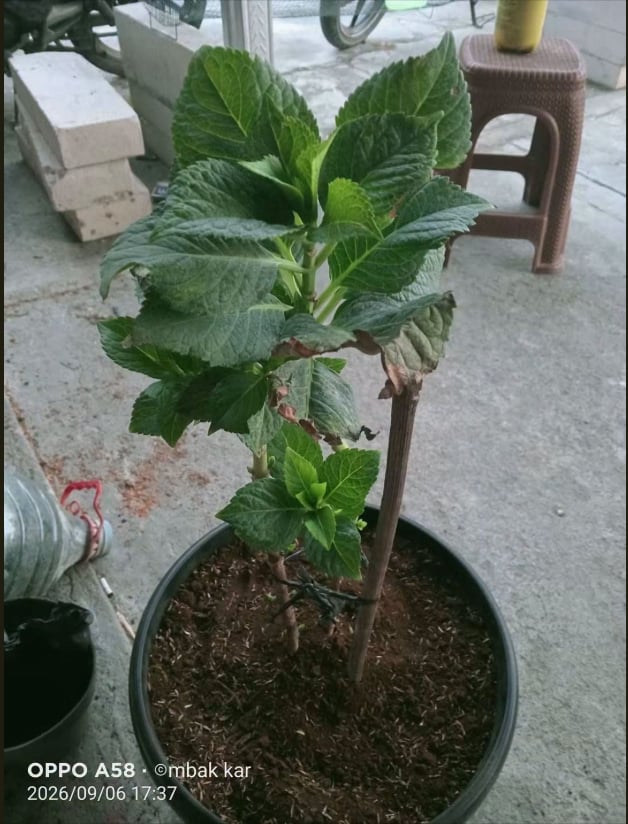
hydrangea
Why is my five-colored hydrangea not blooming in a pot?
This hydrangea looks healthy but is likely missing the right light or has had its flower buds pruned off. Give it bright morning sun, avoid heavy pruning, and use a bloom fertilizer lower in nitrogen to encourage flowers.
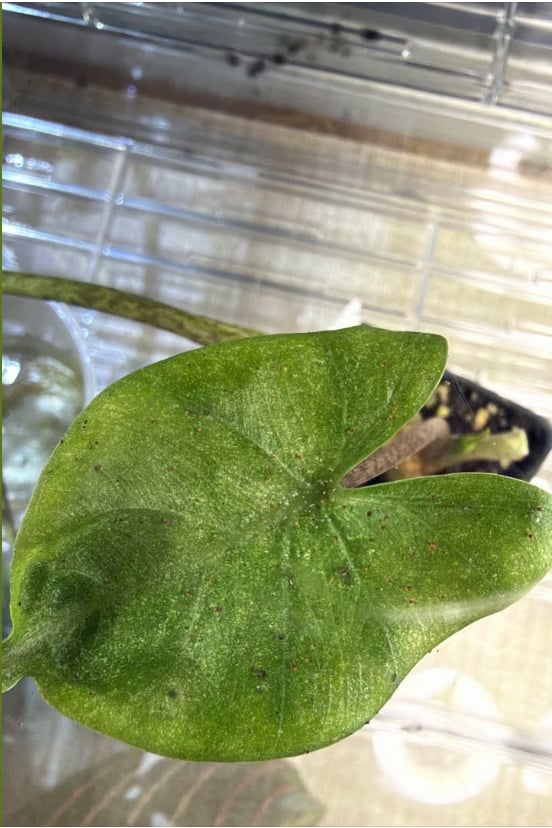
What are the tiny red-brown specks on my new plant leaves?
Those tiny red‑brown specks and the dusty, faded look on the leaf are very likely spider mites. Keep the plant in quarantine, check the undersides of leaves with a magnifying glass, and start treating with a gentle wash and repeated insecticidal soap or neem spray.
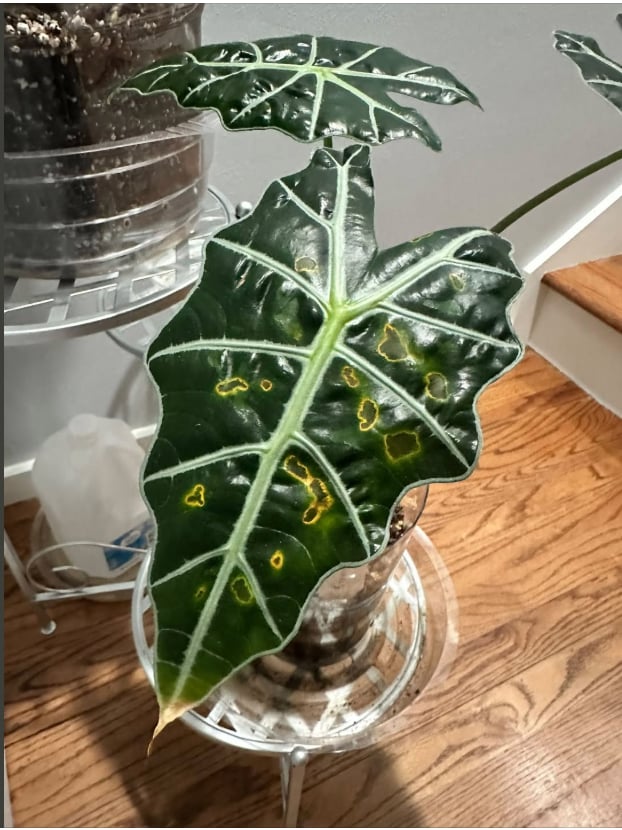
Alocasia (African mask)
What are the yellow-edged spots on my Alocasia (African mask) leaves?
Those yellow-rimmed brown spots are most likely a leaf spot issue, often from moisture staying on the leaves or a stressed, overwatered Alocasia. Remove the worst leaf, keep the foliage dry, and adjust watering and airflow so it doesn’t spread.
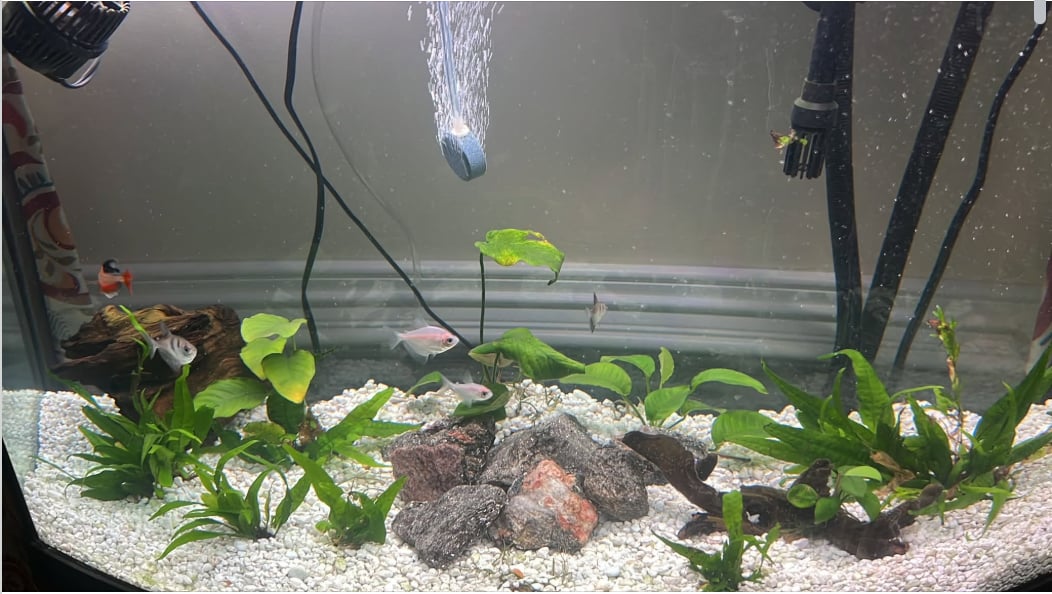
aquarium plants
Why do my aquarium plants always look unhealthy?
The plants are in plain gravel with weak-looking light, so they’re probably starving for nutrients and possibly not getting enough suitable light. Start by improving the light and adding aquarium plant fertilizer (liquid and/or root tabs) to feed them.