
pothos · Asked on Instagram · 2 November 2026
What is happening to my pothos plant leaves?
This pothos looks generally healthy—those lighter green areas are normal variegation, not disease. Focus on steady care: bright indirect light, watering when the top soil dries, and good drainage.
The question
“What’s going on with my plant? Please help”
What's likely going on
From the photo, this looks like a pothos (Epipremnum aureum). The leaves are glossy and firm with some lighter green streaks and patches.
What can actually be seen:
- Leaves are mostly a rich green with lighter yellow‑green areas.
- No obvious brown, crispy edges, big soft black spots, or massive yellowing.
- Stems look sturdy and the plant is trailing well.
So far, that all points to a plant in decent health. The lighter patches look like normal variegation (natural color pattern), not a sign of a disease.
What might be going on behind the scenes:
- Normal color variation – Pothos naturally have mixed greens and yellows, especially in brighter light.
- Minor light or watering stress – If some leaves droop or curl slightly, it’s often from soil staying too wet/too dry or from low light.
- Nutrient lightness – If future new leaves come in paler overall (not just streaky), it could mean it wants a bit of fertilizer.
A closer photo of any single leaf that worries you (both front and back) would help confirm, especially if there are brown spots or mushy areas.
What to do
Check the soil
Stick a finger in up to the first knuckle. Water only when the top 2–3 cm feel dry. Empty any water that collects in the saucer.Give bright, indirect light
Place near a bright window but out of harsh midday sun, which can scorch leaves.Improve drainage if needed
Make sure the pot has drainage holes and the soil is not dense like clay. A loose houseplant mix is ideal.Feed lightly in growing season
During spring and summer, use a balanced liquid fertilizer at half strength once a month if growth seems slow or new leaves are small and pale.Wipe leaves occasionally
Dust can dull leaves and slow growth. Wipe gently with a damp cloth.
(Pothos are toxic if chewed by pets or children, so keep out of reach.)
How to prevent it
- Keep a regular watering rhythm: let the top dry, then water thoroughly.
- Avoid very dark corners; more light keeps color strong and growth compact.
- Repot every 1–2 years into fresh mix so it doesn’t become root‑bound and starved of nutrients.
When to worry
- Many leaves turn solid yellow, then drop, and the soil feels constantly wet (possible root rot).
- Leaves develop large brown or black mushy patches.
- New growth is tiny, twisted, or very pale all over.
If any of those appear, sharing close‑up photos of affected leaves and the soil surface will help narrow it down further.
Answered by the GrowPls assistant. Every plant and room is different; if things don't improve, a clear close-up photo of the affected part is the fastest way to a better answer.
Related questions
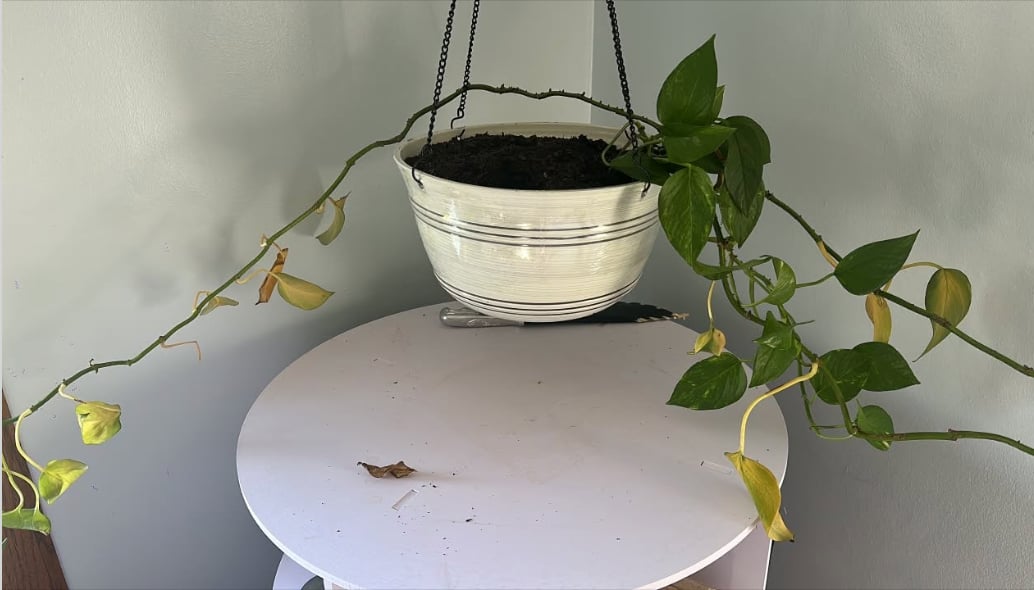
pothos (money plant)
Why are my pothos leaves turning yellow after repotting?
Those yellow leaves are most likely from stress after repotting plus soil that’s staying too wet. Check that the pot drains well, let the soil dry a bit between waterings, and trim off the worst yellow leaves.
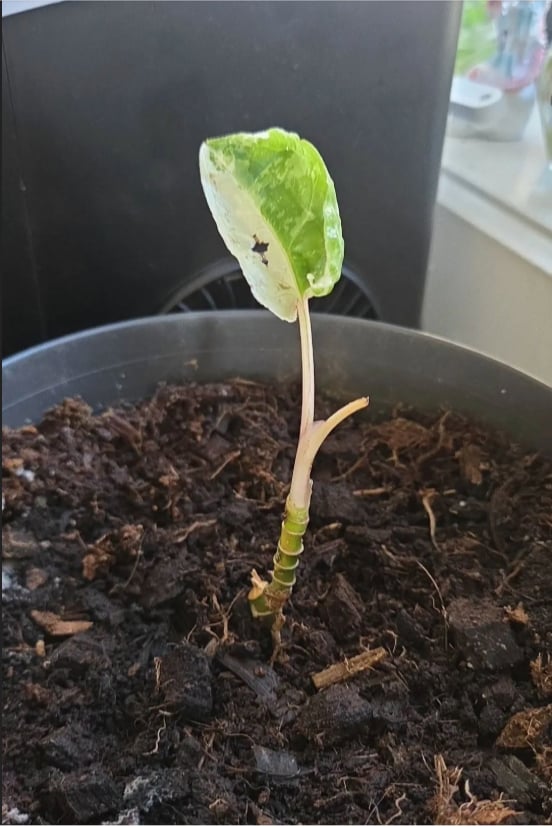
How can I identify this small cutting with only one damaged leaf?
From the photo, the plant is too small and damaged to confidently identify; it looks like a young aroid-type houseplant grown from a stem cutting. Let it grow a few new leaves and nodes, then compare leaf shape and growth habit for a more reliable ID.
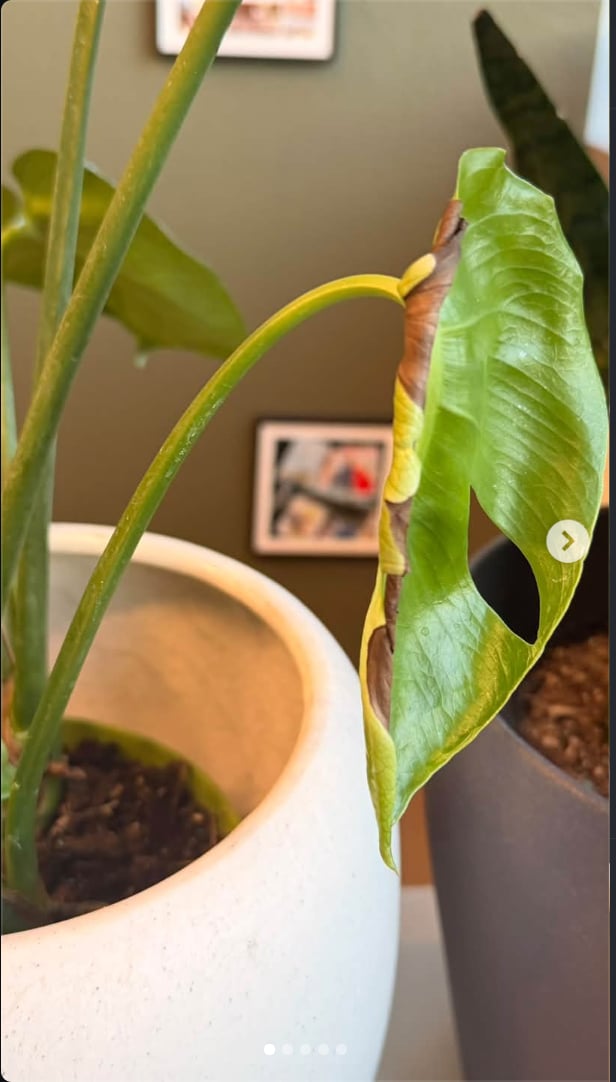
monstera
Why is my Monstera new leaf browning before it fully opens?
That brown edge on the new leaf is usually from stress while the leaf is still tightly rolled – most often low humidity, underwatering, or the leaf getting stuck and damaged. Check watering, light, and humidity, and focus on helping the next leaf grow in better.
How do I know when my plants need watering?
Most plants should be watered when the top layer of soil has dried out, not on a fixed schedule. Check the soil with your finger, lift the pot to feel the weight, and watch the leaves for early signs of thirst like slight drooping or dullness.