
split-leaf philodendron · Asked on Facebook · 2 November 2026
Why are my split-leaf philodendron leaves turning yellow and brown?
That leaf has been damaged, most likely from strong sun through the window and/or some watering stress, and it’s now dying back. Remove the worst leaf and adjust light and watering so new leaves grow healthy.
The question
“What’s wrong ? it’s dying !”
What's likely going on
From the photo, this looks like a split‑leaf philodendron (also sold as Hope, Selloum, or tree philodendron).
What can be seen:
- A large, otherwise green leaf with a central yellow area and some dark brown, dry patches.
- Damage is mostly on one part of the leaf rather than starting at all the edges.
- The plant is right by a bright window with blinds.
What that usually means:
- Sunburn / heat damage – Strong direct sun through glass can “cook” a section of the leaf where the rays hit, causing a patch that first looks light or bleached, then turns yellow, then brown and crispy.
- Watering stress on an older leaf – Older leaves are often sacrificed when the plant has been kept too wet or occasionally too dry. They yellow from the midrib out and get brown spots as the tissue dies.
It’s rarely a contagious disease; more often it’s one stressed leaf that won’t recover.
What to do
Check the soil
Push a finger 3–4 cm (about a knuckle) into the pot. If it’s very wet or smells sour, let it dry out before watering again. If bone‑dry and pulling from the sides, water thoroughly and then let excess drain.Adjust the light
Move the plant a little back from the window or give it sheer curtain protection so it gets bright, indirect light, not strong sunbeams on the leaves.Remove the badly damaged leaf
Once more than about 1/3 of a leaf is yellow/brown, it won’t turn green again. Cut it off close to the main stem with clean scissors. This tidies the plant and lets it focus on new growth.Check drainage
Make sure the pot has holes and water can run out freely. Empty any outer cachepot or tray after watering so roots don’t sit in water.Watch new leaves
If the next leaves come in fully green and stay that way, the problem is solved. If new leaves also quickly yellow, reassess watering and light, and consider repotting into fresh, well‑draining mix.
How to prevent it
- Give bright, filtered light rather than harsh midday sun. East light or a bit back from a south/west window works well.
- Water when the top few centimeters of soil are dry, not on a fixed schedule.
- Use a chunky, well‑draining mix (regular potting soil plus some perlite or coco chips).
- Rotate the pot every couple of weeks so all sides get even light.
When to worry
- Several new leaves in a row yellow quickly or come out deformed.
- Stems near the soil are mushy, and there’s a sour smell (possible root rot).
- Yellowing spreads rapidly to many leaves even after you fix light and watering.
In those cases, gently unpot the plant to inspect the roots and trim any black, mushy ones, then repot into fresh, draining soil.
Answered by the GrowPls assistant. Every plant and room is different; if things don't improve, a clear close-up photo of the affected part is the fastest way to a better answer.
Related questions
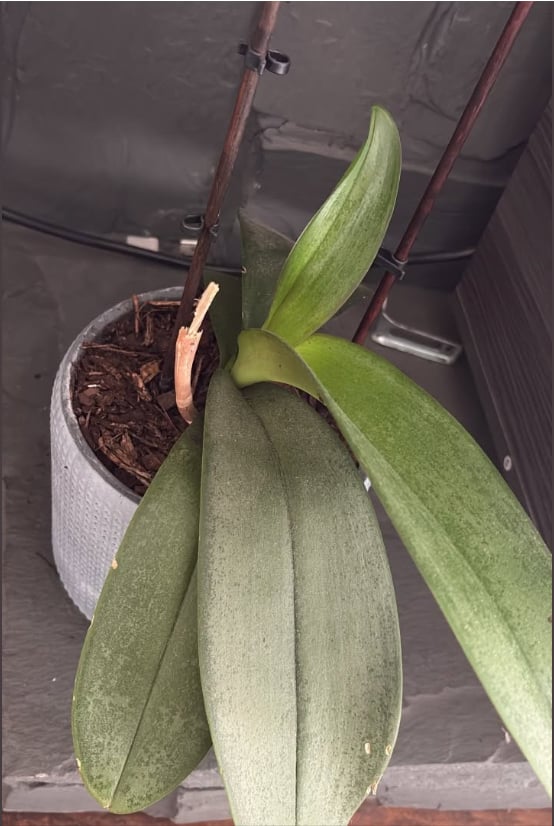
moth orchid (Phalaenopsis)
Why hasn’t my orchid flowered again for a year?
This moth orchid looks healthy enough but likely isn’t getting the right mix of bright light, feeding, and a slight temperature drop that triggers new flower spikes. Improve light, start regular orchid fertilizer, and give it a cooler, brighter spot for a few weeks to encourage blooming.
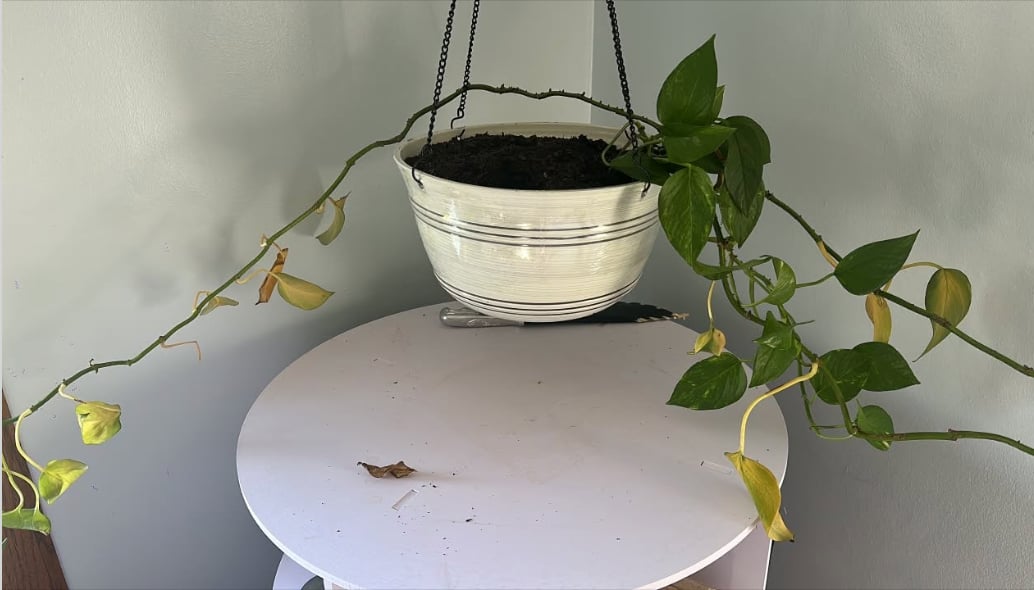
pothos (money plant)
Why are my pothos leaves turning yellow after repotting?
Those yellow leaves are most likely from stress after repotting plus soil that’s staying too wet. Check that the pot drains well, let the soil dry a bit between waterings, and trim off the worst yellow leaves.
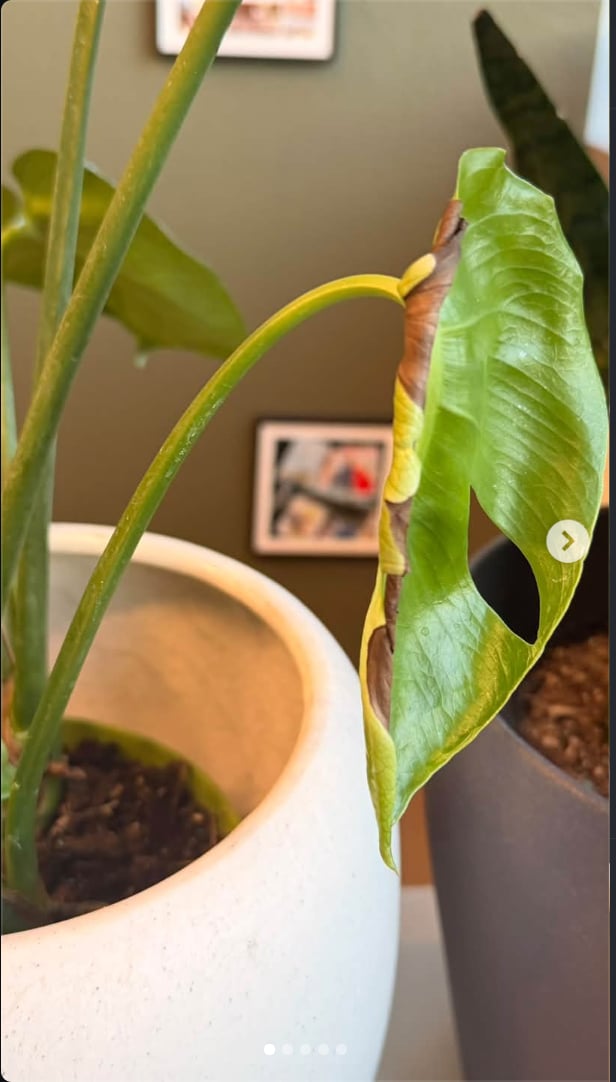
monstera
Why is my Monstera new leaf browning before it fully opens?
That brown edge on the new leaf is usually from stress while the leaf is still tightly rolled – most often low humidity, underwatering, or the leaf getting stuck and damaged. Check watering, light, and humidity, and focus on helping the next leaf grow in better.
How do I know when my plants need watering?
Most plants should be watered when the top layer of soil has dried out, not on a fixed schedule. Check the soil with your finger, lift the pot to feel the weight, and watch the leaves for early signs of thirst like slight drooping or dullness.