
spring onion · Asked on Facebook · 5 November 2026
Why are my spring onion plants so thin and spindly?
Spring onions stay thin when they don’t get enough light or food, or when they’re stressed by poor soil and uneven watering. Give them full sun, richer soil with added compost or fertilizer, and steady moisture and they’ll start to thicken up as they grow new leaves.
The question
“Does anyone know why my spring onion plants are so thin?”
What's likely going on
From the photos, the spring onions are tall, floppy and very slim, with some pale, dying lower leaves. A few things commonly cause this:
- Not enough sun – Spring onions really like full sun (at least 5–6 hours of direct light). In lower light they stretch upwards to “look for” light and end up long and thin.
- Poor or tired soil – The bed looks quite bare and a bit compact. Onions are leafy crops and need plenty of nitrogen and organic matter. In poor soil they grow slowly and stay pencil-thin.
- Water stress – Letting the soil swing between very dry and very wet can weaken the plants. This doesn’t usually cause thinness on its own, but it adds to the problem.
There’s no clear sign of insect or disease damage in the pictures, so this looks more like growing conditions than a pest issue.
What to do
Check the light
Make sure the bed gets strong, direct sun for most of the day. If a wall or building is shading them, consider moving the next planting to a sunnier spot or using containers in full sun.Improve the soil
Mix in plenty of compost or well‑rotted manure to the top 10–15 cm of soil around the plants. For a quick boost, use a balanced vegetable fertilizer or a nitrogen‑rich one (follow the packet rate).Water steadily
Keep the soil evenly moist, not soggy. Water when the top couple of centimeters feel dry. Mulch lightly with dry leaves or straw to hold moisture if your climate is very hot.Trim off dead leaves
Remove the completely yellow or dried leaves at the base so the plant puts its energy into new growth.Give them time
Spring onions don’t make big bulbs; they thicken gradually as they grow new leaves. After improving light and soil, give them 2–3 weeks and watch for sturdier, greener growth.
How to prevent it
- Always plant spring onions in a sunny place.
- Before planting, dig in compost or manure so the soil is loose and rich.
- Start with fresh seed or healthy sets rather than very old store leftovers.
- Keep a regular watering schedule, especially in hot weather.
When to worry
- If new leaves are also turning yellow from the tips down, even after feeding, check for waterlogging or root rot.
- If you see spots, slimy patches, or many insects on the leaves, identify the pest or disease before treating.
- If plants don’t respond at all after 3–4 weeks of better light, food and water, it may be easier to reprepare the bed and sow a new, better‑fed crop.
Answered by the GrowPls assistant. Every plant and room is different; if things don't improve, a clear close-up photo of the affected part is the fastest way to a better answer.
Related questions
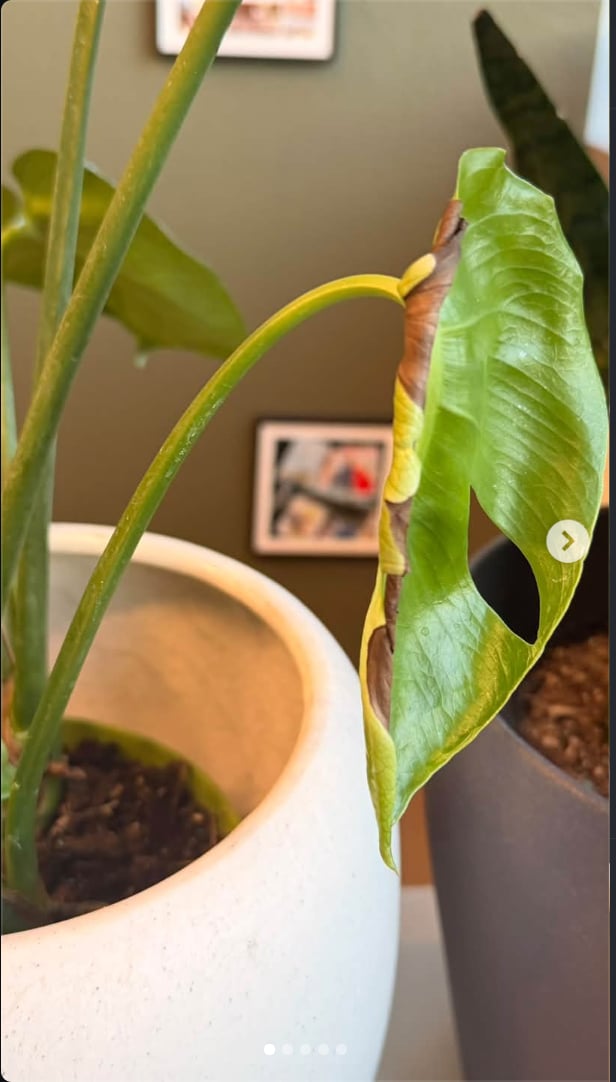
monstera
Why is my Monstera new leaf browning before it fully opens?
That brown edge on the new leaf is usually from stress while the leaf is still tightly rolled – most often low humidity, underwatering, or the leaf getting stuck and damaged. Check watering, light, and humidity, and focus on helping the next leaf grow in better.
How do I know when my plants need watering?
Most plants should be watered when the top layer of soil has dried out, not on a fixed schedule. Check the soil with your finger, lift the pot to feel the weight, and watch the leaves for early signs of thirst like slight drooping or dullness.
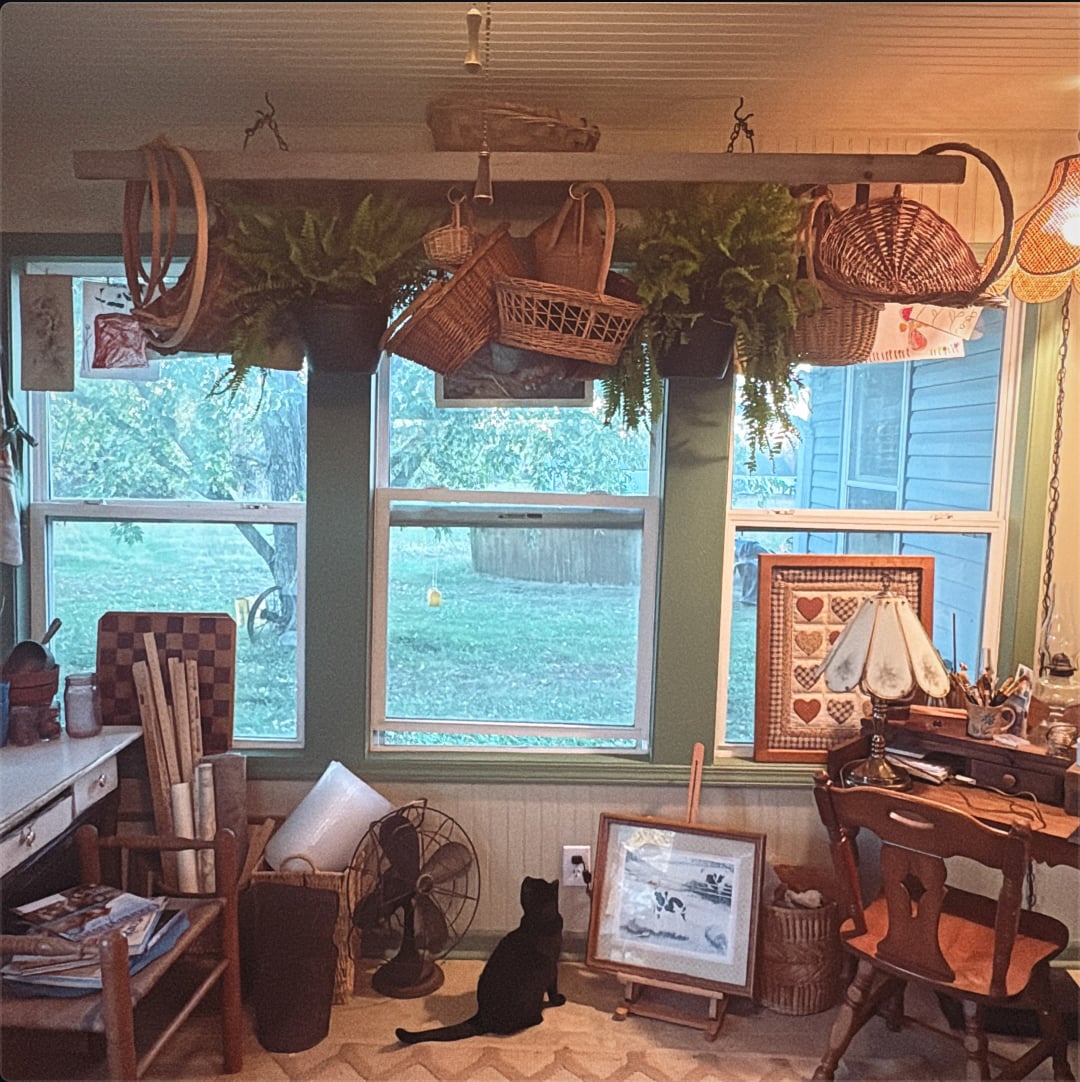
fern (likely Boston fern)
How do I overwinter hanging ferns in a bright sunroom?
That sunroom spot should work well if the ferns get bright but not harsh direct sun and the air isn’t too hot or dry. Indoors, water whenever the top of the soil just starts to feel dry, which is often about once a week but depends on your room’s temperature and humidity.
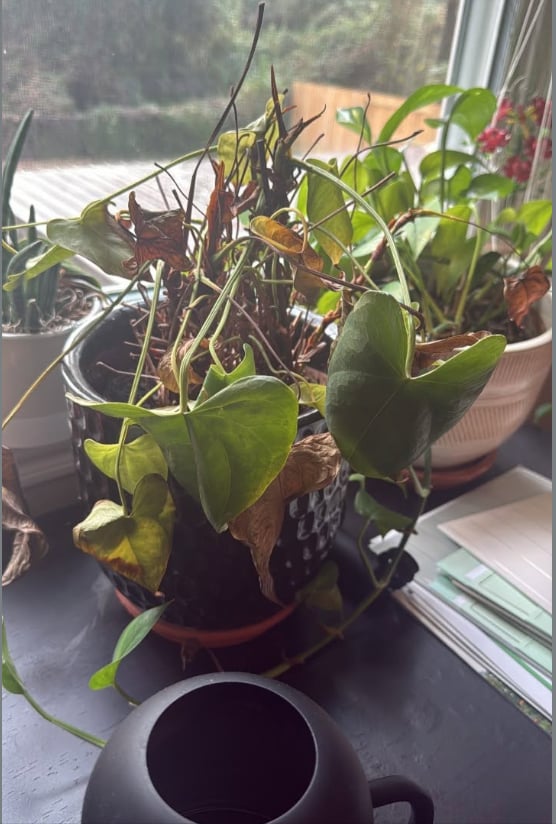
heartleaf philodendron
What is wrong with my heartleaf philodendron with yellow, crispy leaves?
The plant looks badly stressed from a mix of underwatering and an old, crowded root system, so many of the old vines have died back. Start by pruning all dead growth, checking the roots, and repotting into fresh, well‑draining soil, then water regularly but not constantly soggy.