
cucumber or other cucurbit vine · Asked on Facebook · 2 November 2026
Why are the leaves on my potted vine turning yellow and crispy even with daily watering?
Those yellow, crispy leaves are usually from stressed roots – often a mix of overwatering in a small pot plus strong sun and poor soil. Let the top of the soil dry before watering, improve drainage, and trim the dead leaves so the plant can try to recover.
The question
“HELP! What am I doing wrong? My plant’s leaves are turning yellow, wilting, and drying up… even though I water it every single day! 🥹🌱 Has anyone else experienced this with their plants? Please share your tips with me! I don’t want to lose this little guy. 🥺🪴”
What's likely going on
From the photo, the plant looks like a cucumber or similar vine. The lower leaves are yellow, limp, and turning papery brown, while the stem looks thin and the pot seems quite small for a fast‑growing vine.
What we can see:
- Older leaves near the base are yellow and crispy.
- The plant looks floppy and weak.
- It’s in strong sun on a balcony, in a black plastic pot (which heats up easily).
Most likely causes working together:
- Stressed roots from constant watering – Watering every day can keep the soil soggy, pushing air out of the root zone. Roots then suffocate or rot, so they can’t take up water even though the soil is wet. The leaves react as if the plant is thirsty.
- Pot too small / poor soil – Cucurbit vines have big, hungry roots. In a tight pot with tired soil, they run out of nutrients (especially nitrogen), causing yellowing from the bottom up.
- Heat and sun stress – In hot climates, a dark pot in full sun gets very hot, further damaging roots.
There can also be wilt diseases in cucumbers, but those are harder to confirm from one photo and are less common than simple root/heat stress in containers.
What to do
Check the soil before watering
Stick your finger 3–4 cm into the mix. Only water when that layer feels dry. If it’s still moist and cool, skip a day.Improve drainage right away
- Make sure the pot has several open drainage holes.
- If water sits on top, gently poke a few holes into the soil with a stick to loosen it without tearing too many roots.
Repot or up‑pot if you can
Move the plant into a larger container (at least 25–30 cm wide) with fresh, well‑draining mix: garden soil + compost + cocopeat or sand. Handle the roots gently; don’t break a solid root ball.Trim what is fully dead
Cut off completely brown, crispy leaves. Leave any that are still partly green – they still help the plant.Give light shade during hottest hours
Use a thin cloth or shade net in the midday sun so the pot doesn’t overheat, especially if temperatures are above ~32–35°C.Feed lightly once it perks up
After 7–10 days, if you see new green growth, add a mild fertilizer: a handful of compost or diluted liquid fertilizer once every 2 weeks.
How to prevent it
- For fast vines, always choose a larger pot from the start.
- Use a loose mix that drains well; avoid pure garden clay.
- Water deeply but less often: soak until water runs out the bottom, then wait until the top few centimeters dry.
- Mulch the surface with dry leaves or coco husk to keep the roots cooler.
When to worry
- If the whole plant, including the top new leaves, suddenly collapses even though the soil is moist, and it doesn’t perk up overnight, a root rot or wilt disease may be advanced.
- If cutting the stem shows brown/black tissue inside instead of fresh green/white, the plant may not recover.
If that happens, it’s usually better to remove and discard the plant and soil and start a new vine in fresh, well‑draining mix with better watering habits.
Answered by the GrowPls assistant. Every plant and room is different; if things don't improve, a clear close-up photo of the affected part is the fastest way to a better answer.
Related questions
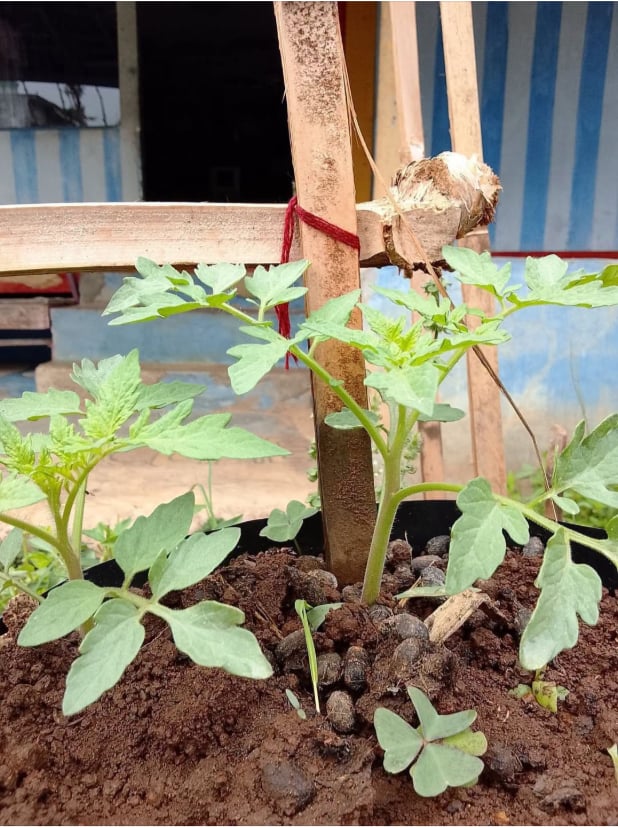
tomato
What plant is this seedling I planted?
The seedlings in the photo are tomato plants. Give them strong sun, a bigger pot or bed, and support as they grow taller.
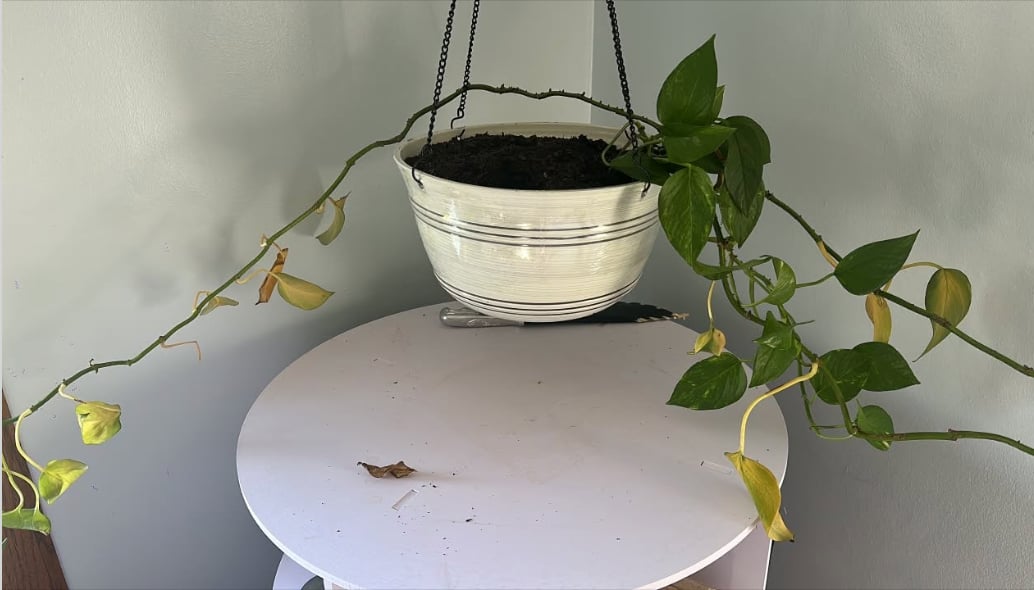
pothos (money plant)
Why are my pothos leaves turning yellow after repotting?
Those yellow leaves are most likely from stress after repotting plus soil that’s staying too wet. Check that the pot drains well, let the soil dry a bit between waterings, and trim off the worst yellow leaves.
How do I know when my plants need watering?
Most plants should be watered when the top layer of soil has dried out, not on a fixed schedule. Check the soil with your finger, lift the pot to feel the weight, and watch the leaves for early signs of thirst like slight drooping or dullness.
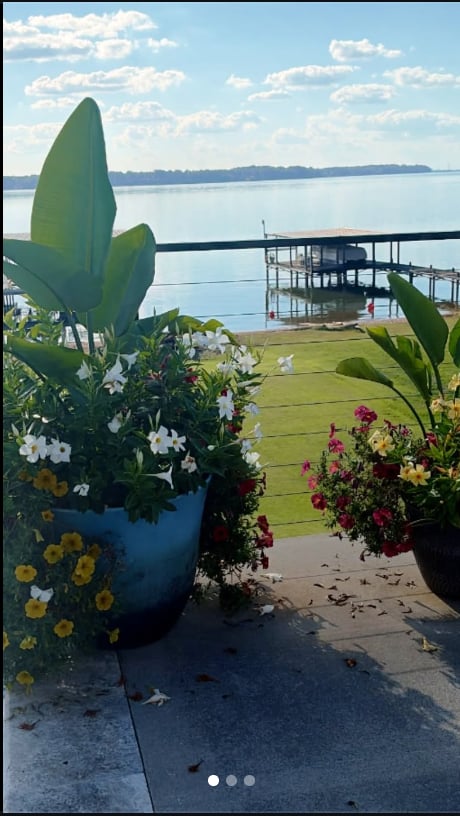
tropical canna or banana-type plant
How can I overwinter the tropical “palm” in my big patio pots?
That center “palm” can be saved, but it’s a tropical (not frost‑hardy), so you’ll need to lift it from the mixed pot before frost and keep it inside in bright light with much less water. The flowering trailers around it are usually treated as annuals and are hard to carry over.