
Asked on Instagram · 2 November 2026
Why are the leaves on my vine turning yellow with black spots?
Those yellow leaves with dark spots are almost certainly a fungal leaf-spot disease made worse by humidity and leaves staying wet. Start by pruning off the worst affected leaves, improving air flow, and keeping water off the foliage.
The question
“Why is my plant looking like this?”
What's likely going on
From the photo, the plant has:
- Many leaves turning yellow
- Dark, fairly round spots scattered across the yellowing leaves
- A vining or scrambling growth on a trellis
That combination strongly suggests a fungal leaf-spot disease (such as black spot or Cercospora leaf spot). These fungi thrive when:
- Leaves stay wet for long periods (overhead watering, frequent rain, poor air flow)
- The plant is crowded or growing in still, humid air
The yellowing itself is usually the leaf reacting to the infection; once a leaf is speckled and yellow, it won’t recover.
Nutrient problems or normal aging usually cause more even yellowing without so many dark spots, so they’re less likely here.
What to do
Remove affected leaves
Using clean scissors, cut off the worst spotted/yellow leaves and any dead bits. Bag and bin them; don’t compost, as that can spread the fungus.Improve air flow
Gently thin out crowded stems so air can move through the plant. Make sure nearby plants aren’t pressed tightly against it.Change watering habits
Water at the base of the plant, not over the top. Water early in the day so any splashes can dry quickly.Mulch the soil surface
A light layer of mulch (dry leaves, straw, or bark) under the plant helps stop spores in the soil from splashing back up onto leaves.Consider a fungicide only if it keeps spreading
If, after pruning and better care, new leaves still get spots, you can use a fungicide labeled for leaf spot on ornamental plants (like a copper or sulfur-based spray). Follow the label carefully and keep pets and kids away until it dries.
How to prevent it
- Keep foliage as dry as possible. Drip or soaker watering is best.
- Prune lightly each season to keep the plant open and airy.
- Clean up fallen leaves around the base, especially after rain.
- Avoid heavy nitrogen fertilizer, which can cause lots of soft, disease-prone growth.
When to worry
- If new growth is also quickly spotting and dropping.
- If stems start to turn black, mushy, or crack.
- If several nearby plants develop similar spots.
In those cases, take a close-up photo of a few spotted leaves (front and back) and the stems, and check with a local nursery or extension service—there may be a more aggressive disease that needs targeted treatment.
Answered by the GrowPls assistant. Every plant and room is different; if things don't improve, a clear close-up photo of the affected part is the fastest way to a better answer.
Related questions
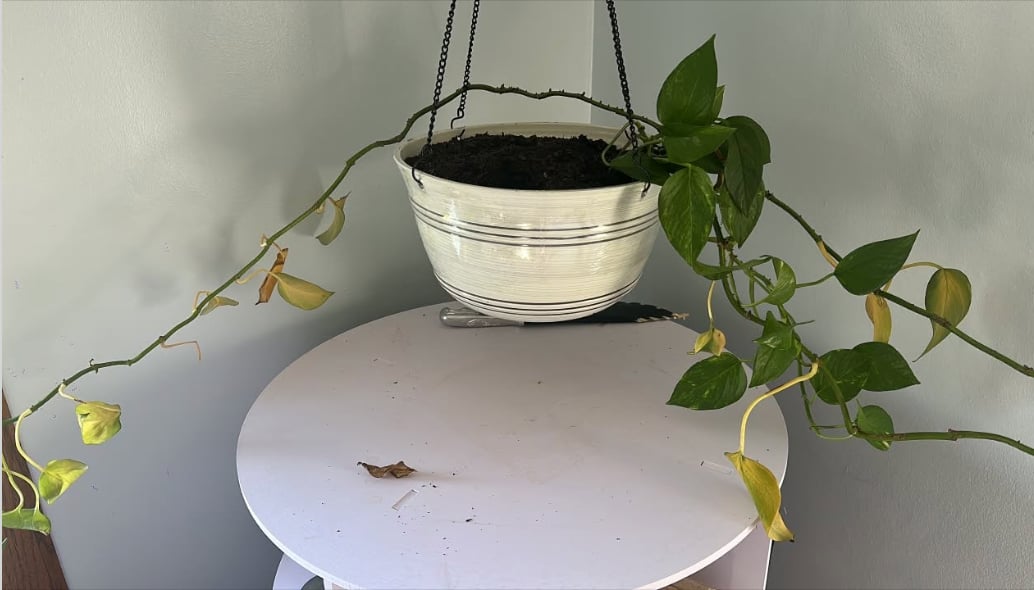
pothos (money plant)
Why are my pothos leaves turning yellow after repotting?
Those yellow leaves are most likely from stress after repotting plus soil that’s staying too wet. Check that the pot drains well, let the soil dry a bit between waterings, and trim off the worst yellow leaves.
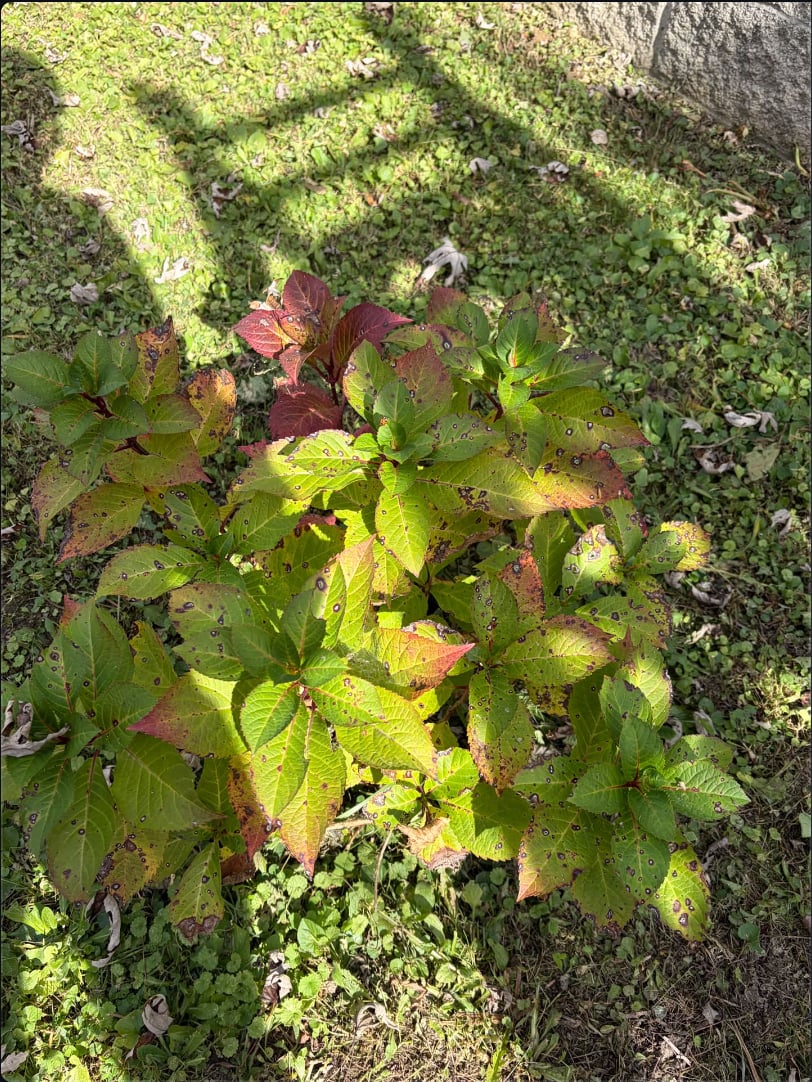
hydrangea
What is causing spots and discoloration on my hydrangea leaves?
The shrub has a leaf‑spot disease, most likely a fungal problem made worse by wet leaves and crowded growth. Remove the worst leaves, clean up fallen ones, and keep the plant drier and better ventilated; it usually clears up without harsh chemicals.
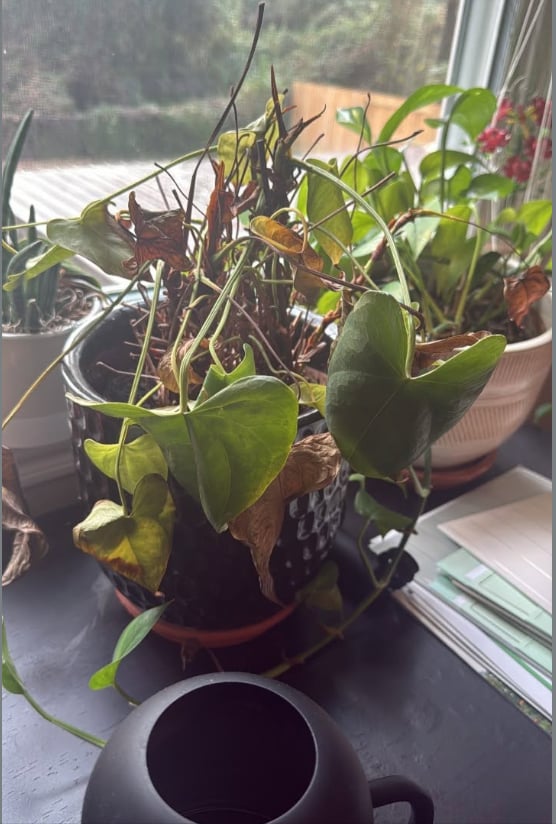
heartleaf philodendron
What is wrong with my heartleaf philodendron with yellow, crispy leaves?
The plant looks badly stressed from a mix of underwatering and an old, crowded root system, so many of the old vines have died back. Start by pruning all dead growth, checking the roots, and repotting into fresh, well‑draining soil, then water regularly but not constantly soggy.
What should I do when my plant leaves get brown spots?
Brown spots usually come from either watering issues, sunburn, pests, or a fungal disease. First, check the pattern of the spots, how you water, and look closely for insects, then remove the worst leaves and adjust care.