
Monstera adansonii · Asked on Facebook · 2 November 2026
How do I care for my Monstera adansonii (Swiss cheese plant) with holey leaves?
This is a Monstera adansonii, and the holes are normal for this plant, not damage. Give it bright, indirect light, water when the top soil dries, and provide a loose, well‑draining mix so it keeps making healthy, holey leaves instead of yellow, torn ones.
The question
“My friend just gave me this plant. How do I care for it so the leaves don't get full of holes like this?”
What's likely going on
The plant in the photo is a Monstera adansonii, often called the Swiss cheese vine. The “holes” in the leaves are normal for this plant and are called fenestrations. They’re part of its natural leaf shape, not a sign of insects eating it.
Things to actually watch for are:
- Yellowing, mushy leaves – usually from overwatering or poor drainage.
- Crispy brown edges – often from very dry air, underwatering, or strong direct sun burning the leaves.
From the picture, the plant looks generally healthy, just a bit crowded in its pot.
What to do
Light
Place it in bright, indirect light – near a window with filtered sun, or a bright room out of harsh direct rays. A few minutes of gentle morning sun is fine; avoid strong midday sun that can scorch the leaves.Watering
- Water when the top 2–3 cm of soil feels dry to the finger.
- Water thoroughly until a little drains out the bottom, then empty any saucer so roots don’t sit in water.
Soil and pot
Use a loose, well‑draining mix (regular potting soil mixed with coco chips/bark and perlite is great).
If roots are circling the pot or poking out the bottom, repot to a slightly larger pot with drainage holes.Humidity and temperature
It likes warm, humid air. Keep away from cold drafts and AC blasts. In dry homes, grouping plants together or using a pebble tray with water under (not touching) the pot can help.Support and pruning
Give it a small stake or moss pole to climb if vines get long. Trim any very yellow or damaged leaves with clean scissors.
How to prevent it
- Stick to a consistent watering routine based on soil feel, not the calendar.
- Keep it in bright but not harsh light.
- Refresh or repot the soil every 1–2 years so it doesn’t compact and stay soggy.
- Wipe leaves occasionally with a damp cloth so they can breathe and photosynthesize well.
When to worry
- Many leaves turning yellow and soft at once – check for waterlogged soil and improve drainage.
- Leaves getting irregular chewed edges or speckling plus sticky residue – inspect closely for pests (caterpillars, thrips, or mites) on both sides of the leaves.
- No new growth for months in good light – consider repotting, checking roots, and feeding lightly with a balanced houseplant fertilizer.
Remember: on this plant, holes in healthy green leaves are a good thing – that’s exactly how it’s meant to look.
Answered by the GrowPls assistant. Every plant and room is different; if things don't improve, a clear close-up photo of the affected part is the fastest way to a better answer.
Related questions
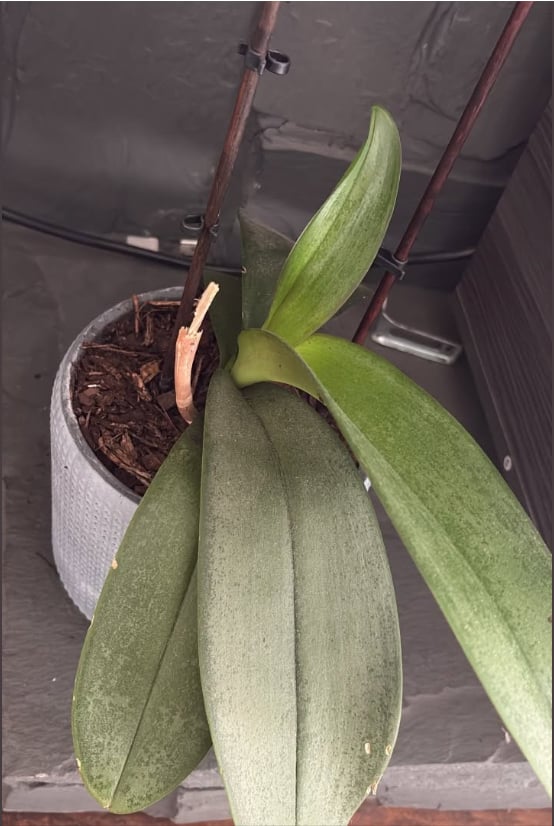
moth orchid (Phalaenopsis)
Why hasn’t my orchid flowered again for a year?
This moth orchid looks healthy enough but likely isn’t getting the right mix of bright light, feeding, and a slight temperature drop that triggers new flower spikes. Improve light, start regular orchid fertilizer, and give it a cooler, brighter spot for a few weeks to encourage blooming.
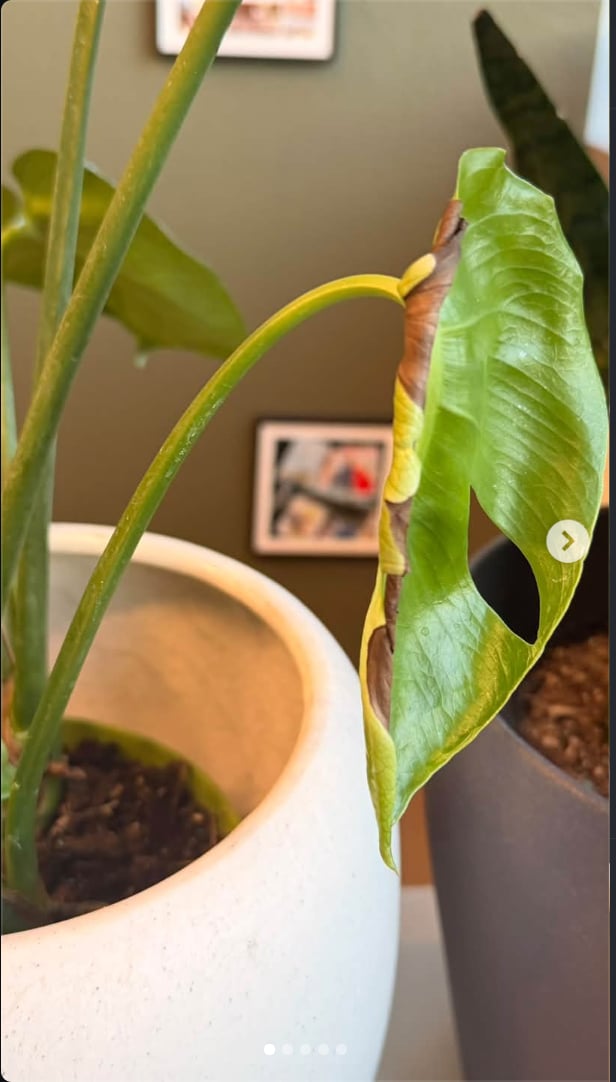
monstera
Why is my Monstera new leaf browning before it fully opens?
That brown edge on the new leaf is usually from stress while the leaf is still tightly rolled – most often low humidity, underwatering, or the leaf getting stuck and damaged. Check watering, light, and humidity, and focus on helping the next leaf grow in better.
How do I know when my plants need watering?
Most plants should be watered when the top layer of soil has dried out, not on a fixed schedule. Check the soil with your finger, lift the pot to feel the weight, and watch the leaves for early signs of thirst like slight drooping or dullness.
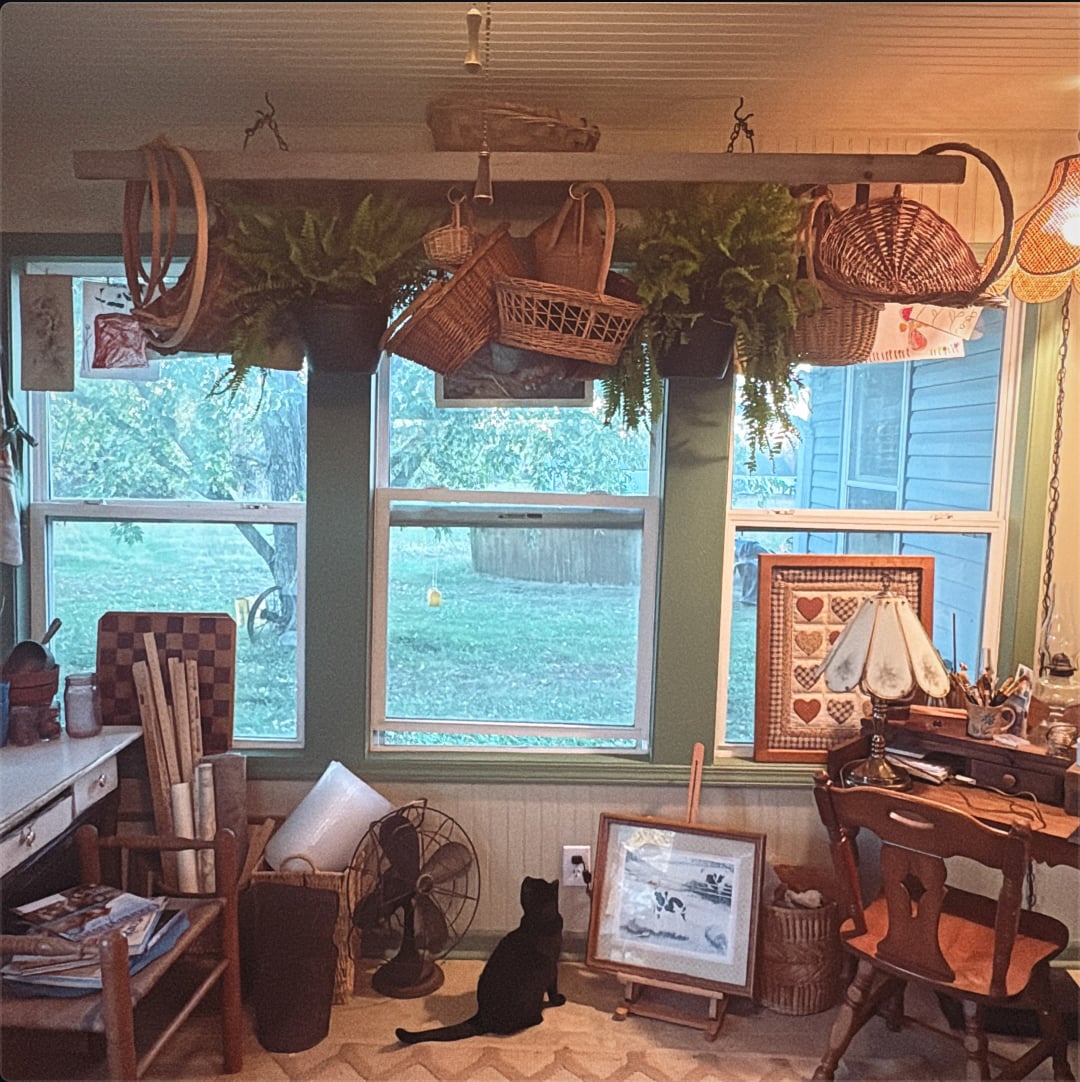
fern (likely Boston fern)
How do I overwinter hanging ferns in a bright sunroom?
That sunroom spot should work well if the ferns get bright but not harsh direct sun and the air isn’t too hot or dry. Indoors, water whenever the top of the soil just starts to feel dry, which is often about once a week but depends on your room’s temperature and humidity.