
Asked on Instagram · 3 November 2026
How often should I shower my houseplants?
Most leafy houseplants enjoy a gentle shower every 4–8 weeks to rinse dust and pests, as long as the soil can drain well and the leaves dry quickly. Avoid frequent showers for succulents, cacti, and very fuzzy‑leaved plants.
The question
“plant shower day 🚿 sound on for the spa part 🔊 how often do you shower your plants? 👇”
What's likely going on
Rinsing plants in the shower is mostly about cleaning and pest prevention, not everyday watering. A shower:
- Washes dust off leaves so they can use light better.
- Knocks off spider mites, aphids, and other soft pests.
- Flushes some excess fertilizer salts from the potting mix.
But too much showering can keep soil constantly wet, which can lead to root rot, fungus gnats, and yellowing leaves—especially in low light or heavy soil. Some plants (succulents, cacti, and fuzzy leaves like African violets) dislike water sitting on their leaves and rot or spot easily.
What to do
- Use showers as an occasional “spa day,” not a routine watering. For typical tropical houseplants (pothos, philodendron, peace lily, anthurium, spider plant, etc.), once every 4–8 weeks is plenty.
- Check the soil first. Only shower when the top 2–3 cm of soil are dry. Treat it as their normal watering that day.
- Use lukewarm, gentle water. Not hot, not cold, and with a soft spray so you don’t damage leaves or splash soil everywhere.
- Let pots drain fully. Leave them in the tub or balcony until water stops dripping, then empty saucers so roots aren’t sitting in water.
- Keep water off sensitive plants. Skip showers for cacti, succulents, fuzzy‑leaved plants, or plants with very delicate blooms—wipe their leaves instead, or just water the soil.
- Dry leaves in cool climates. In air‑conditioned or very cool rooms, gently shake off excess water so leaves don’t stay wet for many hours.
How to prevent it
- Use well‑draining potting mix and pots with drainage holes so occasional heavy waterings don’t cause rot.
- Dust big leaves with a damp cloth between showers so you don’t feel the need to rinse them constantly.
- Keep plants in enough light—wet soil + low light is the main recipe for problems.
When to worry
- Leaves yellowing from the bottom, soil smelling sour, or stems turning mushy after showers.
- Fungus gnats flying up whenever you water.
- Brown or black spots appearing where water sat on leaves (especially on succulents or fuzzy leaves).
If any of these show up, cut back on plant showers, improve drainage, and let the soil dry more between waterings.
Answered by the GrowPls assistant. Every plant and room is different; if things don't improve, a clear close-up photo of the affected part is the fastest way to a better answer.
Related questions
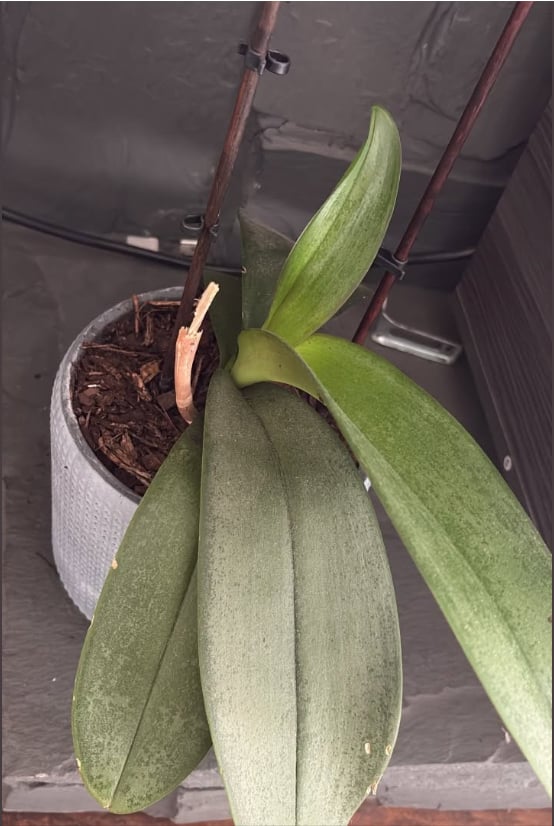
moth orchid (Phalaenopsis)
Why hasn’t my orchid flowered again for a year?
This moth orchid looks healthy enough but likely isn’t getting the right mix of bright light, feeding, and a slight temperature drop that triggers new flower spikes. Improve light, start regular orchid fertilizer, and give it a cooler, brighter spot for a few weeks to encourage blooming.
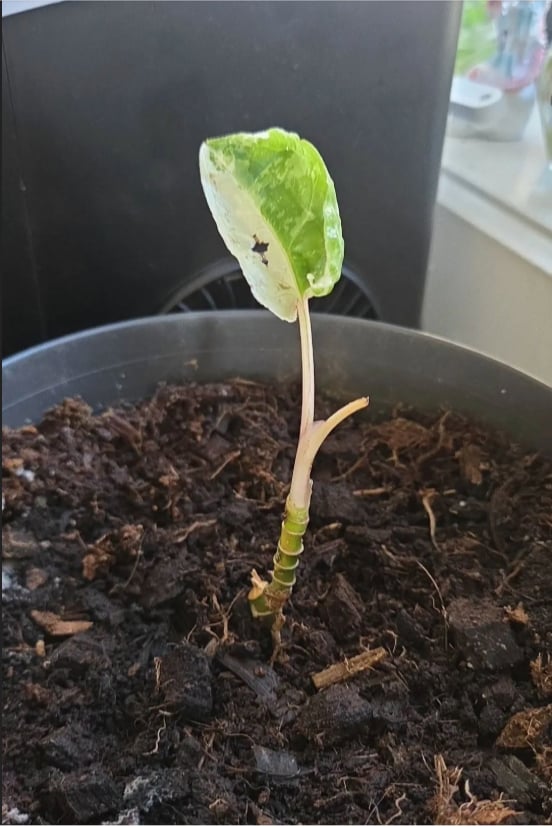
How can I identify this small cutting with only one damaged leaf?
From the photo, the plant is too small and damaged to confidently identify; it looks like a young aroid-type houseplant grown from a stem cutting. Let it grow a few new leaves and nodes, then compare leaf shape and growth habit for a more reliable ID.
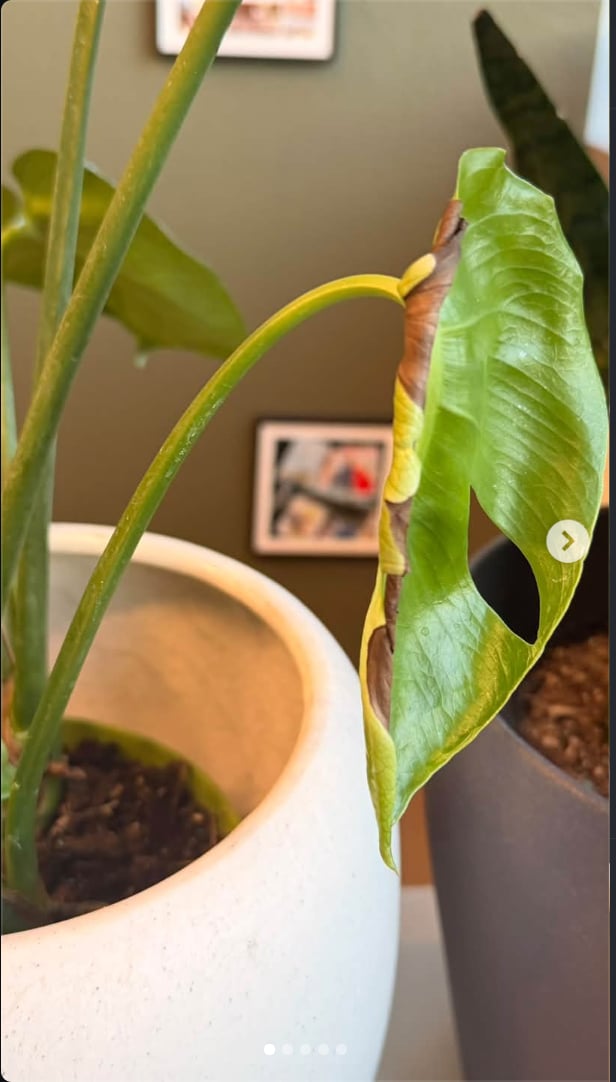
monstera
Why is my Monstera new leaf browning before it fully opens?
That brown edge on the new leaf is usually from stress while the leaf is still tightly rolled – most often low humidity, underwatering, or the leaf getting stuck and damaged. Check watering, light, and humidity, and focus on helping the next leaf grow in better.
How do I know when my plants need watering?
Most plants should be watered when the top layer of soil has dried out, not on a fixed schedule. Check the soil with your finger, lift the pot to feel the weight, and watch the leaves for early signs of thirst like slight drooping or dullness.