
Calathea (pinstripe calathea) · Asked on Instagram · 31 October 2026
Why are the edges of my Calathea (pinstripe) leaves drying out?
On Calatheas, crispy brown edges are almost always from dry air, underwatering, or tap water sensitivity. Check humidity and watering first, then adjust light and water quality.
The question
“The edges of this leaf keep drying out. Does anyone know why?”
What's likely going on
From the photo, this looks like a Calathea (pinstripe type). The brown, crispy edges starting from the margins and working inward are classic stress signs, not a disease.
Most often it’s a mix of:
- Low humidity / dry air – Calatheas are rainforest plants. In typical indoor air or in front of a fan or AC, the leaf edges lose moisture faster than the roots can supply, so they dry and crisp.
- Inconsistent watering – Letting the soil get too dry between waterings, then soaking, stresses the leaves and often shows first on the edges and tips.
- Water quality / fertilizer salts – Hard tap water or heavy fertilizer can burn sensitive Calathea leaves, again starting at the margins.
- Too much direct sun – Strong sun through a window can scorch the thinner parts of the leaf, which then dry out.
The pattern in the picture (outer edges brown and papery, inner part still green) fits environmental stress more than pests or rot.
What to do
- Check the soil moisture: Before watering, poke a finger or stick a few cm into the pot. Water when the top feels just slightly dry, not bone-dry or soggy.
- Raise humidity: Move the plant away from AC vents and fans. Group it with other plants or place near a humidifier or in a more humid room (like a bright bathroom). Aim for consistently moist air rather than occasional misting.
- Improve water quality: If your tap water is hard/chlorinated, try using filtered, RO, or rainwater. Let tap water sit overnight before use if nothing else is available.
- Adjust light: Give bright, indirect light only—no harsh midday sun on the leaves. A spot near a bright window with a sheer curtain works well.
- Trim damage: With clean scissors, cut off the dead, crispy parts following the natural shape of the leaf. This won’t fix old damage but keeps the plant tidy and helps you monitor new growth.
How to prevent it
- Keep a regular watering routine so the soil stays evenly moist, never swampy.
- Maintain higher humidity, especially in hot or very dry seasons.
- Avoid over‑fertilizing; feed lightly during the growing season and flush the pot with plain water every few months.
- Repot in a loose, well‑draining mix (potting soil with some coco peat and perlite) so roots aren’t sitting in water.
When to worry
- If new leaves are coming out already brown or deformed, check for root rot (sour smell, black mushy roots) or severe underwatering.
- If you see spots, webbing, or sticky residue, inspect closely for pests like spider mites and treat promptly.
- If many leaves suddenly yellow from the base instead of just the edges crisping, reassess watering—constant sogginess can kill roots.
Most of the time, once humidity and watering are improved, new leaves will grow in much healthier, even though the old damaged ones won’t recover.
Answered by the GrowPls assistant. Every plant and room is different; if things don't improve, a clear close-up photo of the affected part is the fastest way to a better answer.
Related questions
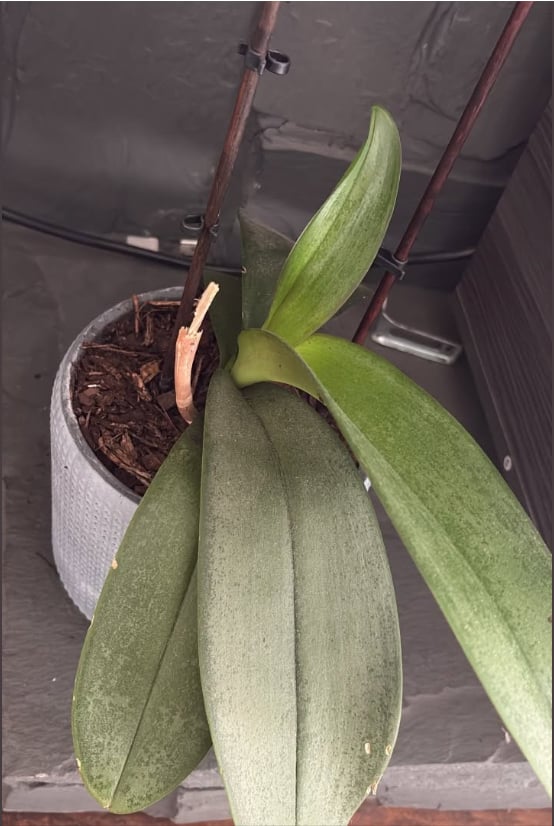
moth orchid (Phalaenopsis)
Why hasn’t my orchid flowered again for a year?
This moth orchid looks healthy enough but likely isn’t getting the right mix of bright light, feeding, and a slight temperature drop that triggers new flower spikes. Improve light, start regular orchid fertilizer, and give it a cooler, brighter spot for a few weeks to encourage blooming.
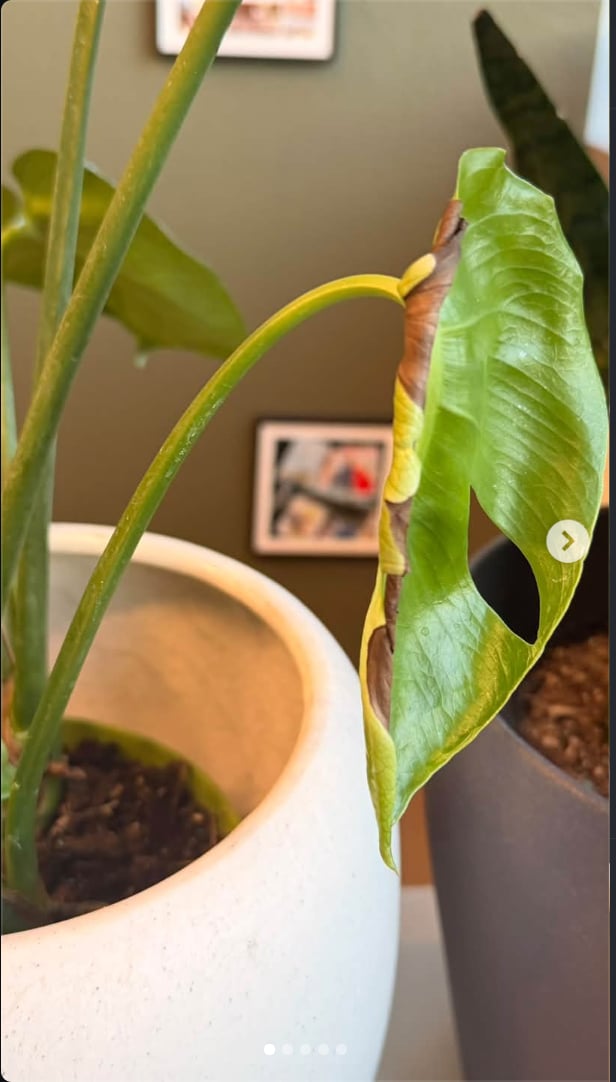
monstera
Why is my Monstera new leaf browning before it fully opens?
That brown edge on the new leaf is usually from stress while the leaf is still tightly rolled – most often low humidity, underwatering, or the leaf getting stuck and damaged. Check watering, light, and humidity, and focus on helping the next leaf grow in better.
How do I know when my plants need watering?
Most plants should be watered when the top layer of soil has dried out, not on a fixed schedule. Check the soil with your finger, lift the pot to feel the weight, and watch the leaves for early signs of thirst like slight drooping or dullness.
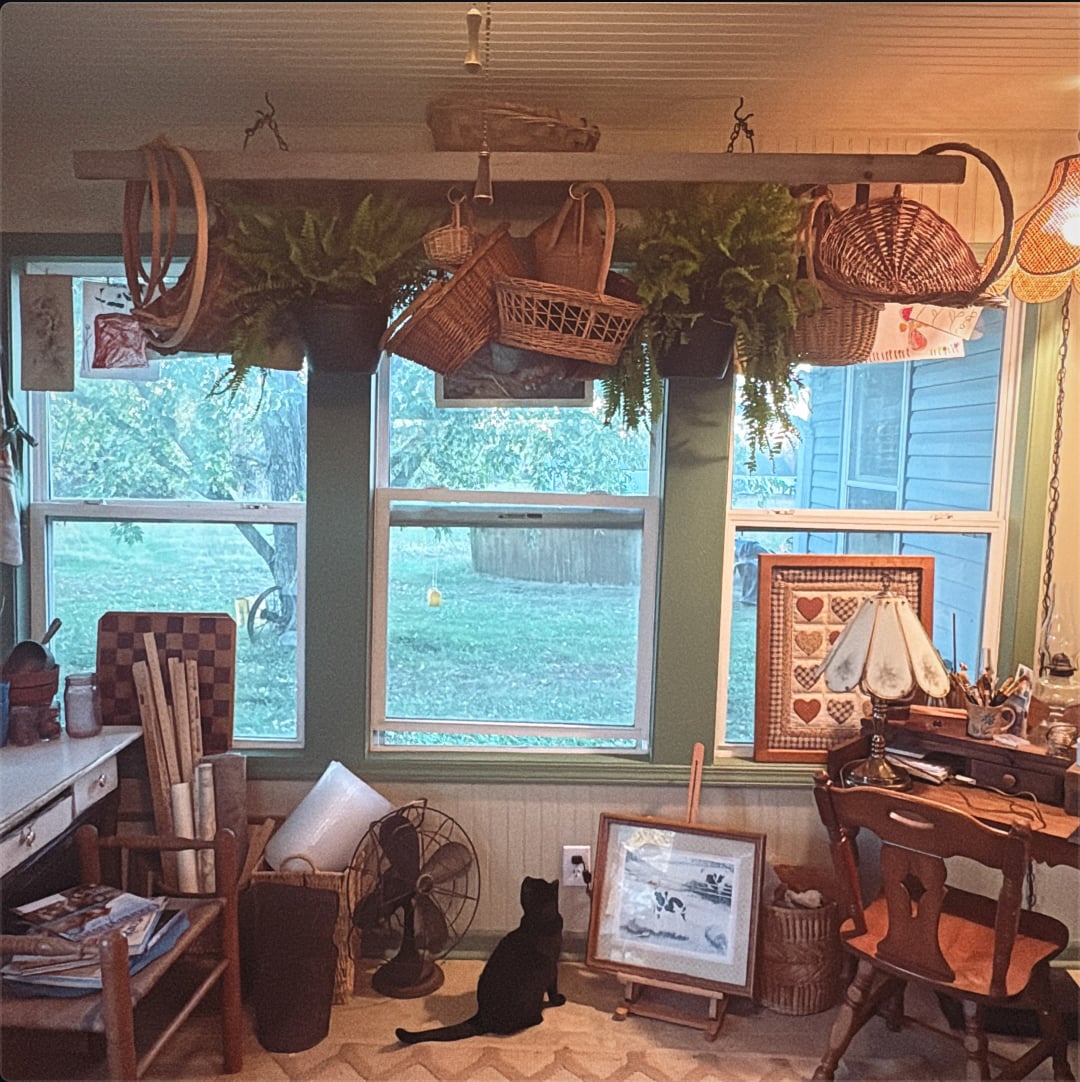
fern (likely Boston fern)
How do I overwinter hanging ferns in a bright sunroom?
That sunroom spot should work well if the ferns get bright but not harsh direct sun and the air isn’t too hot or dry. Indoors, water whenever the top of the soil just starts to feel dry, which is often about once a week but depends on your room’s temperature and humidity.