
Alocasia (African mask/Polly type) · Asked on Facebook · 5 November 2026
Why are the leaves on my Alocasia always drying up even though soil stays wet?
The soil staying constantly wet is likely causing root rot, so the plant can’t take up water and the leaves dry and die. Let the soil dry out between waterings, check for drainage holes, and repot into a well‑draining mix if the roots look mushy or black.
The question
“I need help with my plant. It's not ever dry.”
What's likely going on
From the photo, this looks like an Alocasia (often called African mask/Polly). The drooping, papery brown leaves with soil that “is not ever dry” point much more to overwatering and possible root rot than to thirst.
When Alocasia roots sit in wet soil for too long, they rot. Rotten roots can’t move water to the leaves, so the leaves dry, crisp and collapse even though the pot feels wet. A decorative outer pot without drainage, or heavy soil that dries very slowly, can make this worse.
Less likely but possible: very low light or cold drafts slowing growth, so the plant uses less water and stays wet for too long.
What to do
Check for drainage
Make sure the inner pot has holes at the bottom. If it doesn’t, repot into one that does.Inspect the roots
Gently slide the plant out of the pot. Healthy roots are firm and whitish; rotten ones are brown/black, soft, or smell bad. Cut off all mushy roots with clean scissors.Repot in fresh, airy mix
Use a mix that drains well: regular potting soil plus 30–40% perlite, bark, or coco chips. Put it back in a pot only slightly larger than the root ball.Adjust watering
Water thoroughly, then wait until at least the top 2–3 cm of soil are dry before watering again. In cooler, darker rooms this could take a week or more.Give better light and warmth
Place in bright, indirect light (near a window but not harsh sun) and keep away from cold drafts. Alocasias also appreciate some humidity.Remove dead leaves
Trim off fully brown, crispy leaves so the plant can focus on new growth.
(Alocasias are toxic if chewed, so keep out of reach of pets and children.)
How to prevent it
- Always use pots with drainage holes.
- Use a chunky, well‑draining mix, not heavy garden soil.
- Water by feeling the soil, not on a fixed schedule.
- In low light or cool seasons, water less often because the soil stays wet longer.
When to worry
- If new leaves also emerge weak, yellow, or collapse quickly.
- If the stem bases get soft and smelly even after repotting.
- If pests (like spider mites) appear on remaining leaves.
If those happen, further root loss or stem rot is likely, and a drastic trim plus repot—or propagating any healthy offsets—may be needed to save the plant.
Answered by the GrowPls assistant. Every plant and room is different; if things don't improve, a clear close-up photo of the affected part is the fastest way to a better answer.
Related questions
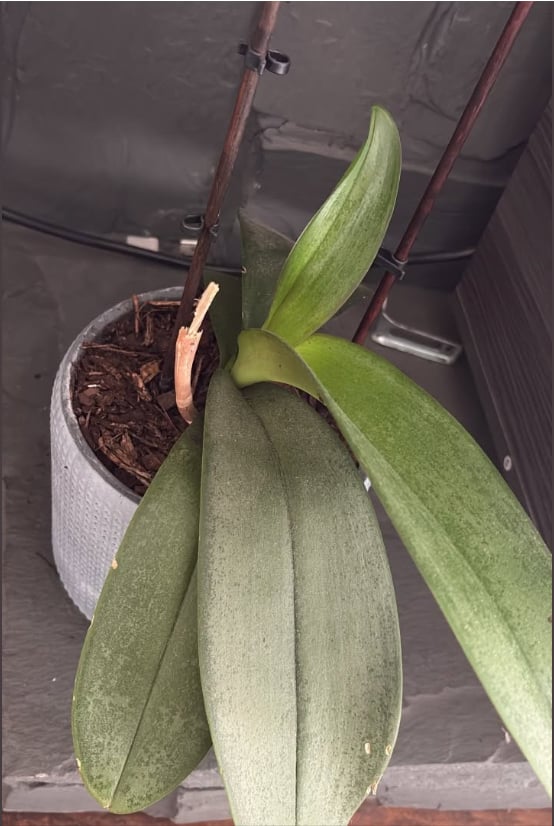
moth orchid (Phalaenopsis)
Why hasn’t my orchid flowered again for a year?
This moth orchid looks healthy enough but likely isn’t getting the right mix of bright light, feeding, and a slight temperature drop that triggers new flower spikes. Improve light, start regular orchid fertilizer, and give it a cooler, brighter spot for a few weeks to encourage blooming.
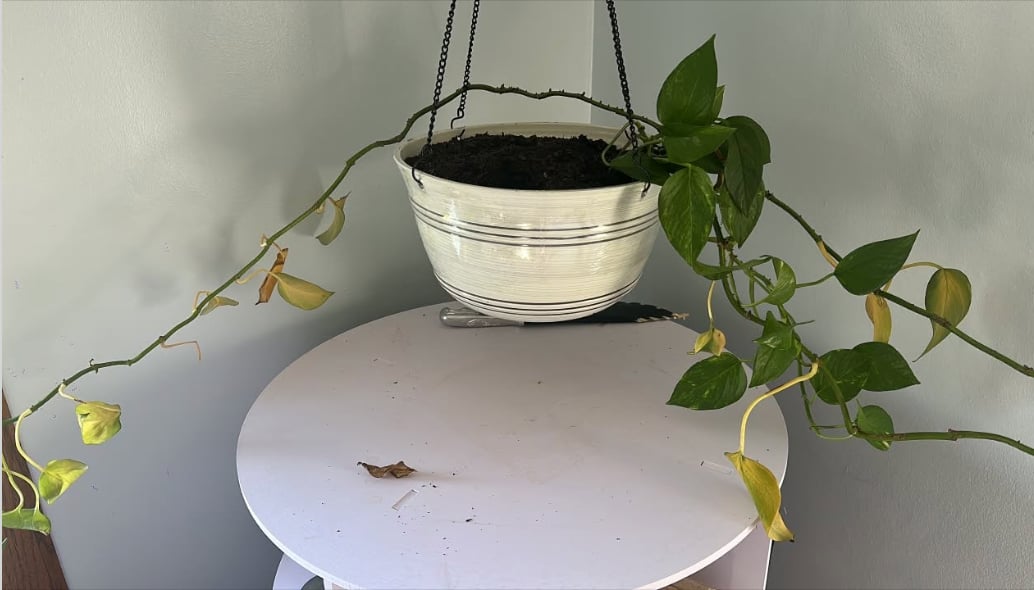
pothos (money plant)
Why are my pothos leaves turning yellow after repotting?
Those yellow leaves are most likely from stress after repotting plus soil that’s staying too wet. Check that the pot drains well, let the soil dry a bit between waterings, and trim off the worst yellow leaves.
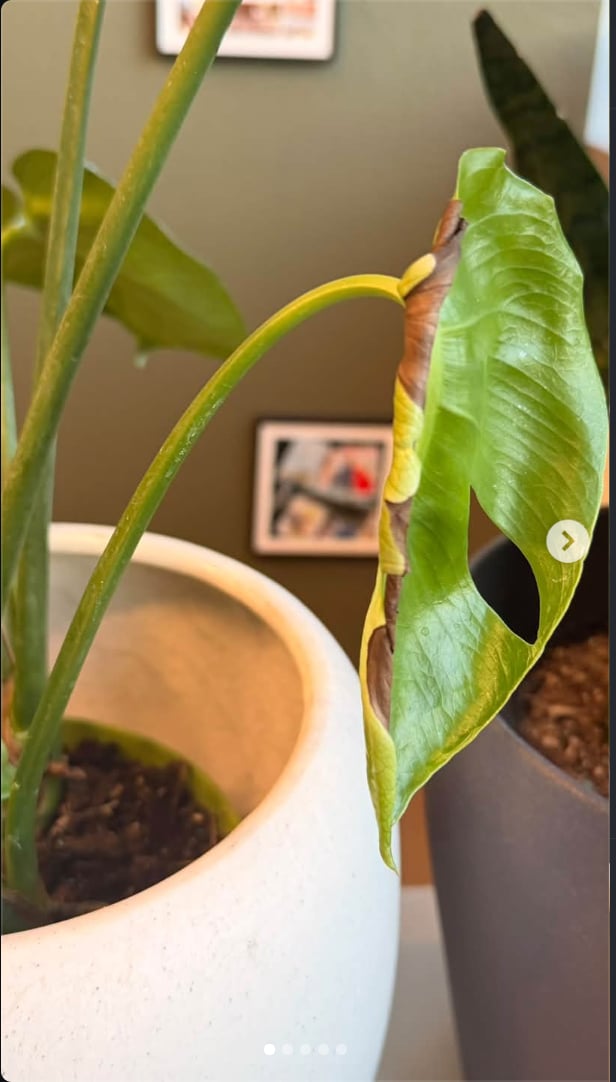
monstera
Why is my Monstera new leaf browning before it fully opens?
That brown edge on the new leaf is usually from stress while the leaf is still tightly rolled – most often low humidity, underwatering, or the leaf getting stuck and damaged. Check watering, light, and humidity, and focus on helping the next leaf grow in better.
How do I know when my plants need watering?
Most plants should be watered when the top layer of soil has dried out, not on a fixed schedule. Check the soil with your finger, lift the pot to feel the weight, and watch the leaves for early signs of thirst like slight drooping or dullness.