
heartleaf philodendron · Asked on Facebook · 2 November 2026
Why are the leaves on my heartleaf philodendron turning yellow and brown?
Those yellowing leaves are usually from watering issues plus normal aging of the oldest leaves. Check the soil and drainage, adjust your watering schedule, and remove the already-yellow leaves.
The question
“Help! This is my third plant doing this- for the first time since I’ve been a serious plant parent. What am I doing wrong?”
What's likely going on
From the photo, the plant looks like a heartleaf philodendron with:
- Several older leaves turning solid yellow, some then going brown and crispy.
- Newer leaves higher up that are still a healthy green.
What we can see for sure:
- Yellowing is mostly on the lower, older leaves along long vines.
- The plant looks fairly full, not collapsing or rotting.
What’s most likely causing it:
- Normal leaf aging, made worse by watering habits. Philodendron vines regularly shed their oldest leaves. If watering is a bit off (either too often or letting it get very dry), more of those older leaves yellow at once.
- Possible overwatering / poor drainage. If the pot has no drainage holes or stays wet for many days, roots get stressed and older leaves turn uniform yellow, then drop.
- Or occasional underwatering. If the soil gets bone-dry and leaves feel crispy and curled, that’s stress from drying out too hard between waterings.
Because this is happening to several plants, the common factor is usually the watering routine, not a disease.
What to do
- Check the pot and soil.
- Make sure there’s a drainage hole.
- Stick a finger 3–5 cm into the soil before watering. If it’s still quite moist, wait.
- Adjust watering.
- For philodendrons, water thoroughly only when the top 3–5 cm are dry.
- Empty any water that collects in the saucer after 10–15 minutes.
- Assess roots if yellowing is heavy.
- Slide the plant out of the pot. Healthy roots are mostly white or light tan and firm.
- If many roots are brown, mushy, and smell bad, trim those and repot in fresh, well‑draining mix.
- Give it good light.
- Bright, indirect light (near a window but not harsh midday sun) helps the plant replace old leaves quickly.
- Remove damaged leaves.
- Snip fully yellow or brown leaves at the base of their stem. They won’t turn green again.
How to prevent it
- Keep a simple schedule: check soil every few days, water only when the top has dried, not by the calendar.
- Use a loose mix (potting soil + perlite or coco chips) so extra water can drain.
- Avoid letting the plant sit right in the path of very dry air from heaters or fans, which speeds up leaf loss.
- Once or twice a year, check if it’s root‑bound and move up one pot size if roots are circling tightly.
When to worry
- Many leaves (including new ones) turn yellow at once, feel soft, and stems look mushy – that points to serious overwatering or root rot.
- New growth is stunted, pale, or deformed.
- You notice a bad smell from the soil.
If any of these show up, act quickly: unpot, trim bad roots, repot in fresh mix, and water much less often until it recovers.
Answered by the GrowPls assistant. Every plant and room is different; if things don't improve, a clear close-up photo of the affected part is the fastest way to a better answer.
Related questions
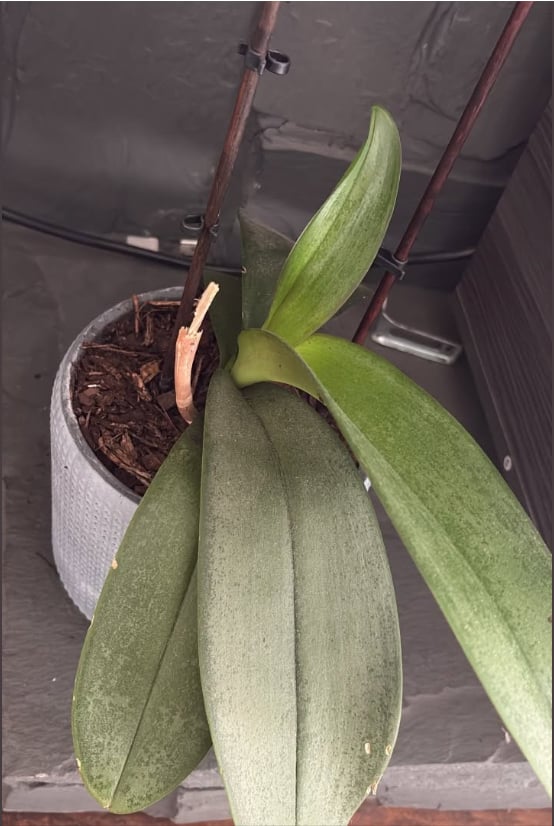
moth orchid (Phalaenopsis)
Why hasn’t my orchid flowered again for a year?
This moth orchid looks healthy enough but likely isn’t getting the right mix of bright light, feeding, and a slight temperature drop that triggers new flower spikes. Improve light, start regular orchid fertilizer, and give it a cooler, brighter spot for a few weeks to encourage blooming.
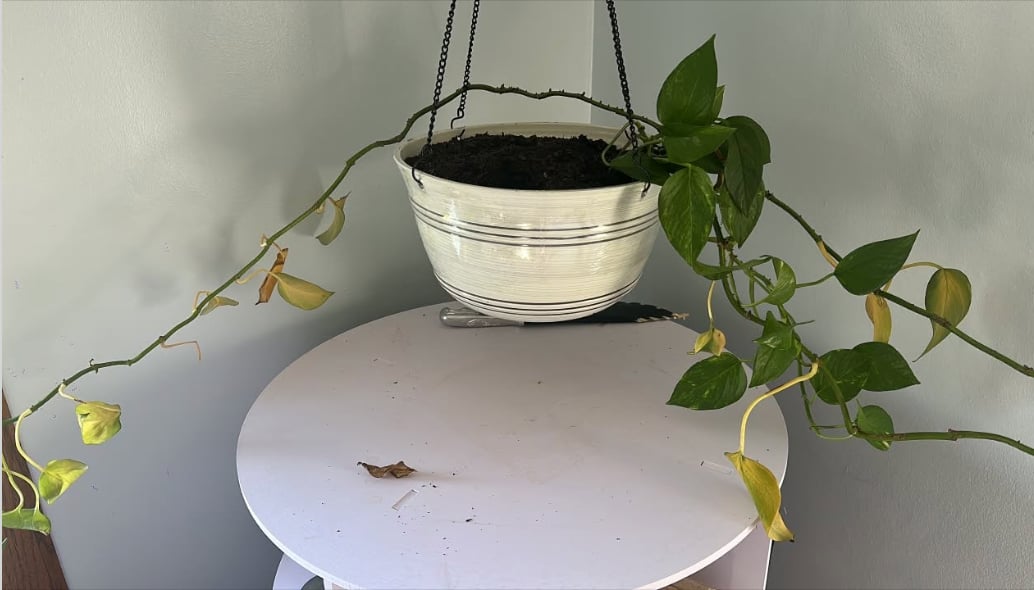
pothos (money plant)
Why are my pothos leaves turning yellow after repotting?
Those yellow leaves are most likely from stress after repotting plus soil that’s staying too wet. Check that the pot drains well, let the soil dry a bit between waterings, and trim off the worst yellow leaves.
How do I know when my plants need watering?
Most plants should be watered when the top layer of soil has dried out, not on a fixed schedule. Check the soil with your finger, lift the pot to feel the weight, and watch the leaves for early signs of thirst like slight drooping or dullness.
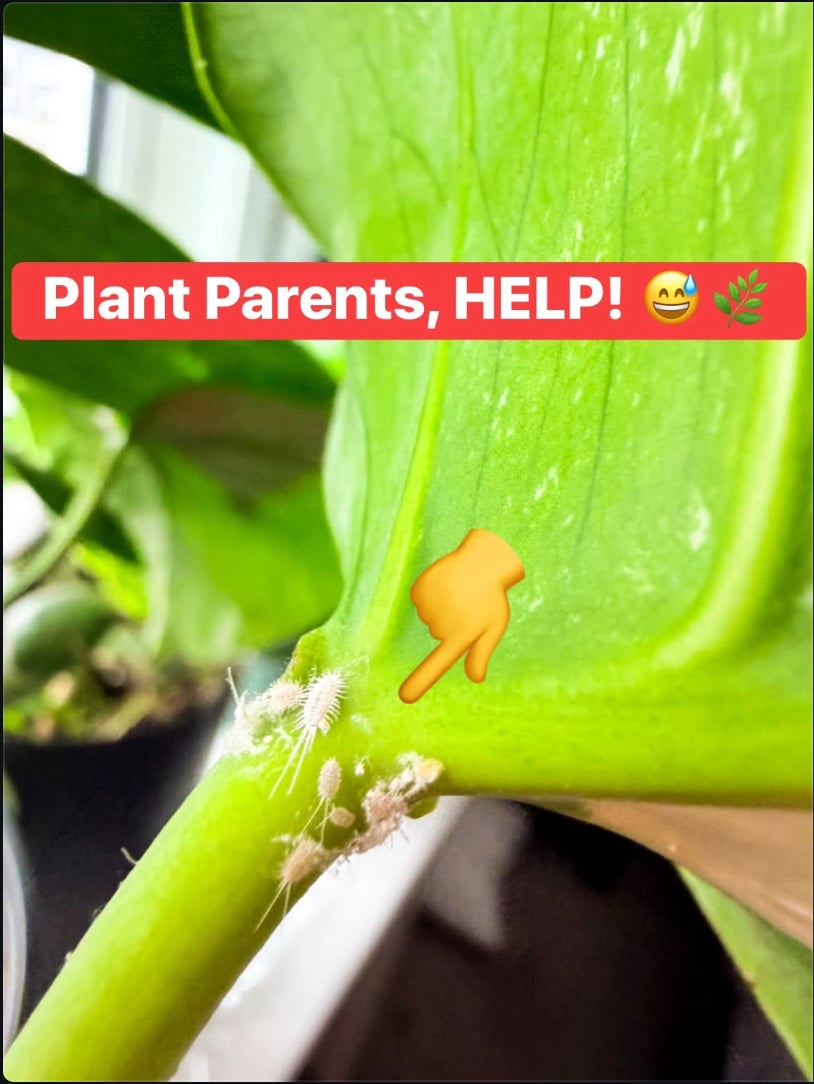
Are these white insects on my plant mealybugs and how do I get rid of them?
Those fluffy white insects in the leaf joint are mealybugs. Isolate the plant, wipe them off with cotton dipped in diluted rubbing alcohol, and repeat weekly, adding insecticidal soap or neem oil if they keep coming back.